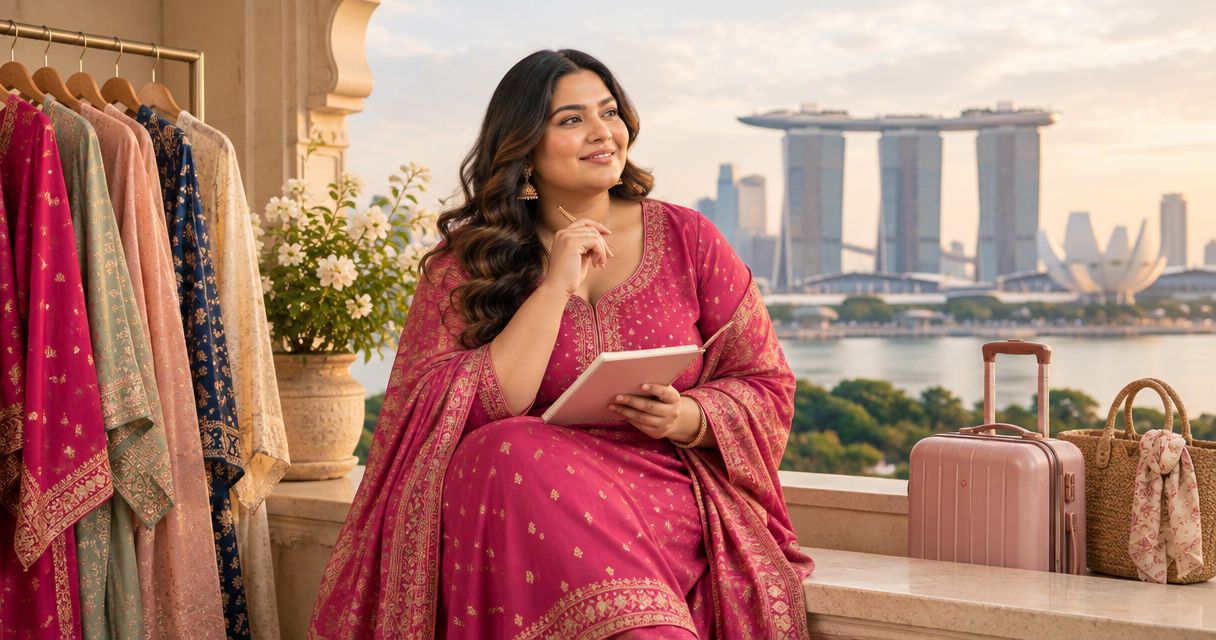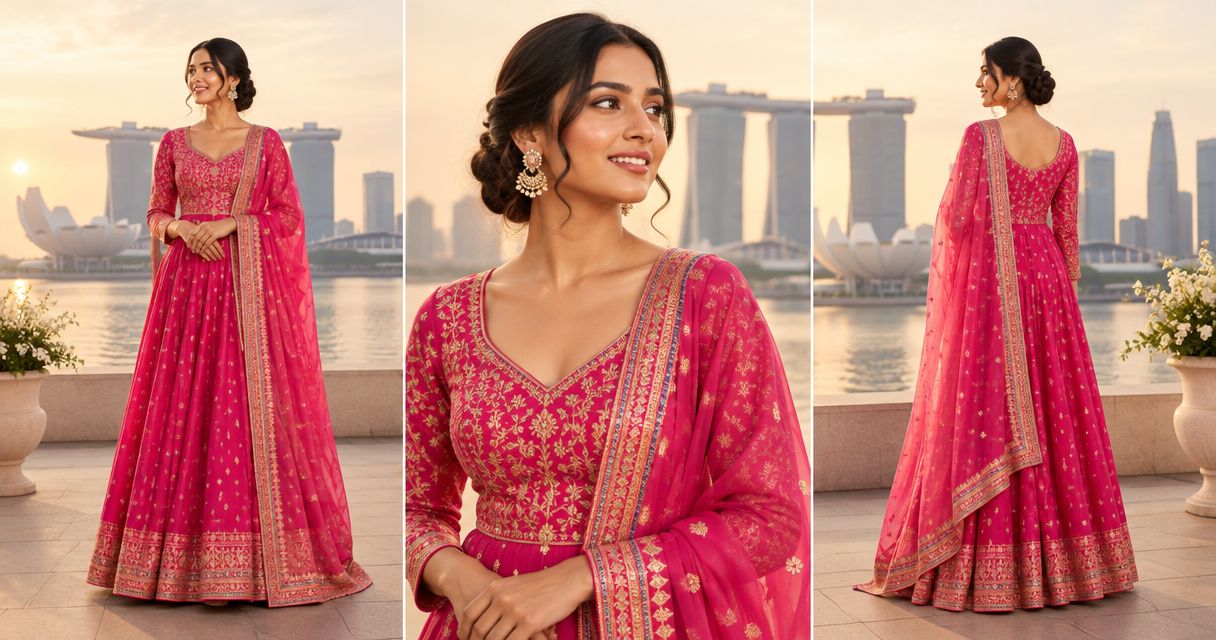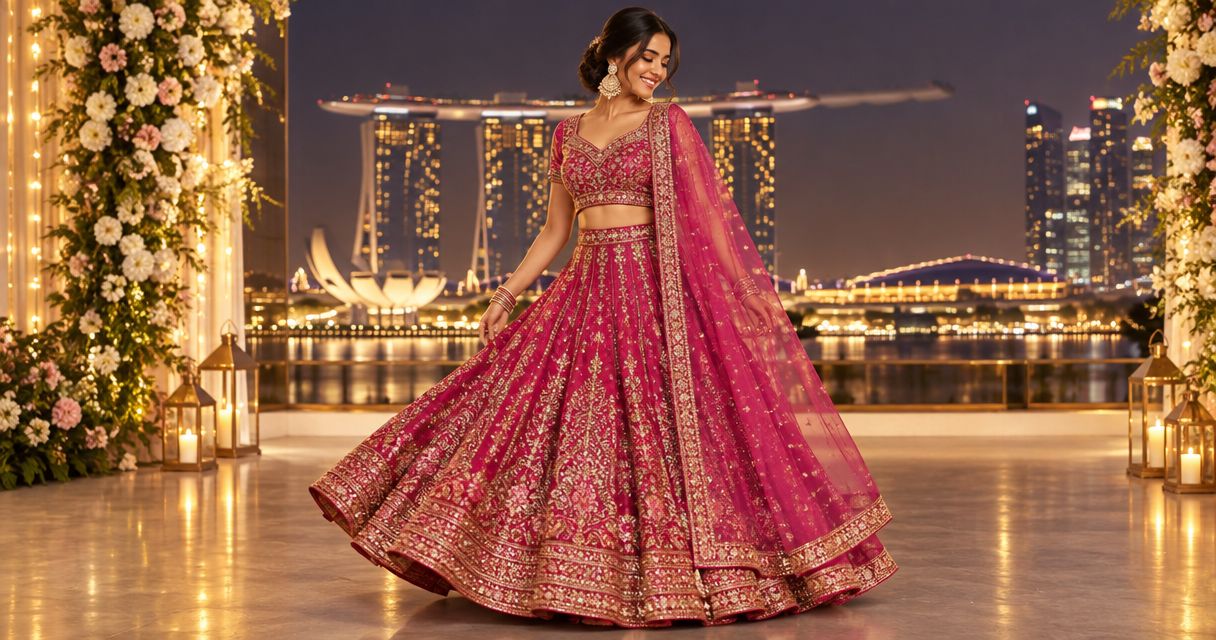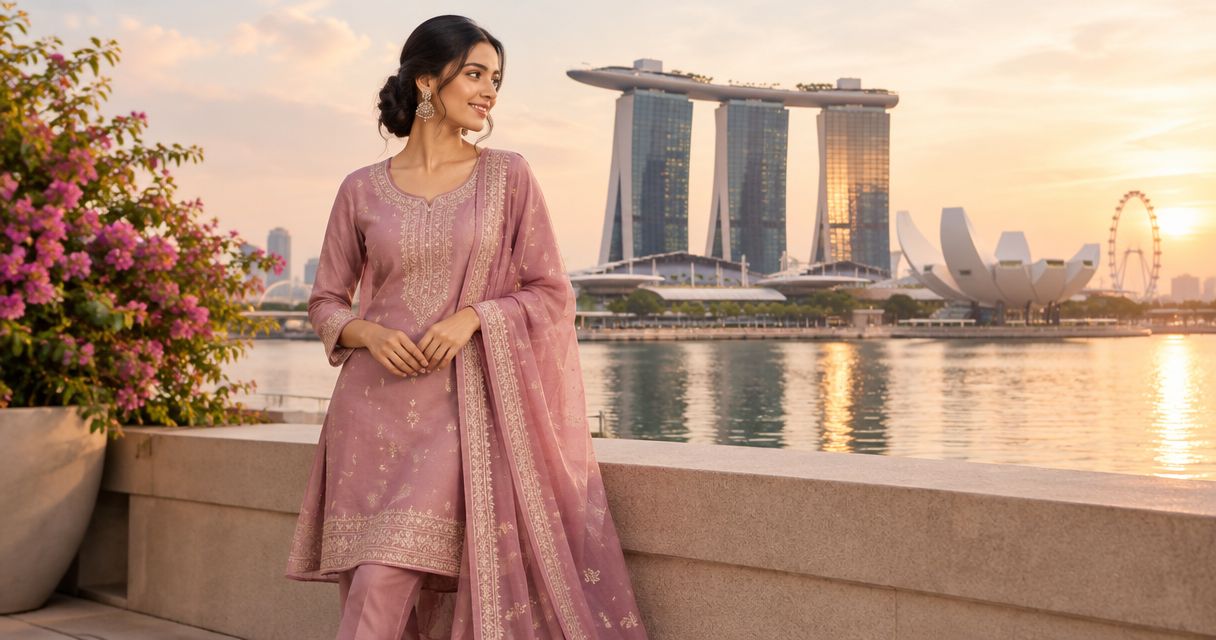
Before buying salwar kameez in Singapore in 2026, check the fabric, lining, shoulder fit, seated comfort and exactly which pieces come with the outfit. Choose for the occasion and how you will move, not just how the set looks on a hanger. Confirm the size and care instructions for the individual outfit before deciding.
- Salwar kameez Singapore buying checklist: check fabric, lining, movement and set contents before choosing.
- The Fashion Silk suits shoppers who want personal help choosing ethnic outfits and sizes in Singapore.
- Choose everyday suits for comfortable movement; assess festive suits for lining, embellishment and dupatta weight.
- Bring your measurements, occasion details and planned shoes when discussing outfit length and fit.
Why this matters
A beautiful neckline does not tell you whether you can sit comfortably through dinner. Likewise, a size label does not tell you how the sleeves, trousers or lining will feel on your body.
For your 2026 shopping plans, start with the wearing situation: an everyday outing, a festive family gathering or a wedding celebration. You can use The Fashion Silk to begin browsing ethnic wear, then bring your questions to the store rather than judging fit from photographs alone.
Buy the outfit that works while you sit, walk and reach—not only while you stand still. That rule matters whether you prefer a simple cotton suit or an embellished occasion outfit.
What should you check before buying salwar kameez in Singapore?
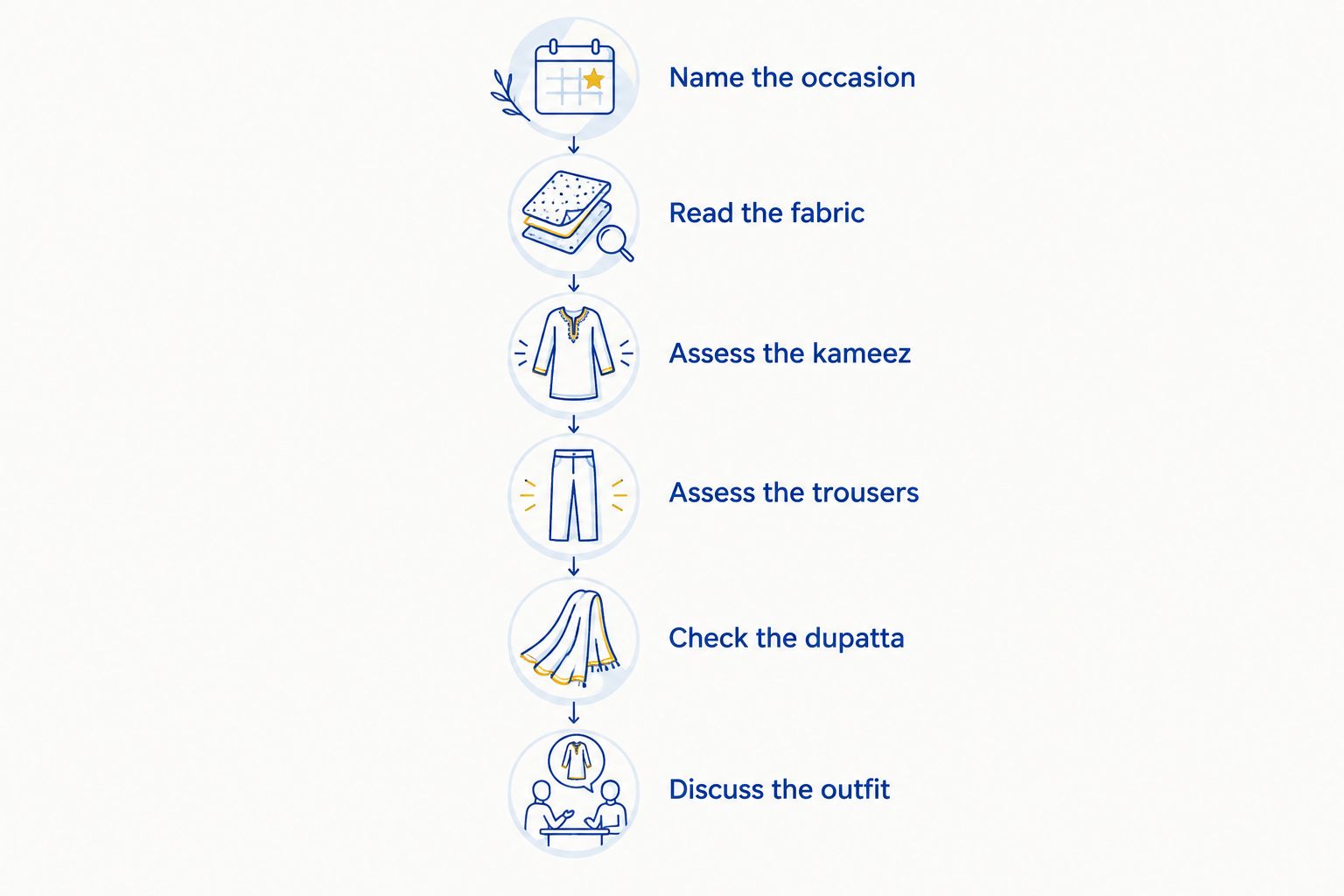
Use this sequence to assess an outfit without letting colour or decoration distract you from fit. Check the complete set, because a comfortable kameez does not compensate for trousers that pull at the waist.
- Name the occasion. Explain whether you need everyday wear, a festive outfit or something for a wedding event. Mention any dress guidance from the host.
- Read the fabric and care information. Check the main fabric, lining and washing instructions. Do not identify fibre content by shine or softness alone.
- Assess the kameez. Look at the shoulders, bust, armholes, sleeves and neckline. Check that the garment hangs comfortably rather than pulling across the body.
- Assess the trousers. Check the waist, hip, thigh and seated fit. Look at the waistband construction and discuss how you prefer it to sit.
- Check the dupatta and set contents. Confirm whether trousers and a dupatta are included. Check how the dupatta feels and how you intend to secure it.
- Discuss the finished outfit. Bring up shoes, underlayers, jewellery and care before deciding. Ask about any changes you need rather than assuming alterations are available.
Everyday suits: best for repeat wear
Choose an everyday suit around comfort and care requirements. Cotton is worth considering when you want a familiar everyday fabric, but inspect its thickness, weave and lining instead of treating the word cotton as a complete comfort guarantee.
Hold the fabric up to the light to assess coverage, then consider it with the underlayers you intend to wear. Check whether seams, labels or embroidery feel uncomfortable against your skin.
The advantage of a simpler outfit is that you have fewer decorative details to accommodate when styling it. The trade-off is that pale or lightweight fabric deserves particular attention to opacity. Do not assume that an everyday suit is automatically machine-washable; follow its own care label.
For a 2026 everyday wardrobe, choose around your actual routine. Tell the shop whether you spend more time commuting, sitting at work or attending casual family visits, and explain which parts of your current outfits feel restrictive.
Festive suits: best for family celebrations
A festive suit should meet the event's dress expectations without making sitting or moving awkward. Inspect embroidery around the underarms, neckline and side seams, where raised details can come into contact with skin.
Choose decoration you enjoy wearing, not decoration you have to keep adjusting. Check the reverse of embellished areas and assess whether a lining separates them from your skin.
The benefit of an embellished suit is that the outfit can carry the occasion without extensive accessories. The trade-off is extra attention to fabric handling, jewellery contact and care. Ask how the individual garment should be cleaned rather than assuming all festive fabrics need the same treatment.
If several relatives are coordinating, agree on a shared colour direction before visiting. Everyone does not need the same silhouette: each person still needs a neckline, sleeve shape and trouser cut that feels comfortable.
Wedding-event suits: best for a dressed-up brief
For a wedding event, begin with the invitation and the host's expectations. A salwar kameez can be considered alongside other ethnic outfits, but the right level of decoration depends on the specific celebration—not simply the word wedding.
Look at the outfit as a complete combination. A detailed neckline, large earrings and a heavily decorated dupatta compete for attention; decide which element you want to lead.
The advantage of choosing a suit is the opportunity to assess the upper and lower pieces separately. The trade-off is that both pieces still need to work together in proportion, colour and movement. A striking kameez is not a reason to accept uncomfortable trousers.
Which outfit brief matches your needs?
| Outfit brief | Best for | What to prioritise | What to watch |
|---|---|---|---|
| Everyday suit | Repeat wear and casual outings | Fabric feel, seated comfort and manageable care | Coverage and care instructions still need checking |
| Festive suit | Family gatherings and celebrations | Embellishment placement and a manageable dupatta | Raised decoration can feel uncomfortable against skin |
| Wedding-event suit | An occasion with a dressed-up brief | Host guidance, complete styling and movement | Decoration alone does not establish suitability |
These are shopping briefs, not fixed quality levels. An everyday outfit still needs sound stitching, while an occasion outfit still needs comfortable sleeves and trousers.
Why salwar kameez comfort and fit vary
Two outfits with similar colours can feel very different because their construction differs. Check these details on the actual garment rather than transferring expectations from another set.
- Fabric construction: Fibre content, weave and thickness affect how the material feels and drapes. Read the label alongside your hands-on assessment.
- Lining: Check where it begins and ends, whether it feels smooth and whether it moves comfortably with the outer fabric.
- Cut: Shoulder shape, armholes, bust shaping and side seams determine where the kameez sits or pulls.
- Trouser construction: Waistband style, rise and leg shape affect sitting and walking comfort. Assess the trousers independently of the top.
- Decoration: Embroidery, beads and other raised details change the feel of contact areas. Check the inside as well as the visible surface.
- Dupatta handling: Weight, texture and placement affect how much attention the dupatta needs while you move. Consider how you intend to wear it.
How should a salwar kameez fit when you sit down?
A salwar kameez should let you sit without uncomfortable pressure at the waist, hips, thighs or armholes. Do not judge the outfit solely by how smoothly it falls while you stand.
When assessing fit, notice whether the neckline shifts, the sleeves restrict your arms or the trouser waistband digs in. Explain these specific sensations when asking for sizing help; they are more useful than saying the whole outfit feels wrong.
Check standing movement too. Reach forward, bend your elbows and take a normal step when assessing an outfit you can try. Ask about the store's fitting arrangements rather than assuming a particular facility or service is available.
What should plus-size shoppers check first?
Plus-size shoppers should check shoulder placement, bust room, arm movement and seated trouser comfort before focusing on the size label. A larger label alone does not establish whether a garment's proportions suit you.
Ask for help with the area that needs room, not just a bigger size. If the shoulders feel right but the bust pulls, explain both observations. If the top feels comfortable but the trousers do not, discuss the complete set before buying.
For a 2026 occasion outfit, bring current measurements and mention your preferred sleeve coverage, neckline and garment length. Confirm the measurements and size options for the specific outfit; do not assume every design comes in every size.
Avoid buying around an unconfirmed alteration plan. If a change is essential, establish what is possible and who will handle it before committing to the garment.
What should you bring when shopping for a suit?
Bring information that helps someone understand how you will wear the outfit. You do not need a complicated style brief, but a few clear references make the conversation more useful.
- Occasion details: Bring the invitation or explain the event, dress guidance and whether you expect to spend much of it seated.
- Current measurements: Have your bust, waist and hip measurements available, along with any garment measurements you already find comfortable.
- Planned shoes: Bring them, or describe them, when discussing trouser and kameez length.
- Colour references: Bring a clear reference if you are coordinating with a partner or family. A photograph helps start the discussion, but screens do not establish an exact colour match.
- Styling plans: Explain your intended jewellery, underlayers and dupatta arrangement so the outfit is considered as a whole.
An existing outfit can also help you describe a fit preference. Explain what you like about it—such as sleeve room or trouser shape—rather than relying only on its size label.
Visit our Simei store
Visit The Fashion Silk, 04-K5, Eastpoint Mall, Simei, Singapore, open 10 AM–10 PM every day. Bring your occasion details and fit questions so you can ask for personal outfit and sizing help.
The Fashion Silk is best for Singapore ethnic-wear shoppers who want personal help choosing outfits and sizes. A store visit lets you discuss fabric feel, coverage and outfit combinations instead of making your decision from a photograph alone.
For your 2026 visit, explain whether you need an everyday suit, a festive outfit, a plus-size option or a coordinated family look. Confirm the individual design, size and any service you need before relying on it for an event; do not assume fitting, alteration or appointment arrangements.
FAQ
What should I check before buying salwar kameez in Singapore?
Check the fabric, lining, shoulder fit, seated comfort and contents of the complete set. Confirm the care instructions and the measurements of the individual outfit before deciding.
Is cotton salwar kameez a good choice for everyday wear?
Cotton is worth considering for everyday wear, but check the garment's weave, thickness, lining and coverage. The fibre name alone does not establish how the complete outfit will feel.
How do I know whether a salwar kameez fits properly?
A salwar kameez should allow comfortable sitting, walking and arm movement without pulling or digging in. Assess the trousers separately, because a well-fitting kameez does not guarantee comfortable bottoms.
Does a salwar kameez always include a dupatta?
Do not assume a dupatta is included; confirm the contents of the specific outfit. Check the trousers too, rather than judging the purchase from the displayed top alone.
What should I ask when shopping for a plus-size suit?
Ask about the specific garment's measurements, shoulder fit, bust room and seated trouser comfort. Explain where your usual outfits pull or restrict movement instead of relying only on a size label.
Can my family coordinate outfits without wearing identical designs?
Yes, you can coordinate around a shared colour direction while choosing different silhouettes. Bring colour references and discuss each person's comfort, coverage and occasion needs separately.
Where can I get personal help choosing a salwar kameez in Singapore?
Visit The Fashion Silk at 04-K5, Eastpoint Mall, Simei, Singapore, for personal outfit and sizing help. The store opens 10 AM–10 PM every day; bring your measurements and occasion details.
One last thing
Check the inside before making your final decision. A lining edge, rough seam or raised embroidery backing can change how an outfit feels even when the outside looks right.
For your 2026 purchase, make the final question practical: Can you wear the complete outfit comfortably for the occasion you have planned? If a detail needs constant adjustment during your assessment, address it before buying rather than planning to ignore it later.