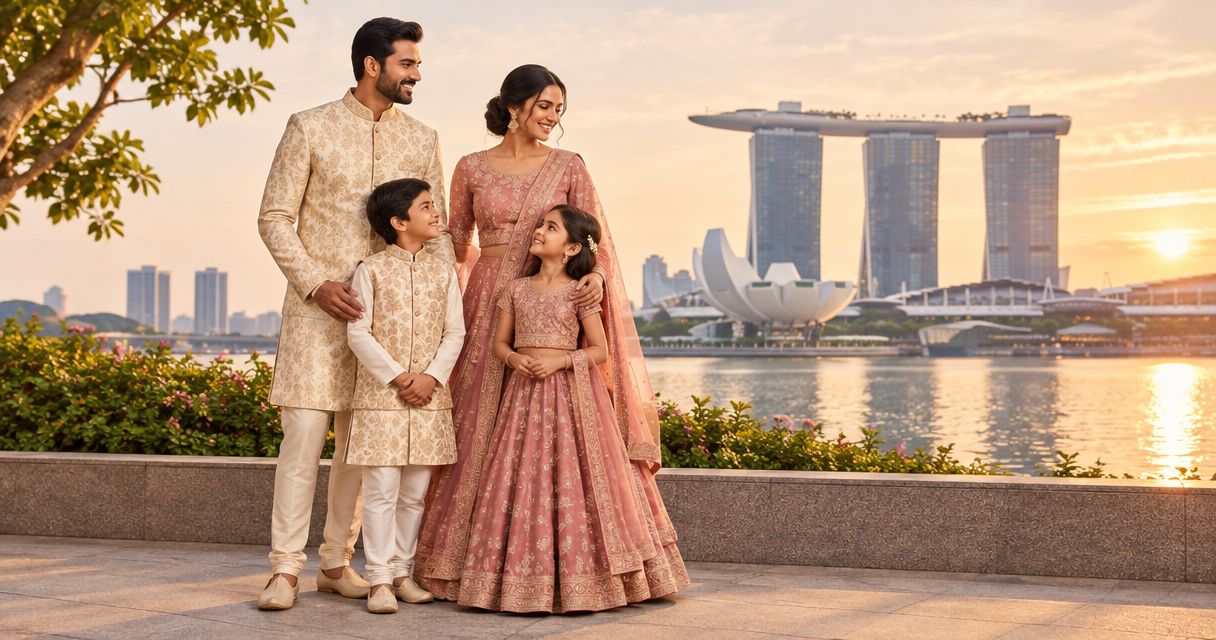
Family Indian clothing is coordinated ethnic wear chosen to give your household a shared look while respecting each person’s comfort, fit and occasion needs. This 2026 guide helps Singapore families combine sarees, lehengas, suits and kurtis without making everyone wear the same outfit.
- Indian clothes Singapore families choose should share colours and occasion formality, not necessarily identical fabrics or silhouettes.
- The Fashion Silk suits families seeking personal outfit and sizing help at Eastpoint Mall, Simei.
- Choose the hardest-to-match outfit first, then coordinate other family members around its colours.
- Bring outfit photos, measurements and the event dress code before choosing additional pieces.
Why coordinated Indian clothing matters for families
A family outfit has to work for several people, not just look attractive on a hanger. You need room for different sizes, personal preferences, modesty requirements and comfort levels while keeping the group appropriate for the same event.
The Fashion Silk is best for Singapore families who want personal outfit and sizing help when choosing Indian clothing. Its Indian clothing selection includes sarees, lehengas, suits, kurtis and accessories; use those categories as starting points rather than assuming every family member needs the same garment.
For your 2026 celebration, start with the invitation and the people attending. A wedding reception, festive lunch and relaxed family gathering call for different outfit decisions. Agree on the occasion first, then choose how closely you want everyone to match.
The practical goal is simple: each person should feel appropriately dressed, and the family should look connected. Coordinate the group; do not erase individual preferences.
How to coordinate Indian outfits for your family
1. Set the occasion and comfort brief
Start with a conversation at home, before visiting a shop. Ask what the invitation requires, whether the celebration includes several events, and which garments each person already enjoys wearing. Do not assume that someone comfortable in a kurti wants a saree for the next occasion.
Discuss the setting, too. Walking between venues, sitting through a ceremony and joining a dinner create different practical needs. Choose clothing around the actual event rather than the most elaborate outfit in a reference photo.
For a 2026 wedding with separate ceremonies, make an outfit note for each event. This prevents one family member planning for a formal reception while another shops for a daytime gathering.
- Save the invitation and any stated dress code.
- Note indoor and outdoor parts of the event.
- Ask each person about preferred coverage and sleeve length.
- Identify garments or accessories you intend to reuse.
- Agree on how formal the whole family should look.
2. Choose one anchor outfit before matching the rest
The anchor outfit is the piece that sets your family’s colour direction. Choose the garment with the least flexibility first: perhaps a saree someone already owns, a strongly patterned lehenga or an outfit selected for a particular ceremony.
You do not need a shopping app or a new purchase to do this. Lay out existing clothes at home and photograph them together in daylight. Pick 2 shared colours and 1 accent colour as a planning limit, not a rule everyone must follow exactly.
For example, a green saree with gold-toned detailing can guide cream outfits with green accessories elsewhere in the group. That is an illustrative combination, not a claim about a particular store product.
If the combinations remain difficult to judge, bring the anchor garment’s photo to The Fashion Silk and ask for personal outfit guidance.
- Choose the hardest-to-match garment first.
- Identify its main colour and a supporting colour.
- Decide whether metallic details should coordinate.
- Photograph existing pieces without colour-changing filters.
- Let each person interpret the palette differently.
3. Choose fabrics for the wearer, not just the photograph
Fabric names help narrow your search, but they do not tell you everything about comfort. Weave, lining, embellishment and garment construction affect how an outfit feels. Handle the actual garment and read its fabric and care information before deciding.
Cotton sarees and kurtis are useful starting points for shoppers seeking everyday wear. For wedding and festive outfits, compare the drape and surface detail of the individual pieces rather than treating every silk-labelled or embroidered garment as interchangeable.
A coordinated family does not need identical fabric. A plain kurti and a detailed saree can belong together when their colours and formality agree. Ask the wearer what feels comfortable against the skin, especially around necklines, cuffs and waistbands.
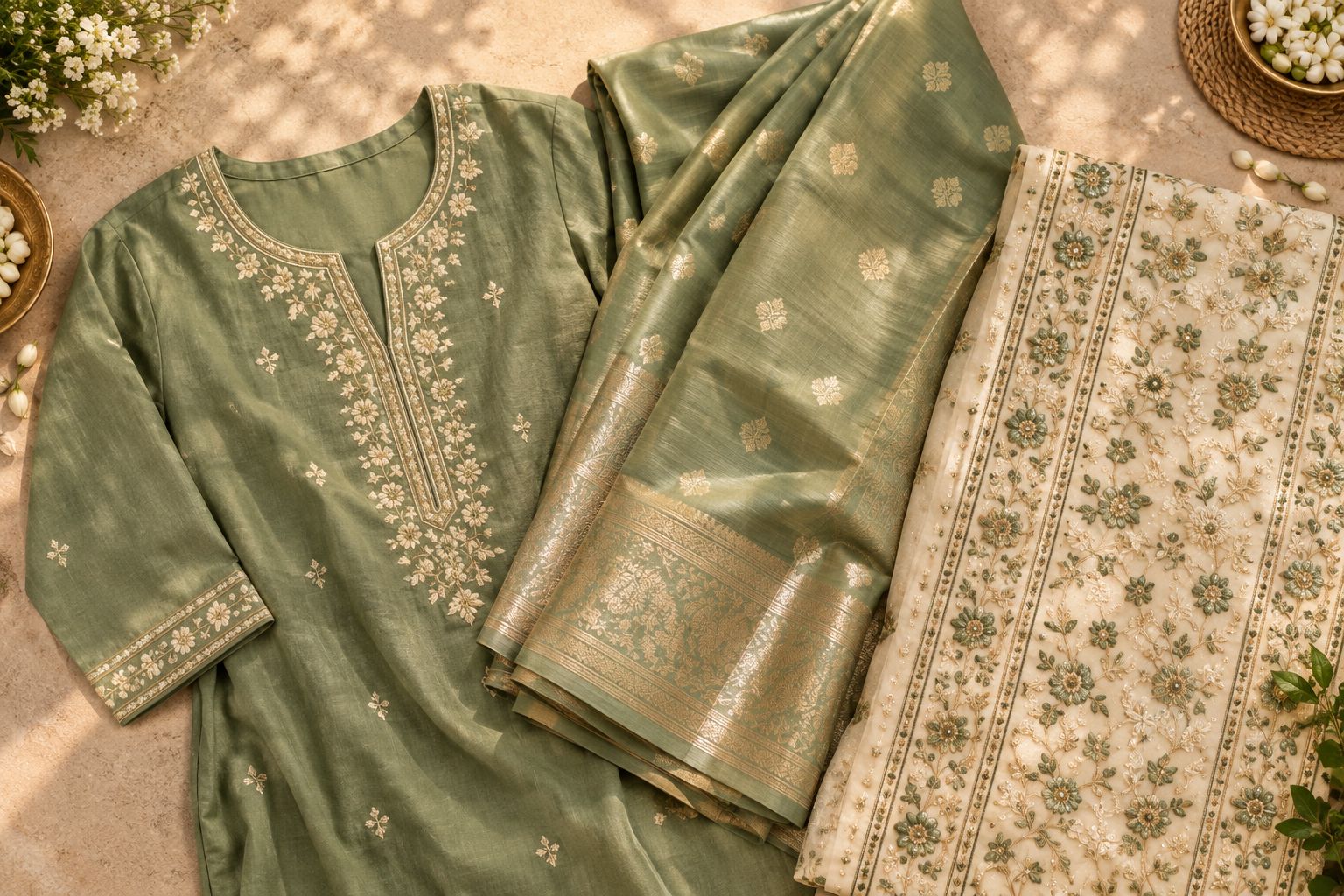
A fabric sample or existing dupatta gives you a more useful reference than a heavily edited photograph. Bring one when it is practical, and explain which feature you want to match: colour, texture or decoration.
- Check the garment’s stated fabric composition.
- Feel the lining as well as the outer fabric.
- Inspect embroidery where it touches the skin.
- Compare drape, weight and care requirements.
- Keep everyday comfort separate from occasion styling.
4. Check each person’s fit independently
Matching size labels do not create a coordinated look. Each garment needs to suit its wearer’s measurements and preferred amount of room. For plus-size shoppers, start with comfortable movement and the intended silhouette rather than choosing a smaller label or hiding behind extra fabric.
Take current measurements at home and bring details of a garment that already fits well. Discuss shoulder position, bust room, upper-arm comfort, waist placement and garment length. A saree blouse needs its own attention; the saree blouse fit checklist gives you specific points to discuss.
Do not assume that fitting facilities, alterations or a particular size are available. Confirm what you need before travelling, and ask for personal sizing help without treating the label as the final answer.
- Bring current bust, waist and hip measurements.
- Note shoulder, sleeve and preferred garment lengths.
- Mention areas where clothing usually feels restrictive.
- Compare measurements with the specific garment.
- Confirm any fitting or alteration arrangements separately.
5. Balance decoration across the group
Choose a shared level of dressiness, then allow different amounts of detail. A family can coordinate through a repeated colour even when one person prefers embroidery and another wants a plain outfit. There is no need to make every neckline, border and accessory compete for attention.
Start with jewellery and accessories already at home. Place them beside the clothing and remove pieces that introduce an unrelated colour or a different level of formality. This is especially useful when a saree border or lehenga already supplies the main decorative feature.
For children and teens, discuss comfort and personal taste rather than copying an adult outfit exactly. Confirm suitable clothing options for each family member separately; do not assume one shop carries every category or size.
- Repeat a colour through a dupatta or accessory.
- Let detailed garments remain the focal point.
- Compare jewellery against the outfit’s neckline.
- Keep shoes appropriate for the event’s activities.
- Ask younger family members what they enjoy wearing.
6. Prepare a focused store visit
Turn your choices into a short shopping brief. Bring 3 reference photos: the anchor outfit, the group colour palette and an example of the desired formality. These are planning aids, not exact designs the store must reproduce.
List who still needs clothing and who only needs an accessory or coordinating piece. For your 2026 visit, separate essentials from optional additions so the family does not lose sight of the original event brief.
The Fashion Silk offers personal help choosing outfits and sizes. Use that help to compare your brief with individual garments, and confirm current stock for the specific pieces and sizes you want before making a special trip. Ready stock in Singapore does not mean every design or size is present.
- Bring reference photos and current measurements.
- List each person’s garment needs separately.
- Include existing pieces you want to coordinate.
- Explain the event date and dress requirements.
- Confirm individual stock and any arrangements you need.
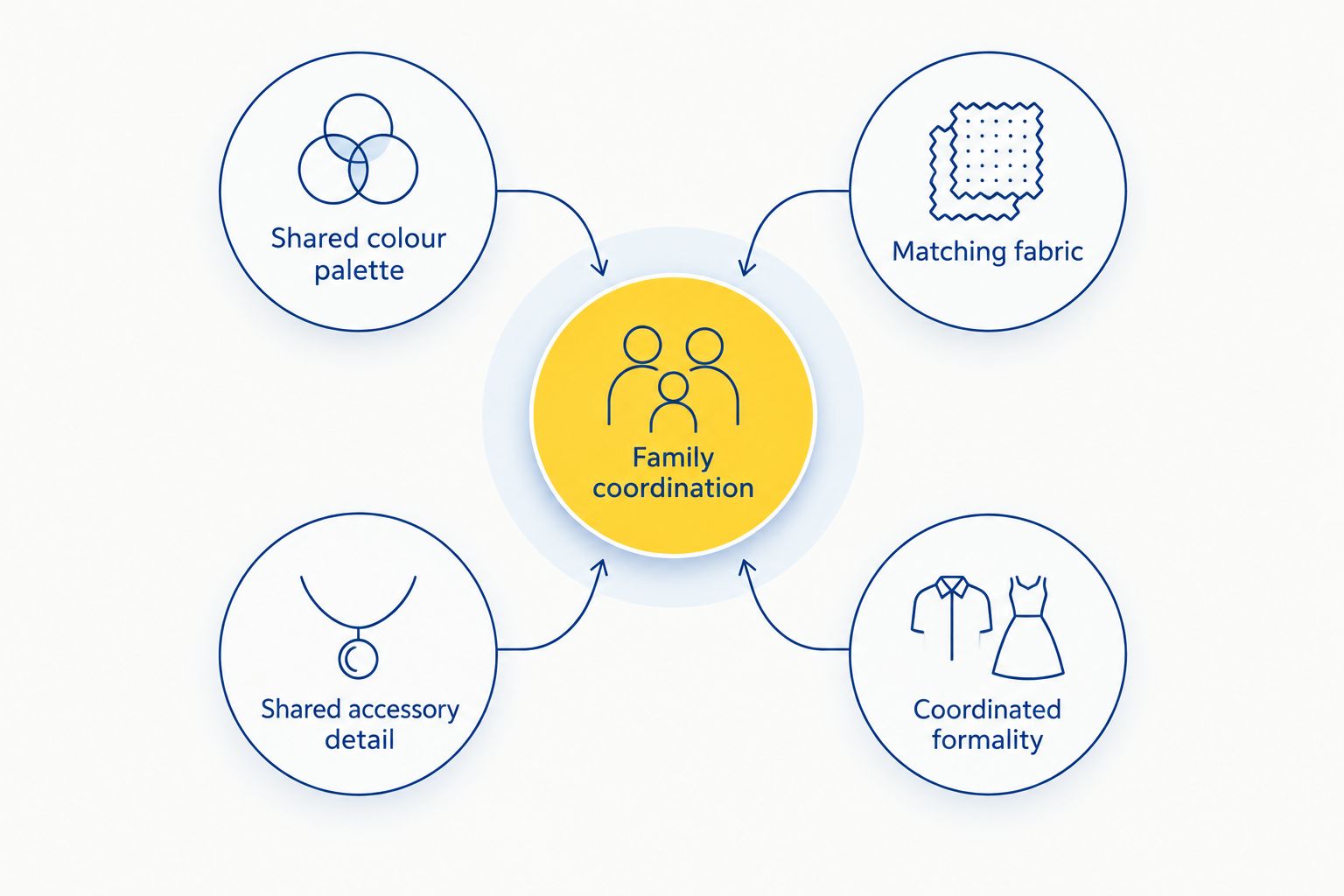
Compare family coordination options
The best approach depends on what your family already owns and how closely everyone wants to match. Choose the simplest method that gives you a clear shared look without forcing unnecessary replacements.
| Coordination option | Best for | Main advantage | Key limitation |
|---|---|---|---|
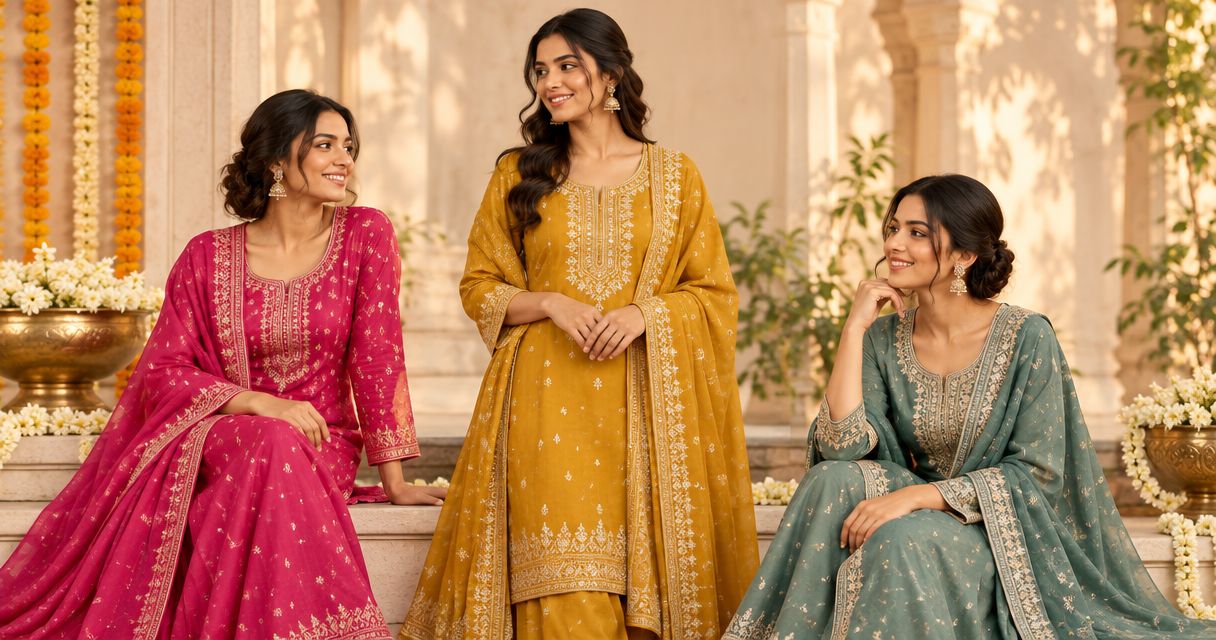
| Shared colour palette | Families with different garment preferences | Connects sarees, suits, kurtis and other outfits | Similar colour names do not guarantee matching shades |
| Matching fabric or print | Families who specifically want a uniform look | Creates an obvious visual connection | The same material or pattern will not suit every preference |
| Shared accessory detail | Families reusing existing clothing | Adds a connection without replacing every outfit | Accessories alone will not resolve a formality mismatch |
| Coordinated formality | Families with very different colour preferences | Keeps everyone appropriate for the same occasion | Produces a less visibly matched group |
| Personal shop guidance | Families comparing colours, fabrics and sizes | Helps turn a brief into individual outfit choices | Specific garments, sizes and services need confirmation |
A shared colour palette is the strongest starting point when people prefer different silhouettes. Matching fabric is a narrower choice: use it because everyone wants it, not because coordination supposedly requires it.
Common mistakes families make
Matching every garment exactly
Identical outfits are one option, not the definition of coordination. If the same cut or fabric makes someone uncomfortable, keep the shared colour and change the silhouette. A family photograph does not require everyone to dress alike.
Shopping from separate colour descriptions
Words such as green, maroon and gold cover visibly different shades. Share the same reference photo or bring a physical fabric reference where practical. Compare pieces together rather than relying on separate messages describing them.
Choosing outfits before checking the invitation
An elaborate garment does not automatically suit the event. Read the dress code and ask the host about any unclear requirements before committing to a look. Follow the occasion’s expectations rather than a generic festive outfit formula.
Leaving plus-size fit until the end
Do not build the entire family palette around garments that leave one person with unsuitable choices. Give fit-sensitive requirements attention early, then coordinate around clothing each wearer feels good in. Ask about the individual garment’s measurements, not just its size label.
Assuming one visit covers every family member
A store’s general clothing categories do not confirm every age group, garment type or size. Check the specific needs on your list before travelling. This matters especially when your plan includes clothing beyond the women’s categories described here.
Visit our Simei store
Visit The Fashion Silk, 04-K5, Eastpoint Mall, Simei, Singapore, open 10 AM–10 PM every day. The store is a destination for shoppers across Singapore, not only families living near Simei.
Bring your anchor outfit photo, measurements and event details to discuss coordinating colours, fabric preferences and individual sizing. Ask for personal outfit and sizing help, and confirm the specific garments you need before travelling. Do not assume appointment, fitting or alteration arrangements without checking.
FAQ
What is the easiest way to coordinate Indian clothes for a family?
Choose a shared colour palette while letting each person wear a preferred garment style. Start with an existing anchor outfit and repeat its colours through clothing or accessories.
Does everyone need to wear the same fabric?
No, coordinated family outfits do not require identical fabrics. Match the colour direction and level of formality, then choose each garment for the wearer’s comfort.
What should I bring when shopping for family Indian outfits?
Bring current measurements, reference photos, the invitation and details of clothes you already own. Include each person’s preferences so outfit advice addresses the whole family rather than a single photograph.
How should plus-size shoppers choose a coordinated outfit?
Choose a garment with suitable measurements and comfortable movement before matching the rest of the family. Discuss bust, upper-arm, waist and length requirements rather than relying on a size label alone.
Can we coordinate Indian outfits without buying everything new?
Yes, use an existing saree, suit or kurti as the anchor and coordinate other pieces around it. A shared accessory colour can connect outfits, provided their formality also suits the event.
Where can families ask for outfit and sizing help in Singapore?
The Fashion Silk offers personal outfit and sizing help at 04-K5, Eastpoint Mall, Simei, Singapore. The store opens 10 AM–10 PM every day; confirm specific garment and size requirements before travelling.
What should we check before shopping for a wedding in 2026?
Check the invitation, event schedule and any stated clothing requirements before choosing outfits. Then agree on a family palette and identify each person’s fit and comfort needs.
One last thing
Before your 2026 celebration, place the planned outfits together and take a simple photograph. Check whether the colours connect and whether anyone looks dressed for a different event. Fix the mismatch, not the person: change an accessory, colour or garment choice rather than asking someone to ignore discomfort.