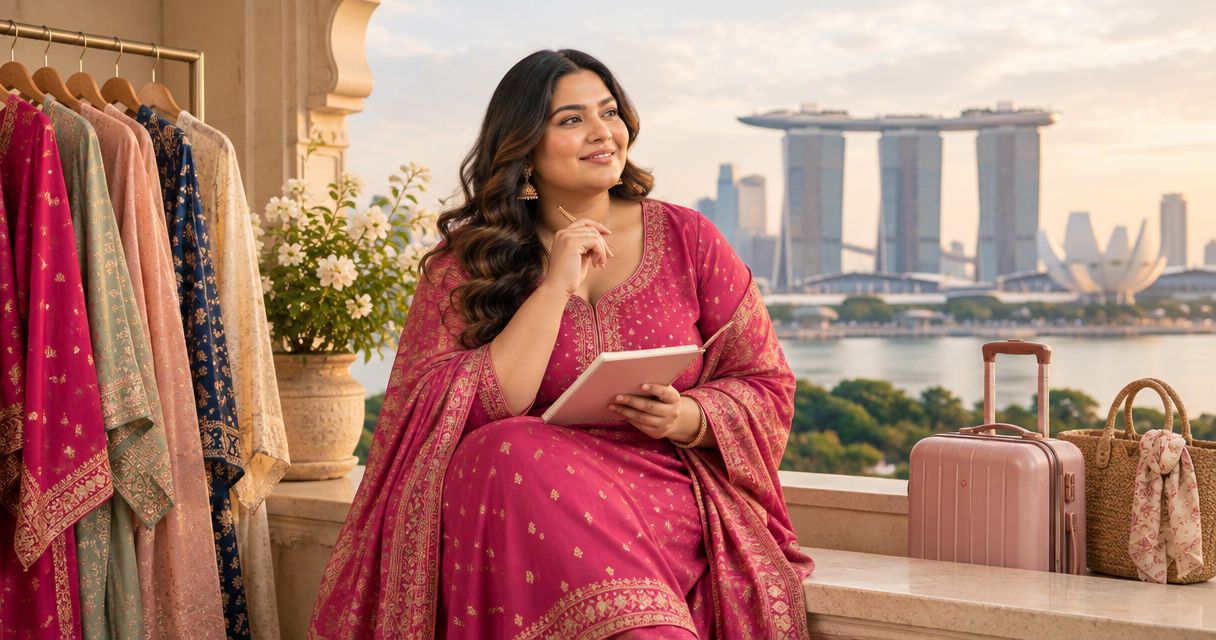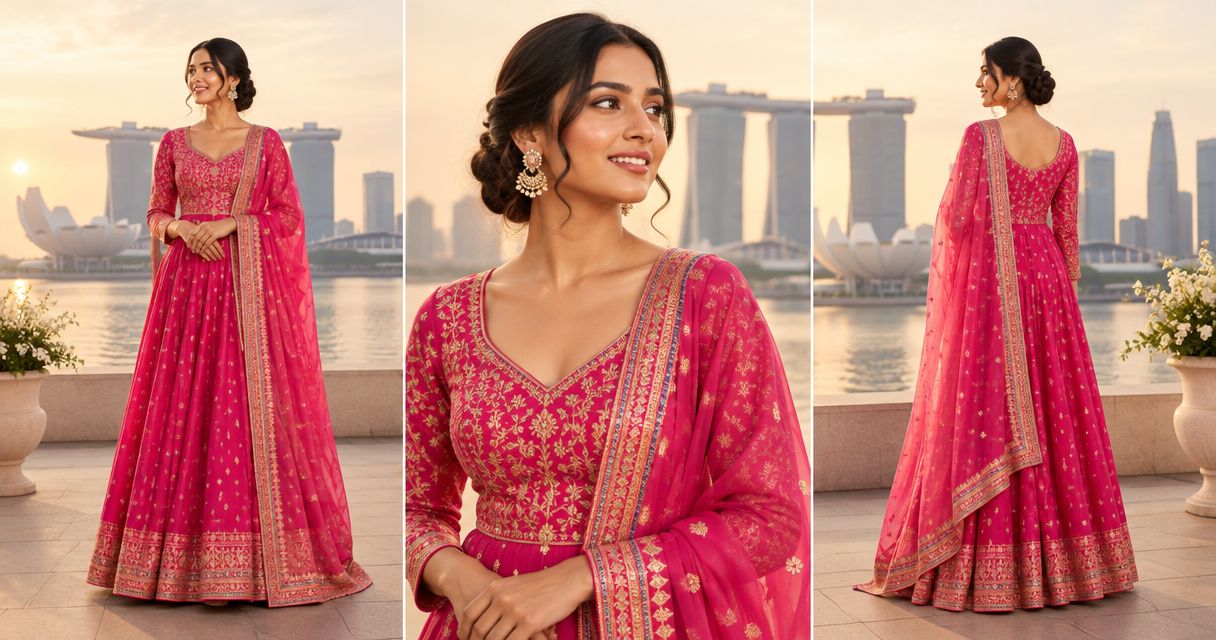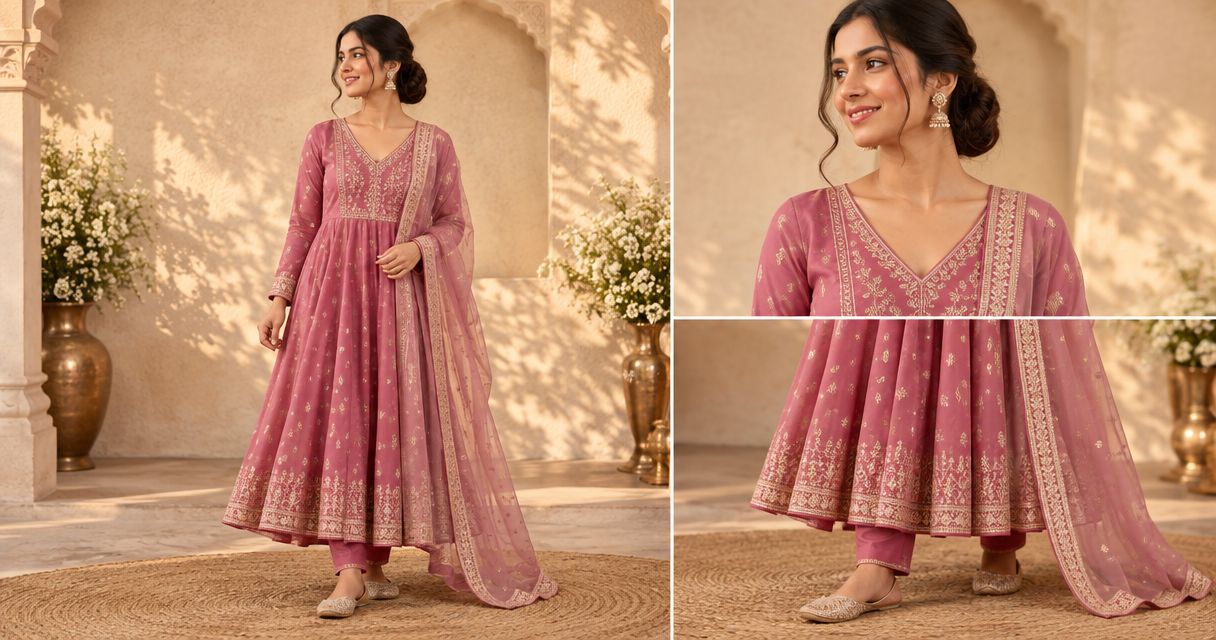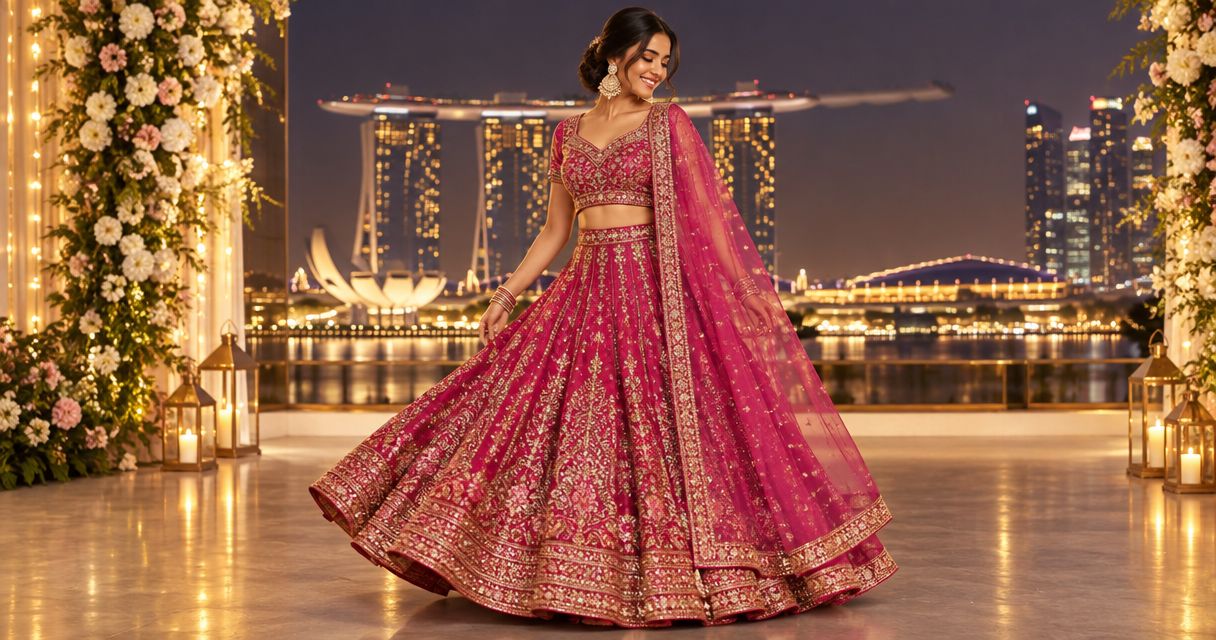
Sangeet dancers’ lehenga shopping is choosing a skirt, blouse and dupatta that let you perform comfortably while looking dressed for the celebration. For a Singapore sangeet in 2026, start with secure fit, clear footwork and manageable fabric—not the biggest skirt or the heaviest embroidery.
- For lehenga singapore searches, choose a sangeet outfit by movement and fit before decoration.
- The Fashion Silk suits Singapore shoppers seeking personal help choosing ethnic outfits and sizes.
- Check your lehenga waistband, blouse movement and dupatta placement before deciding.
- Bring your planned shoes and choreography notes to the Simei store visit.
Start your shortlist with The Fashion Silk, then use the checks below to decide what suits your dance rather than choosing from a photograph alone. A beautiful outfit still needs to work when you raise your arms, turn and sit down.
Why movement matters for sangeet dancers
A sangeet outfit has two jobs: look celebratory and let you join the performance. A skirt that looks dramatic while standing still can become awkward when your routine includes travelling steps, quick turns or a low seated pose.
Your role changes the decision. A guest joining a short family dance needs a different balance from someone performing several routines, while a bride might want a stronger visual statement without losing control of the dupatta.
Choose the outfit around the movements you will actually perform. For your 2026 celebration, discuss the venue setting, your dance role and how long you expect to stay dressed—not just the colour theme.
Choose a dance-friendly lehenga in six steps
1. Define your dance and dress requirements
Start at home with your invitation, choreography notes and outfit inspiration. Separate requirements from preferences: a family colour theme is a requirement if the organisers have requested it; a very full skirt is a preference unless the performance depends on that silhouette.
Write a short brief before visiting a shop. Include whether you are a guest, family performer or bride, plus any movements that make you concerned about coverage or security. This gives the person helping you something more useful than a request for a pretty lehenga.
Use this sequence to keep the decision practical: dance role, movement, fit and finishing details.
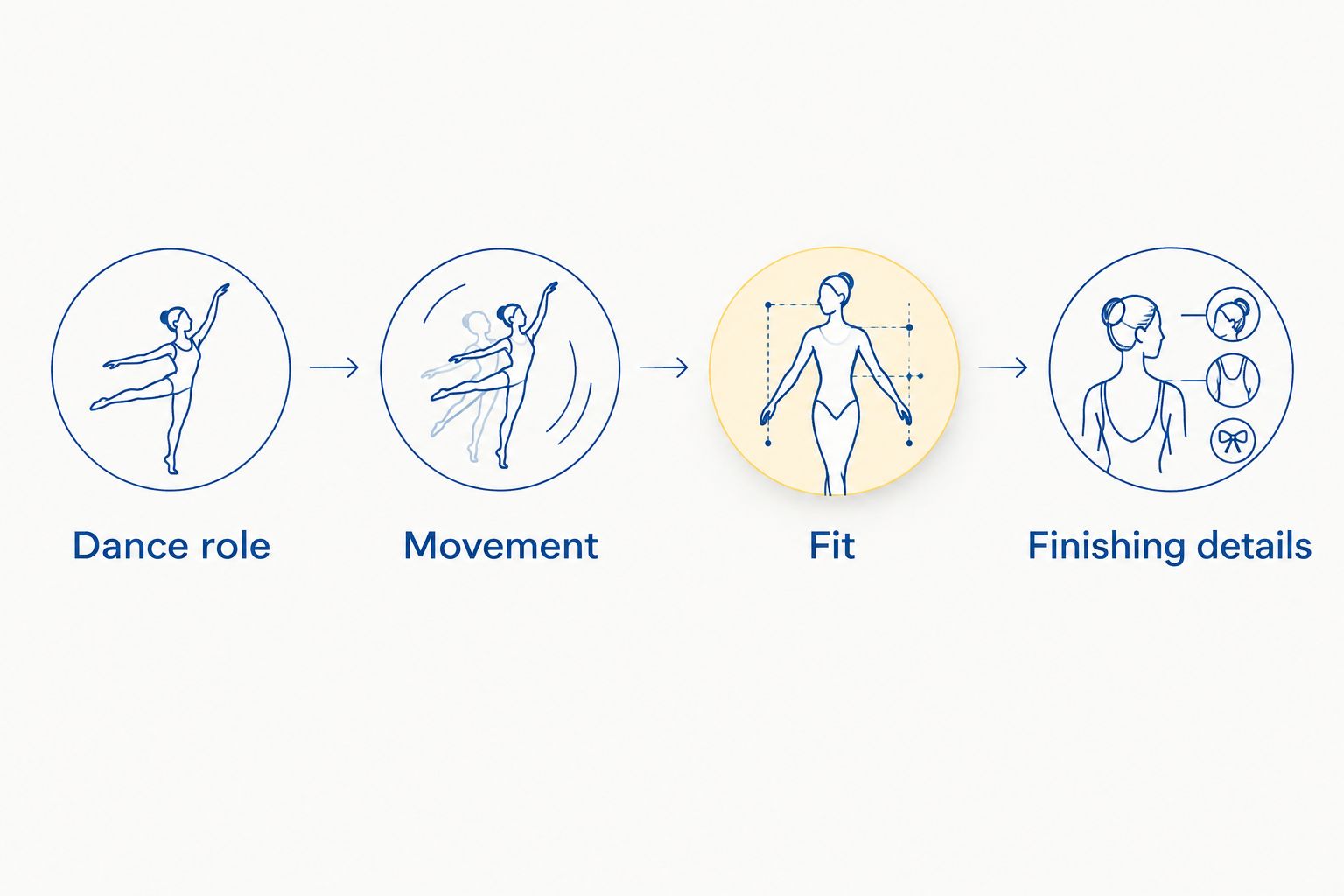
- Note your dance role and any family colour requirements.
- Identify turns, overhead arm movements and seated poses.
- Bring 2 outfit photos showing the silhouette you prefer.
- Decide which coverage details matter to you.
- Tell the shop whether comfort or a dramatic silhouette takes priority.
2. Check the waistband and skirt length
Use a well-fitting skirt at home to understand where you prefer the waistband to sit. Measure around that position without pulling the tape tight, then note the measurement rather than relying only on a familiar size label.
For a lehenga, the waistband should feel secure without making sitting uncomfortable. Check the fastening and how the skirt behaves when you change direction. Avoid solving a loose waist simply by tightening it until it digs in.
Length needs the shoes you intend to wear. A dance-friendly hem clears your footwork without requiring you to hold the skirt up throughout the routine. Ask what length options apply to the specific outfit; do not assume alterations are included or available.
- Bring 1 pair of shoes you plan to wear.
- Record your preferred waistband position.
- Check comfort while standing and sitting.
- Check forward steps, backward steps and a controlled turn.
- Ask how the fastening works before making a decision.
3. Match the blouse to your choreography
Start with a blouse you already find comfortable and notice why it works: armhole shape, neckline, sleeve length or coverage. Bring those observations to the shop instead of asking for the same labelled size in every design.
Personal outfit and sizing help at The Fashion Silk gives you a way to discuss these details alongside the skirt and dupatta. Explain your movements clearly; choosing a larger blouse is not a substitute for checking where the garment restricts you.
Use the guide to choosing a lehenga in Singapore for a wedding for the broader occasion decision, then apply a stricter movement check for your sangeet performance. Confirm any fitting arrangements directly before relying on them.
- Note your preferred neckline and sleeve coverage.
- Explain whether the routine includes overhead arm movements.
- Ask about the blouse’s fastening and construction.
- Check whether the neckline shifts when you move, where assessment is possible.
- Discuss fit at the bust, shoulders and upper arms separately.
4. Compare the whole garment, not just the fabric name
Begin by looking at garments you own and enjoy wearing. Notice whether you prefer a soft drape, a crisp shape or a smooth lining against your skin. Those preferences are more useful than treating one fabric name as an automatic guarantee of comfort.
Cotton, silk, net and other fabric descriptions do not tell you everything about a finished lehenga. Lining, embroidery, borders and underskirt construction also affect how it feels and moves. Check the actual garment’s composition and care information rather than judging from shine alone.
For a 2026 sangeet shortlist, compare the complete skirt assembly, including any inner layers. If a piece feels cumbersome before dancing, treat that as a reason to reassess it—not something the photographs will compensate for.
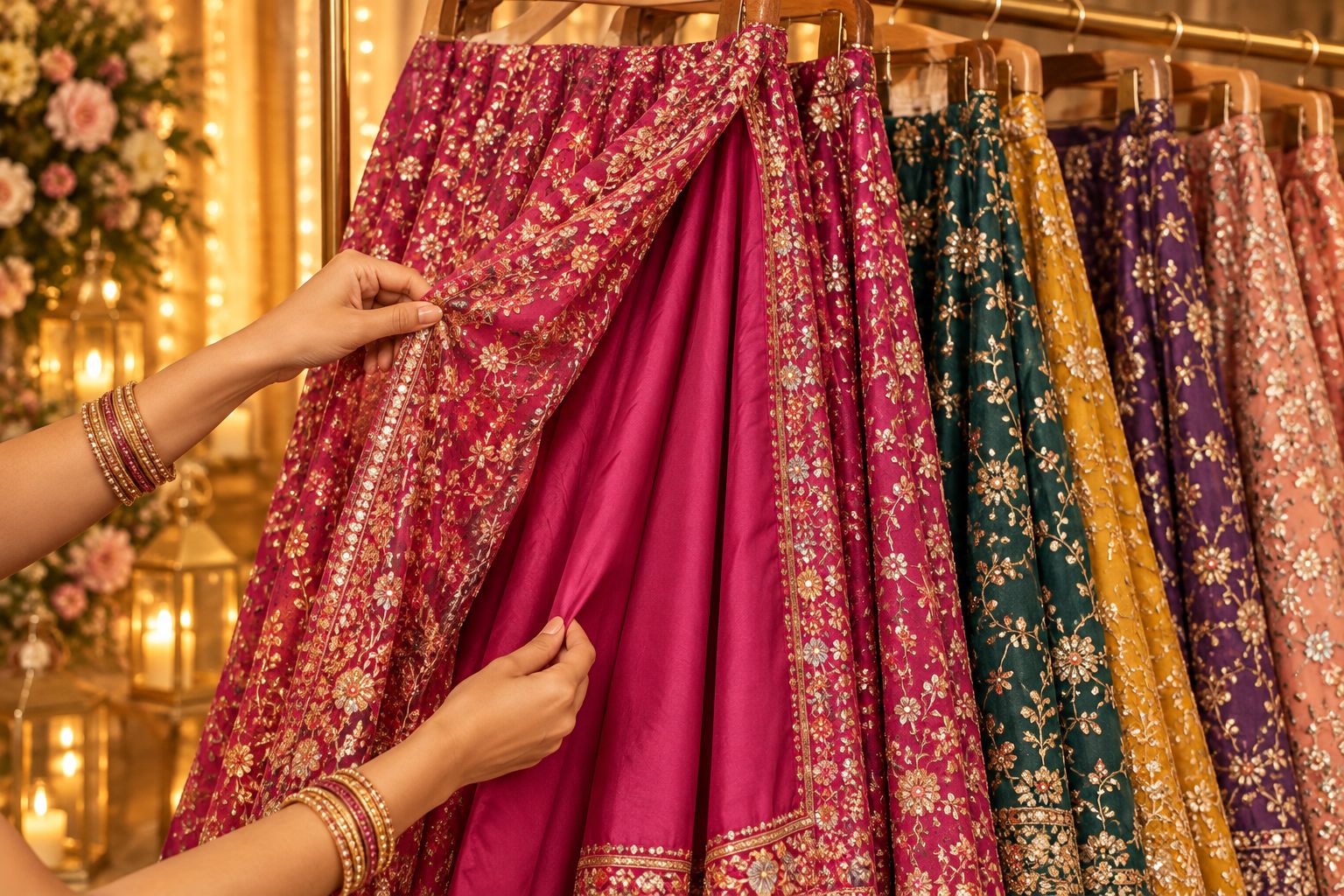
- Ask for the garment’s stated fabric composition.
- Inspect the lining and any stiff inner layers.
- Check the inside of embroidered areas for uncomfortable contact.
- Notice whether the border pulls heavily at the hem.
- Read the care instructions before committing.
5. Plan a secure dupatta and restrained accessories
Use your choreography at home to identify where fabric or jewellery could interrupt the routine. A long loose end might suit a portrait but require a different arrangement for dancing. Decide whether you want a shoulder drape, a more contained arrangement or another style that meets your coverage needs.
Ask for guidance on arranging the dupatta with the specific blouse and skirt. Check whether its border catches on embellishment, and discuss suitable securing methods without assuming every fabric tolerates pinning equally well.
Keep jewellery decisions equally practical. You do not need to remove all decoration; you need pieces that do not distract you from the performance. Make the complete outfit work together rather than selecting each accessory in isolation.
- Explain your preferred dupatta coverage.
- Identify loose ends that cross your hands or feet.
- Check jewellery against the neckline and sleeve decoration.
- Avoid stacking accessories where they interrupt wrist movement.
- Ask how to secure the arrangement without damaging the fabric.
6. Rehearse the complete outfit before the event
After purchase, rehearse carefully at home in the complete outfit, following its care requirements. Shoes, jewellery and the dupatta can change how a familiar routine feels, so a skirt-only check is not enough.
Use 3 movements as your minimum check: an arm raise, a controlled turn and a seated position. These are a starting point, not a replacement for your actual choreography. Stop if anything catches, slips or feels restrictive, then resolve the problem before the event.
For coordinated family performances in 2026, compare colour balance without requiring everyone to wear the same cut. Each dancer still needs an outfit suited to their own proportions and movement.
- Recheck the waistband with the blouse and dupatta in place.
- Practise your actual travelling steps in the intended shoes.
- Confirm that fabric stays clear of your feet.
- Check coverage during your most demanding movement.
- Reassess accessories that catch or distract.
- Share any unresolved fit concern before the celebration.
Compare lehenga options for your sangeet
There is no single best silhouette for every dancer. Use these options as shopping directions, then judge the construction of the actual garment. A softly draped skirt can still have a heavy border, and a structured skirt still needs a workable hem length.
| Option | Best for | Main advantage | Key limitation to check |
|---|---|---|---|
| Softly draped lehenga | Dancers prioritising easy movement | Fabric can follow the body without a rigid silhouette | Fullness and length still need checking around the feet |
| Structured, fuller lehenga | Shoppers prioritising a defined occasion silhouette | Holds a more pronounced skirt shape | Inner layers can make sitting and close steps awkward |
| Lehenga with concentrated embroidery | Shoppers wanting a decorative focal point | Decoration can be focused on selected areas | Borders or panels can pull unevenly; inspect the whole skirt |
| Lehenga with a contained dupatta arrangement | Performers wanting fewer loose ends | Keeps the styling more controlled during movement | The arrangement must still meet coverage needs and stay comfortable |
The Fashion Silk offers personal help choosing outfits and sizes, which is useful when comparing these details in person. The limit is garment-specific: a recommendation still needs to match your movement, coverage preferences and fit. Personal advice supports the choice; it does not replace checking the outfit itself.
Common mistakes sangeet dancers make
Choosing the twirl before checking the footwork
A full skirt creates a striking shape, but your routine might involve small steps, close formations or frequent direction changes. Check those movements first; treat the twirl as one part of the decision rather than the whole test.
Assuming a larger size solves restricted movement
A blouse can feel restrictive in one area and loose in another. Explain exactly where it pulls instead of increasing the size automatically. For plus-size shoppers, discuss upper-arm comfort, bust fit, waistband security and preferred coverage as separate needs.
Buying the dupatta as an afterthought
The dupatta is part of the dance outfit, not just a finishing layer. Decide how you want to wear it before choosing jewellery or committing to a blouse neckline that depends on a particular drape.
Matching every family member identically
A shared colour family or embroidery detail can connect the group without forcing everyone into the same silhouette. Discuss each person’s dance role, comfort and coverage preferences before deciding how closely the outfits should match.
Visit our Simei store
Visit The Fashion Silk, 04-K5, Eastpoint Mall, Simei, Singapore. The store is open 10 AM–10 PM every day and welcomes shoppers from across Singapore seeking help choosing occasion outfits.
For your 2026 sangeet shopping visit, bring your planned shoes, outfit inspiration and notes about the performance. Ask for personal outfit and sizing help, especially if you are balancing blouse coverage, skirt movement and a coordinated family look.
Discuss your preferred fabrics, budget and any fit concerns early. Confirm details for the specific outfit directly, including any fitting or alteration arrangements you need; do not plan around an unconfirmed service.
FAQ
What is the best lehenga for dancing at a sangeet?
The best sangeet lehenga is one with a secure waistband, workable hem length and a blouse that allows your choreography. Compare the complete garment, including its lining, inner layers and dupatta, rather than choosing by decoration alone.
Is a lightweight lehenga always better for dancing?
Weight alone does not decide whether a lehenga is suitable for dancing. A secure fit, clear footwork and a controlled dupatta matter too; check the actual garment rather than relying on its fabric description.
What should I bring when shopping for a sangeet lehenga in Singapore?
Bring your intended shoes, outfit inspiration and notes about your dance movements. Add any family colour requirements and explain your coverage preferences so the shopping advice matches the celebration.
How should a plus-size sangeet lehenga fit?
A plus-size sangeet lehenga should feel secure at the waist without restricting sitting, while the blouse should accommodate your arm movements. Discuss the bust, shoulders, upper arms and waistband separately rather than relying on a size label alone.
Can our family coordinate outfits without wearing matching lehengas?
Yes, a shared colour family or repeated decorative detail can coordinate different silhouettes. Choose each person's fit and movement requirements first, then connect the outfits through selected styling details.
Where can I get personal help choosing a sangeet outfit in Singapore?
The Fashion Silk provides personal help choosing outfits and sizes at 04-K5, Eastpoint Mall, Simei, Singapore. The store opens 10 AM–10 PM every day; bring your shoes and performance notes to make the discussion practical.
One last thing
Choose for the transition between poses, not only the pose itself. A lehenga needs to work when you step into position, change direction and sit down—not just when you pause for a photograph. Make that your final buying check before choosing the decoration you love.