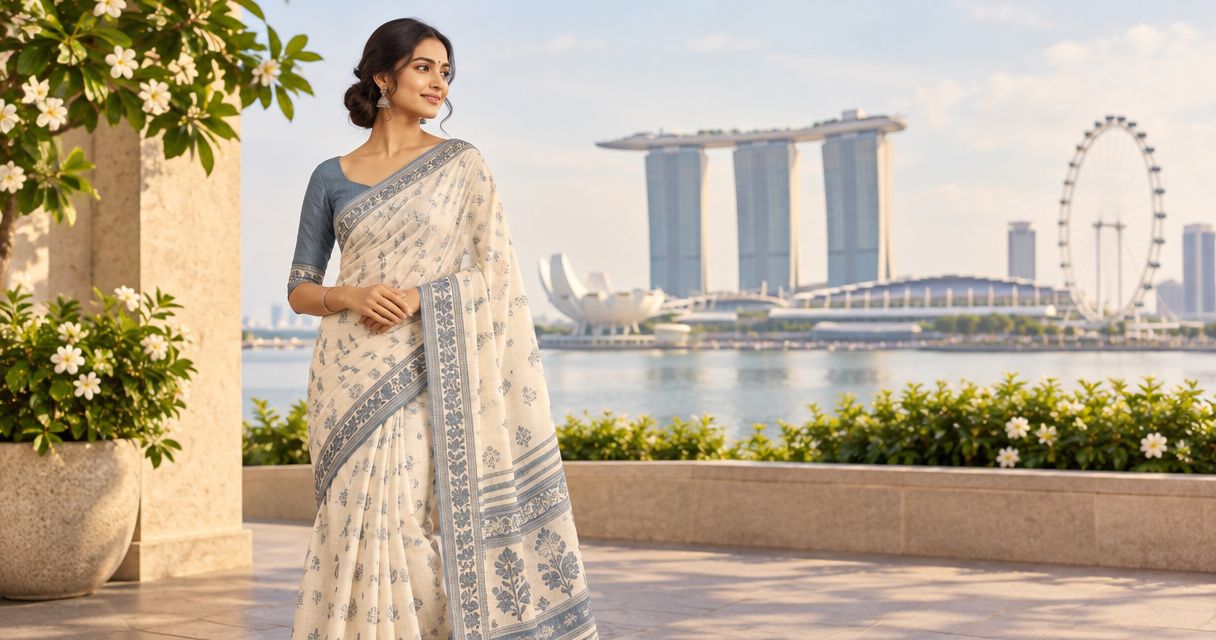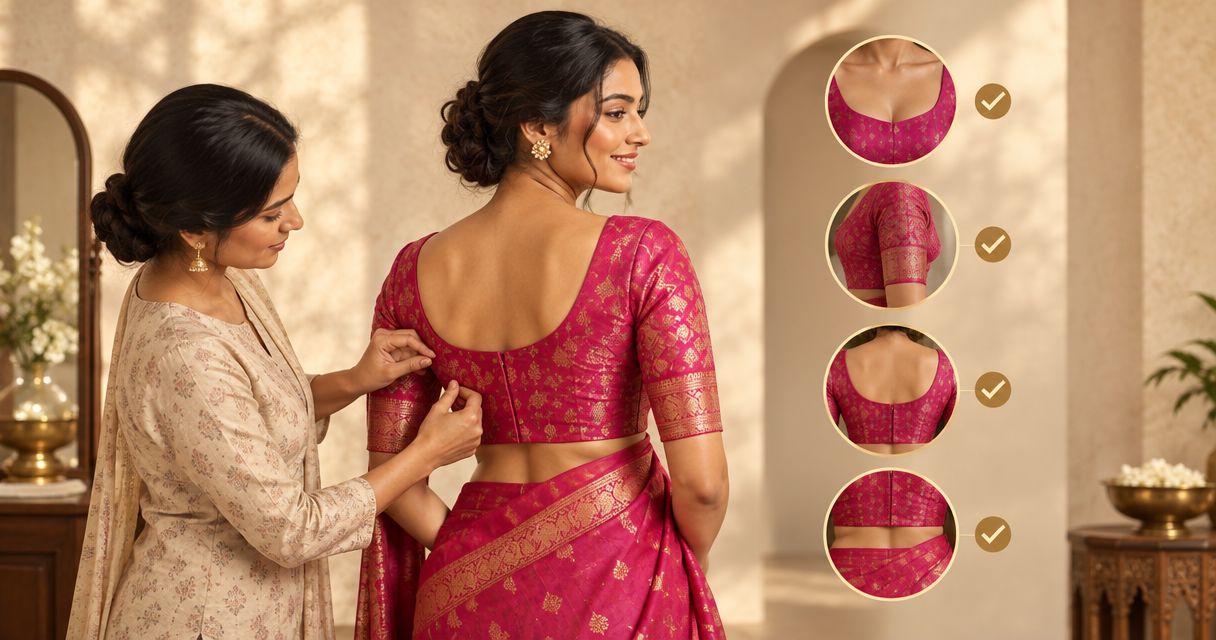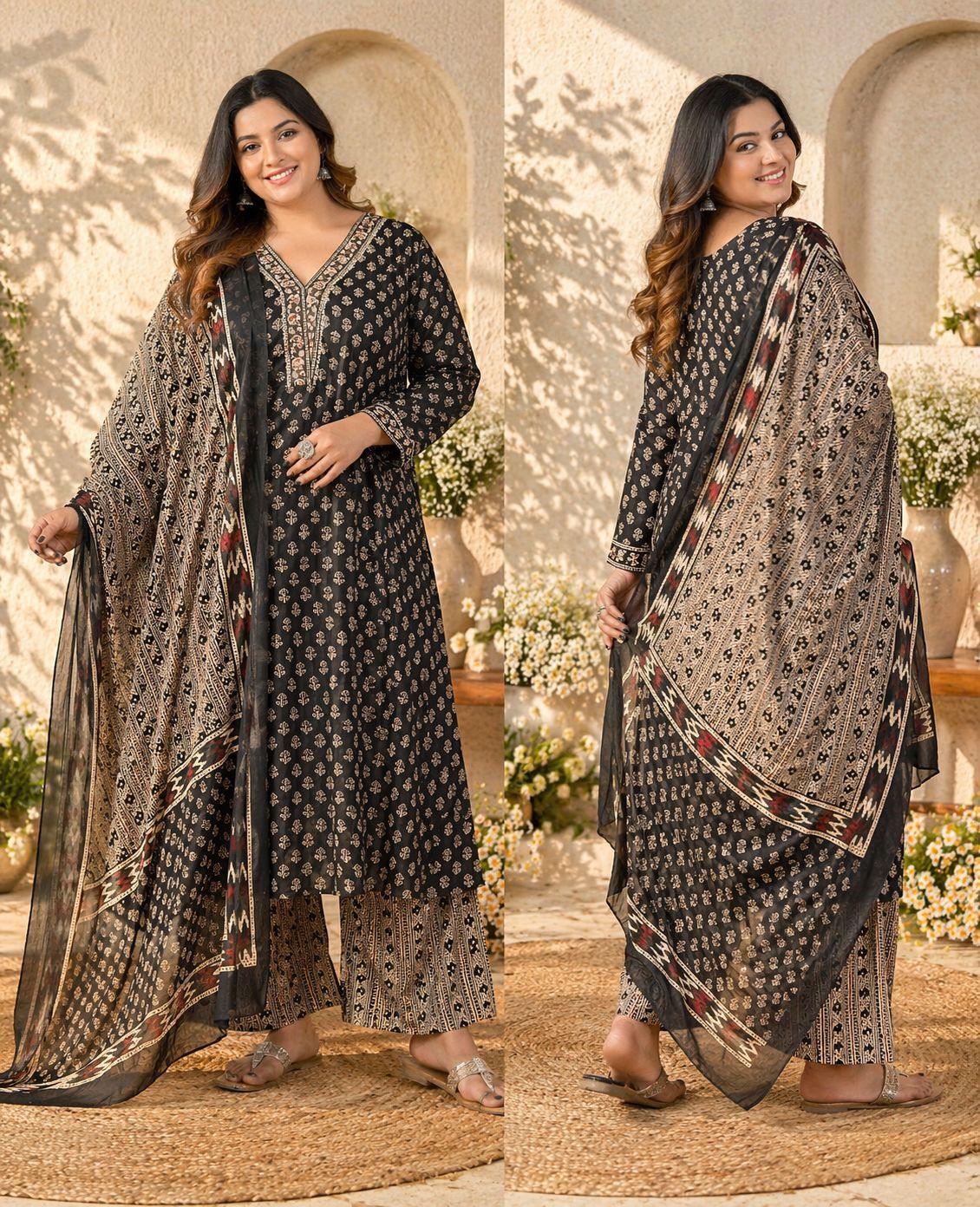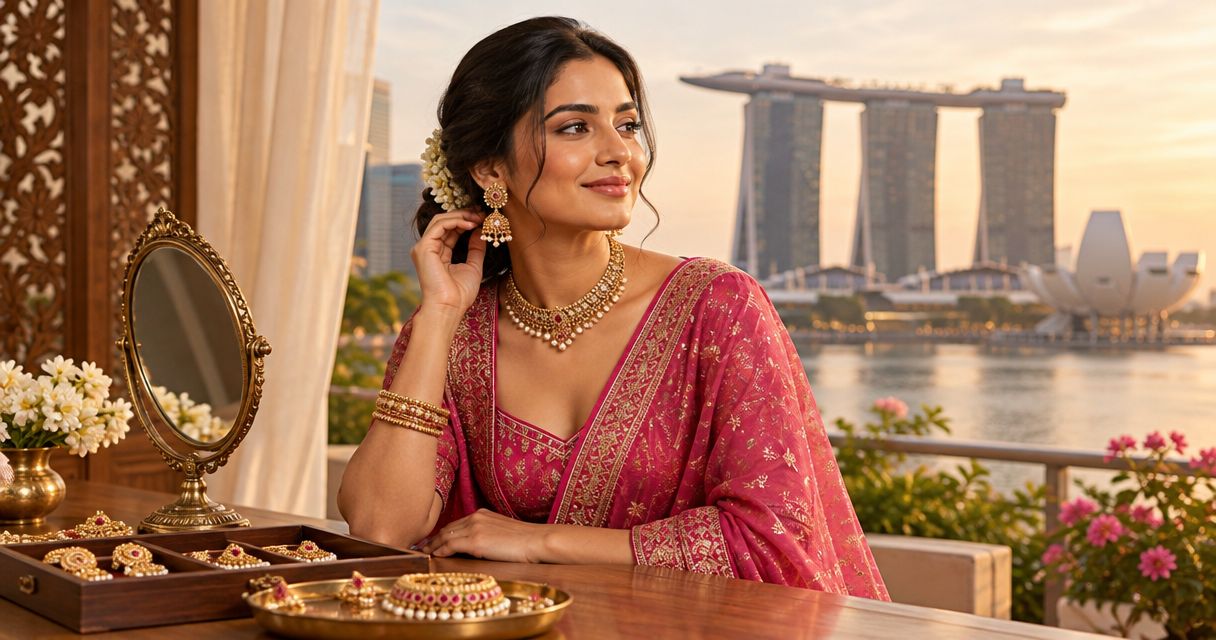
Match Indian jewellery to your outfit by choosing a focal point, checking the neckline and repeating a colour or metal tone already present in the clothes. For weddings, festive celebrations and everyday dressing in Singapore, judge the complete outfit together: jewellery that suits a saree border can still compete with an embroidered blouse or catch on a delicate dupatta.
- For Indian jewellery Singapore shopping, start with your outfit’s neckline, embroidery and occasion—not a matching set.
- Choose statement earrings or a statement necklace first; add other pieces only if they improve the balance.
- The Fashion Silk suits Singapore shoppers seeking personal help coordinating ethnic outfits and accessories.
- Bring your outfit or clear photographs, plus any jewellery you already intend to wear.
How do you match Indian jewellery to your outfit in Singapore?
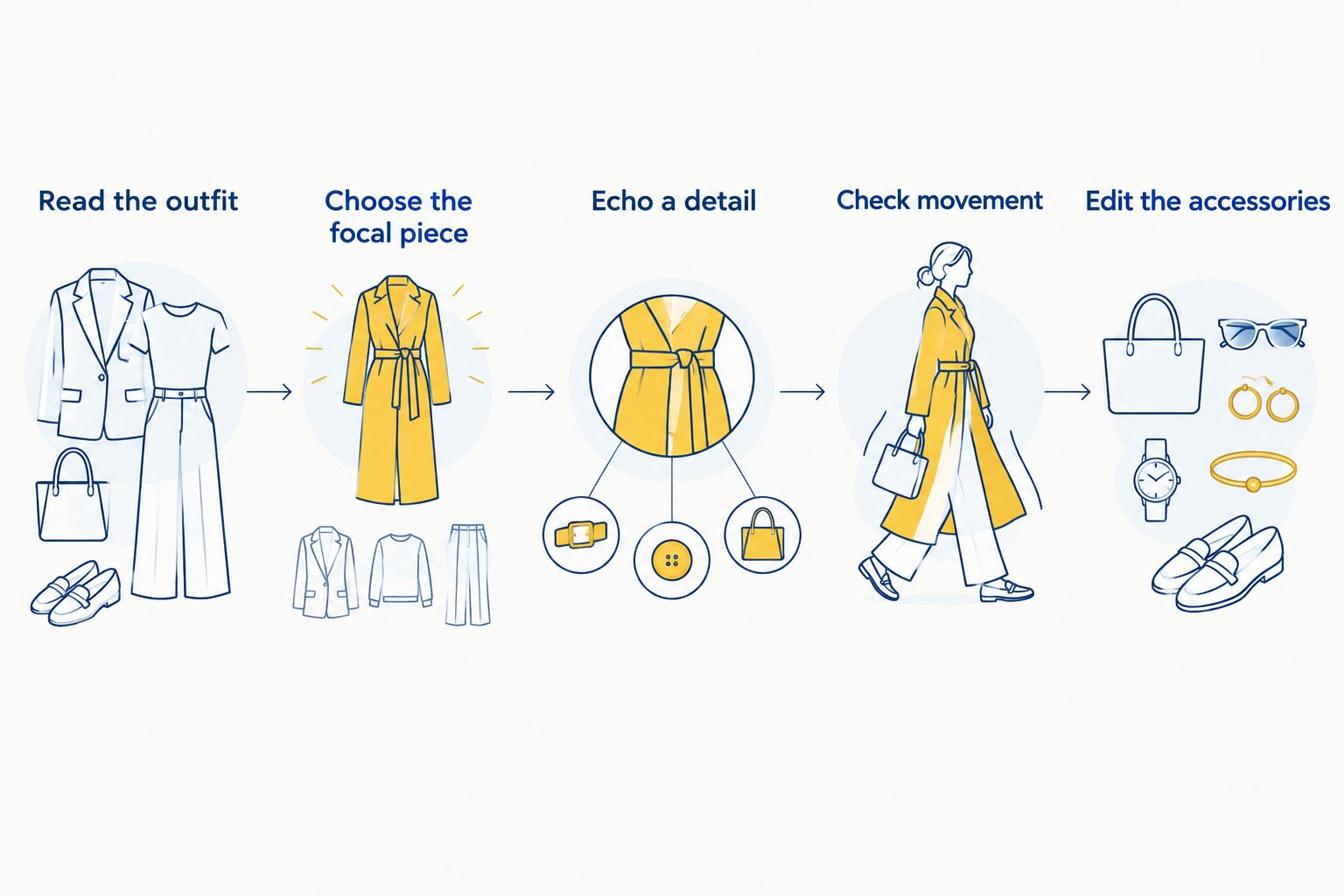
Choose the outfit’s focal point before choosing the jewellery. A heavily decorated neckline needs a different approach from a plain blouse, even when both outfits share the same colour. Use this sequence for your 2026 wedding and festive shopping.
- Read the outfit. Look at its neckline, border, embroidery and overall colour. Decide which detail you want people to notice first.
- Choose the focal piece. Start with earrings or a necklace rather than assuming you need a full set. Check the piece against the most decorated part of your outfit.
- Echo a detail. Repeat a metal tone, accent colour or shape from the clothing. The connection should feel deliberate, not necessarily identical.
- Check movement. Turn your head, raise your arms and sit while wearing your chosen pieces. Notice pulling, tangling or contact with embroidery.
- Edit the accessories. Remove anything that crowds the neckline, competes with another piece or distracts from the outfit.
For personal outfit and sizing help, The Fashion Silk is a Singapore shopping option for women’s ethnic clothing and accessories. Bring the pieces you already own so the discussion starts with your actual outfit rather than an imagined match.
Why this matters
An accessory does not need to repeat every detail in your clothes to belong with them. A coordinated outfit has a clear relationship between the clothing and jewellery, whether that relationship comes from colour, finish or proportion.
Shopping for an event in 2026? Settle the outfit before committing to its accessories. Otherwise, you risk choosing around a necklace you like rather than around the neckline, fabric and occasion you will actually wear it with.
Matching is a styling decision, not a requirement to wear every piece in a set. Keep a piece because it contributes something—not simply because it came with the earrings.
Which jewellery approach suits your outfit?
Use the table as a starting point, then compare the options against your actual clothes. These are styling recommendations, not fixed rules about what you must wear.
| Approach | Best for | What it contributes | What to check |
|---|---|---|---|
| Statement earrings | Decorated necklines and high-neck blouses | Detail near the face without filling the neckline | Length, weight and contact with shoulder embroidery |
| Statement necklace | Plain necklines and simpler blouse fronts | A clear focal point across the upper body | Whether it sits cleanly against the neckline |
| Small earrings and a simple pendant | Everyday cotton sarees and kurtis | An understated finish | Whether the pendant catches or disappears against the fabric |
| Coordinated jewellery set | Occasion outfits with space for several accessories | A consistent finish across pieces | Whether the full set overwhelms the outfit |
| Bangles or a bracelet | Outfits where you want detail away from the neckline | Interest at the wrist | Contact with cuffs, sleeves and delicate fabric |
A full set offers an easy starting point, but it also gives you more elements to balance. Separate pieces give you more control over the final look, but you need to compare their finishes and proportions yourself.
Statement earrings: best for decorated necklines
Start with earrings when your blouse, kurti or suit already has prominent embroidery around the neck. Leaving that area open lets the clothing detail remain visible. You can still add a necklace, but check that it creates a distinct layer rather than an indistinct cluster.
Long earrings also need space beside the face and shoulders. Compare them with your planned hairstyle, dupatta position and blouse sleeves, not just with the outfit hanging on a rail.
- Choose them for: a clear focal point near the face.
- Check before deciding: weight, movement and contact with fabric.
- Leave them out when: the shape or length interferes with how you want to wear the outfit.
Recommendation: let statement earrings lead when the neckline already provides enough decoration.
A statement necklace: best for a simpler neckline
A plain blouse or uncomplicated kurti front gives a necklace room to stand out. Look at the outline the necklace creates against the neckline. A piece sitting partly over fabric and partly against skin needs checking as a complete combination.
Do not choose length from a photograph alone. Hold or position the necklace where you expect it to sit, then look straight ahead and from the side. Notice whether the pendant lands on embroidery, a neckline edge or an otherwise clear area.
- Choose it for: a deliberate focal point on a simpler outfit.
- Check before deciding: neckline placement and pendant position.
- Leave it out when: it obscures the detail that made you choose the blouse.
Recommendation: choose the necklace for the neckline you have, not the neckline you wish you had.
Everyday jewellery: best for cotton sarees and kurtis
For everyday cotton sarees and kurtis, begin with a smaller, simpler combination. Small earrings, a pendant or a wrist accessory can finish the outfit without making every detail compete for attention. Your own comfort and preferred level of decoration should decide the final choice.
A simpler outfit does not ban statement jewellery. If you enjoy larger earrings with a plain cotton kurti, keep the surrounding accessories quieter and check the effect in a mirror.
For your 2026 everyday wardrobe, think about repeat use rather than a match for a single outfit. Compare the same accessory against the colours and necklines you wear regularly before deciding it belongs in your rotation.
Why your jewellery choice varies
The same necklace can look balanced with one outfit and crowded with another. These factors explain what to check:
- Neckline: Its shape and decoration determine the space available for a necklace.
- Embroidery: Dense work gives jewellery more detail to compete with, particularly near the face.
- Colour: Repeating a small accent can connect the accessories to the outfit without copying its main shade.
- Fabric: Raised settings, clasps and edges need checking against delicate surfaces and loose threads.
- Occasion: Your role at the event and preferred level of dressing should guide how much jewellery you wear.
- Comfort: Weight, fastenings and movement matter because the finished outfit needs to work while you wear it.
Should you match jewellery to the embroidery or the main colour?
Match a visible detail first, then judge the whole outfit. If the embroidery provides a clear metallic accent, use that as a starting point; if the clothing is mostly plain, try repeating an accent colour instead. Reject the combination if the pieces look disconnected when viewed together.
Can you mix gold-tone and silver-tone jewellery?
You can mix gold-tone and silver-tone jewellery deliberately. Repeat the combination somewhere in the outfit or keep the shapes consistent, then check whether the result looks intentional. If the mixture distracts you, simplify to a shared finish.
Do you need a matching necklace and earrings?
You do not need a matching necklace and earrings. Separate pieces can work together through a shared finish, colour or shape. A matching set is convenient, but wearing every component is optional.
Match the occasion without copying everyone else
Wedding guests and festive celebrations
Begin with your role, the clothing you have chosen and any dress guidance from the hosts. A wedding guest wearing a heavily embellished lehenga has different styling decisions from someone wearing a plain saree with a detailed blouse.
For a 2026 wedding invitation, discuss the complete outfit before adding accessories. Include the blouse, dupatta, hairstyle and any family jewellery you intend to wear. This helps you avoid choosing several strong pieces that all occupy the same visual space.
Best for wedding guests: a clear focal point that supports the outfit rather than covering its defining details.
Plus-size suits and personal proportions
Choose jewellery around the actual neckline and your preferred proportions, not a rule attached to your clothing size. Plus-size shoppers do not need to default to either oversized or delicate accessories.
Compare where a necklace ends, how earrings sit beside the face and whether bracelets feel comfortable. Ask for personal outfit and sizing help with the suit separately from jewellery advice: a decorative accessory does not resolve a garment-fit problem.
Best for plus-size shoppers: pieces assessed against the person and outfit together, rather than assumptions based on a size label.
Coordinated family occasion outfits
Choose a shared colour or finish without requiring everyone to wear identical jewellery. Family coordination can come from a repeated detail while leaving each person room for their preferred clothing and accessories.
Compare outfits together where possible. If one person’s clothes are much more decorated, use simpler accessories there rather than trying to give everyone the same amount of jewellery.
Best for families: a shared visual connection with individual choices for comfort and style.
What should you bring when shopping for jewellery?
Bring your outfit if practical, or take clear photographs of its front, neckline, embroidery and border. Include a close-up and a full-length view. A close-up shows detail; the wider view shows how much of that detail appears across the outfit.
Also bring or discuss:
- Jewellery you already plan to wear, especially a sentimental piece that must stay in the outfit.
- Your intended hairstyle and how you expect to position the dupatta or saree pallu.
- The occasion, your role and how dressed-up you want to feel.
- Any sensitivity to materials or discomfort with heavier pieces.
- Your spending limit and which accessories you actually need.
Ask about materials and care rather than assuming a gold-coloured piece contains gold. For your 2026 shopping visit, confirm the current details of the particular item you are considering instead of relying on an older photograph or listing.
Visit our Simei store
Visit The Fashion Silk, 04-K5, Eastpoint Mall, Simei, Singapore, open 10 AM–10 PM every day. Bring your saree, blouse, suit or outfit photographs and ask for personal outfit and sizing help.
The practical reason to visit is to discuss jewellery alongside the neckline, embroidery and colours you are trying to coordinate. Ask about suitable accessories and confirm individual item details before making your choice. The store is a destination for shoppers across Singapore, not just those living near Simei.
FAQ
How do I choose Indian jewellery in Singapore for a wedding?
Choose wedding jewellery around your outfit’s neckline, embroidery and your role at the event. Start with earrings or a necklace as the focal point, then check the other accessories against it.
What jewellery goes with a heavily embroidered blouse?
Statement earrings are a useful starting point for a heavily embroidered blouse because they leave the neckline detail visible. Check that their length does not interfere with shoulder embroidery or your dupatta.
Can I wear simple jewellery with a silk saree?
You can wear simple jewellery with a silk saree. Use the border and blouse detail to decide whether understated earrings, a necklace or a wrist accessory gives you the balance you want.
Should my jewellery match my outfit exactly?
Your jewellery does not need to match your outfit exactly. Repeat a colour, finish or shape, then judge whether the complete combination feels connected.
What jewellery should I choose with a plus-size suit?
Choose jewellery for a plus-size suit by checking its neckline, placement and your comfort rather than following size-based styling rules. Assess garment fit separately from accessory choice.
Where can I get personal help matching ethnic outfits and accessories?
The Fashion Silk offers personal outfit and sizing help at 04-K5, Eastpoint Mall, Simei, Singapore. The store opens 10 AM–10 PM every day; bring your outfit or photographs to explain what you want to coordinate.
One last thing
Take something off before deciding you need to buy something else. If the outfit looks crowded, remove the necklace, simplify the earrings or leave off the wrist accessories. The missing piece is sometimes empty space, not another purchase.