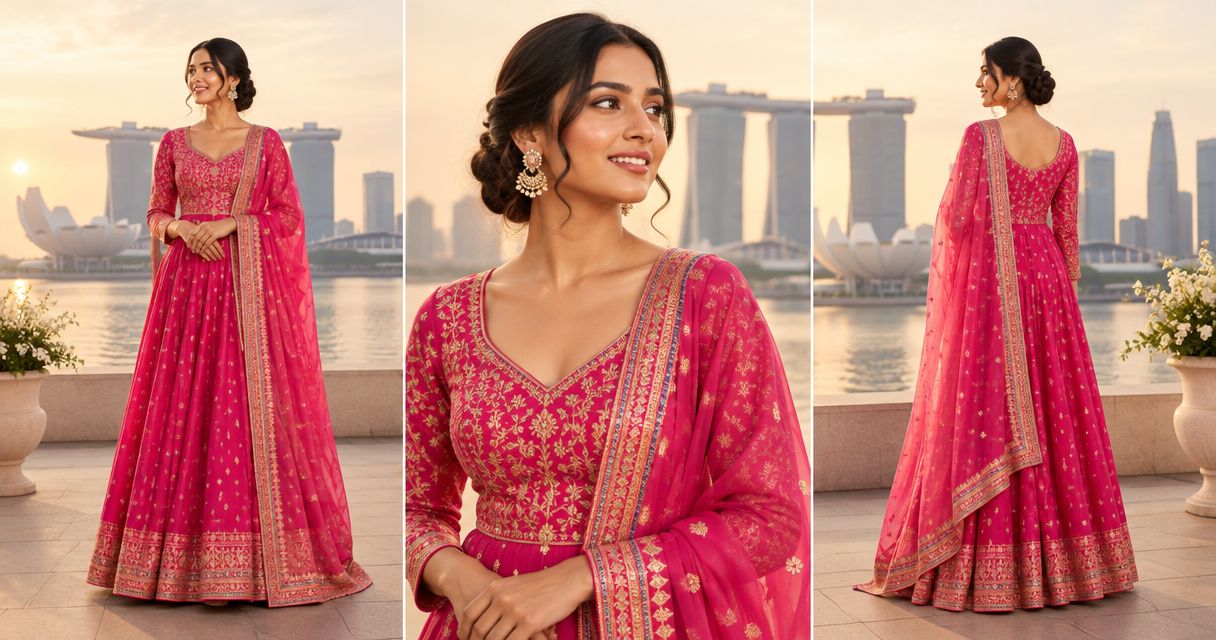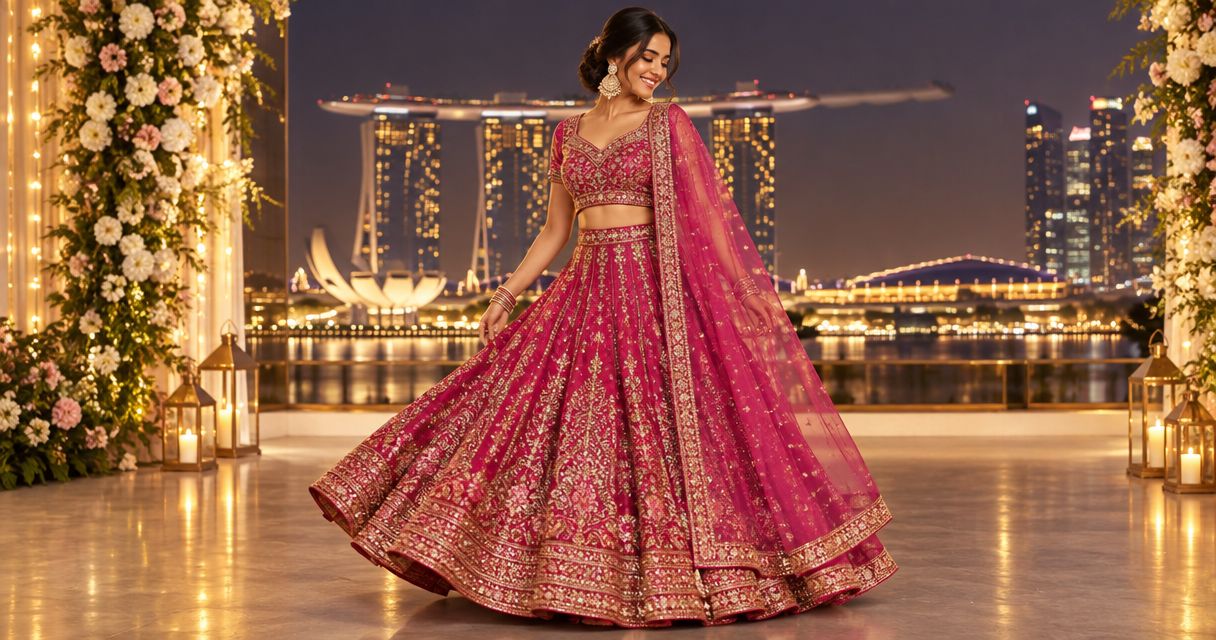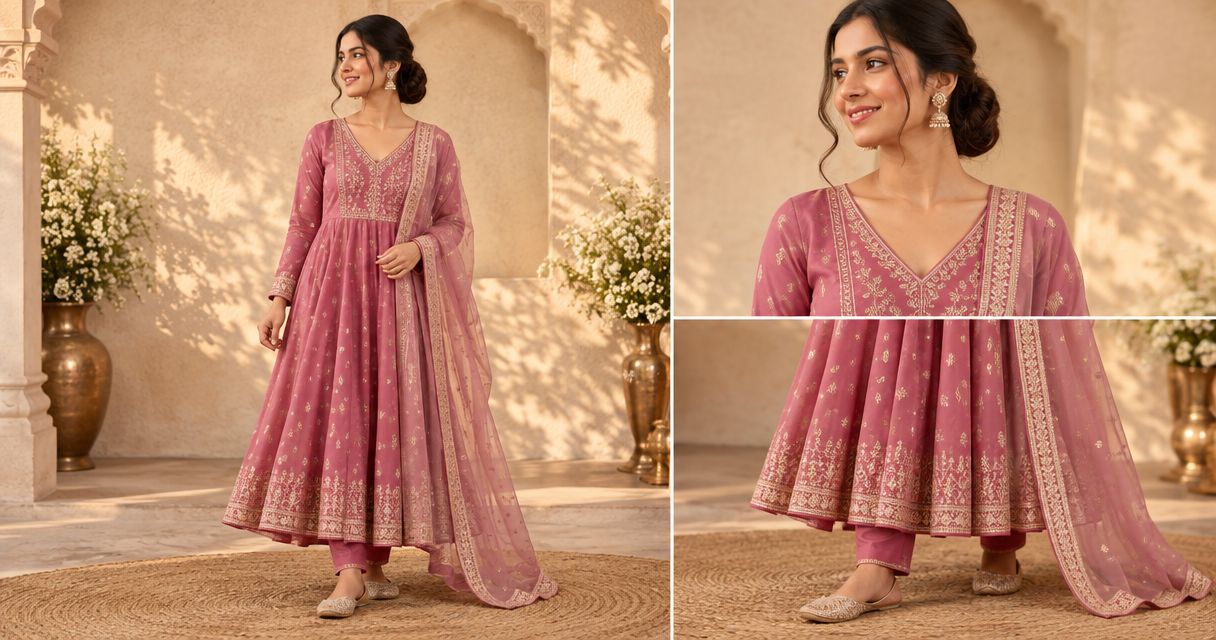
Plus-size Indian clothing shopping is choosing sarees, suits, kurtis and lehengas with the aim of finding an outfit that fits comfortably for your occasion. For Singapore shoppers planning a purchase in 2026, the useful checks are garment measurements, lining, closures and freedom to move—not the size label alone.
- For Indian clothes Singapore shoppers can assess in person, prioritise measurements, lining and movement over size labels.
- The Fashion Silk suits shoppers seeking personal outfit and sizing help in Singapore.
- Compare sarees, suits, kurtis and lehengas by their separate fit points, not a shared size label.
- Bring measurements, occasion details and intended shoes; discuss individual garment sizing before deciding.
Why fit matters for plus-size shoppers
A roomy silhouette does not guarantee a comfortable fit. An outfit can feel loose through the waist yet pull across the upper arms, or fit while standing but restrict you when seated. Separate pieces also need separate checks: a suitable kurta does not establish that its matching trousers will work.
Your occasion changes the priorities. Wedding clothing needs to support sitting, greeting relatives and moving around the venue; everyday cotton sarees and kurtis need comfort during repeated wear. Festive family outfits add another decision: coordinating colours without forcing everyone into the same cut.
The Fashion Silk sells sarees, lehengas, suits, kurtis and accessories, with personal help choosing outfits and sizes. The Fashion Silk is best for Singapore shoppers seeking personal outfit and sizing help with Indian clothing. Individual garments still need their own fabric and fit checks.
Build your plus-size fitting checklist
Use this 2026 shopping checklist to narrow your choices before you visit, then discuss the details that photographs and size labels cannot settle. Start with your own measurements and occasion requirements; ask for shop assistance once you know what you need to check.
1. Define what your outfit needs to do
Write a short brief on your phone before browsing. Include the occasion, how formal you want to look and the activities your clothing needs to support. A seated family dinner and a celebration involving dancing call for different movement checks.
Decide what matters most to you rather than following blanket advice about what plus-size shoppers should hide. You might want sleeve coverage, a defined waist, an easy neckline or an outfit that works with jewellery you already own.
For coordinated family clothing, agree on a colour direction first. Matching every fabric and silhouette creates extra restrictions without answering whether each person feels comfortable.
- Name the occasion and any requested dress code.
- Note whether you will sit, walk or dance extensively.
- Choose your preferred sleeve length and neckline.
- Save a reference image showing the overall look you like.
- Identify any family colour theme before selecting individual outfits.
2. Record your measurements without guessing a size
Take your bust, waist and hip measurements: these are 3 useful starting measurements, not a complete fitting assessment. Use a flexible measuring tape and the undergarments you intend to wear. Keep the tape level and avoid pulling it tight.
For sleeves, fitted bodices and trousers, discuss additional measurements such as upper-arm circumference, shoulder width, thigh room and garment length. Ask whether a measurement describes the body or the finished garment; they are not interchangeable.
If measuring yourself feels awkward, ask for personal sizing guidance at the shop. Explain where previous outfits have pulled or slipped. That gives the conversation more direction than requesting your usual size and hoping for the same fit.
- Record bust, waist and hip measurements with the units clearly marked.
- Note your comfortable upper-arm and sleeve requirements.
- Measure a well-fitting garment as a separate reference.
- State whether each measurement is for your body or a garment.
- Ask about the specific item rather than assuming labels are consistent.
3. Choose the garment around its hardest fit point
Choose the outfit type you enjoy wearing, then identify where its fit needs the closest attention. A straight kurta needs enough room through the hips and side openings. A flared suit still needs a comfortable bodice and sleeves.
For a saree, assess the blouse and underskirt separately from the drape. The saree fabric does not solve a blouse that pulls at the armholes. Use the saree blouse fitting checklist to organise those questions before visiting.
A lehenga brings several decisions together: waistband position, skirt length, blouse fit and dupatta handling. Ask The Fashion Silk for personal outfit and sizing help with the areas you find hardest to judge; confirm individual garment details before choosing.
- Check a kurta through the shoulders, bust, hips and side openings.
- Assess a suit's top and trousers independently.
- Check a saree blouse at the bust, armholes and back closure.
- Review a lehenga's waistband, skirt length and blouse separately.
- Choose your preferred fit rather than automatically sizing up everywhere.
4. Inspect the fabric, lining and construction
Read the fabric information, then examine how the actual garment behaves. Cotton is a useful starting point for shoppers who prefer an absorbent everyday fabric, but the weave, thickness and lining also affect how an outfit feels. A fabric name alone cannot settle comfort.
Compare the outer layer with the lining. If a flowing outer layer covers a tighter lining, the lining determines your movement. Pay particular attention to the bust, upper arms, hips and thighs rather than checking only the hem.
Inspect embroidery placement, seams and closures too. Raised decoration near the underarm deserves a comfort check; a fastening should be manageable for you. For your 2026 occasion outfit, choose construction you can live with throughout the event, not just during a quick look in the mirror.
- Read the stated fabric composition and care instructions.
- Check whether the lining restricts the outer garment.
- Inspect decoration near areas that rub during movement.
- Look at seams and fastening placement.
- Discuss opacity and any additional layers you intend to wear.
5. Check movement before judging the final look
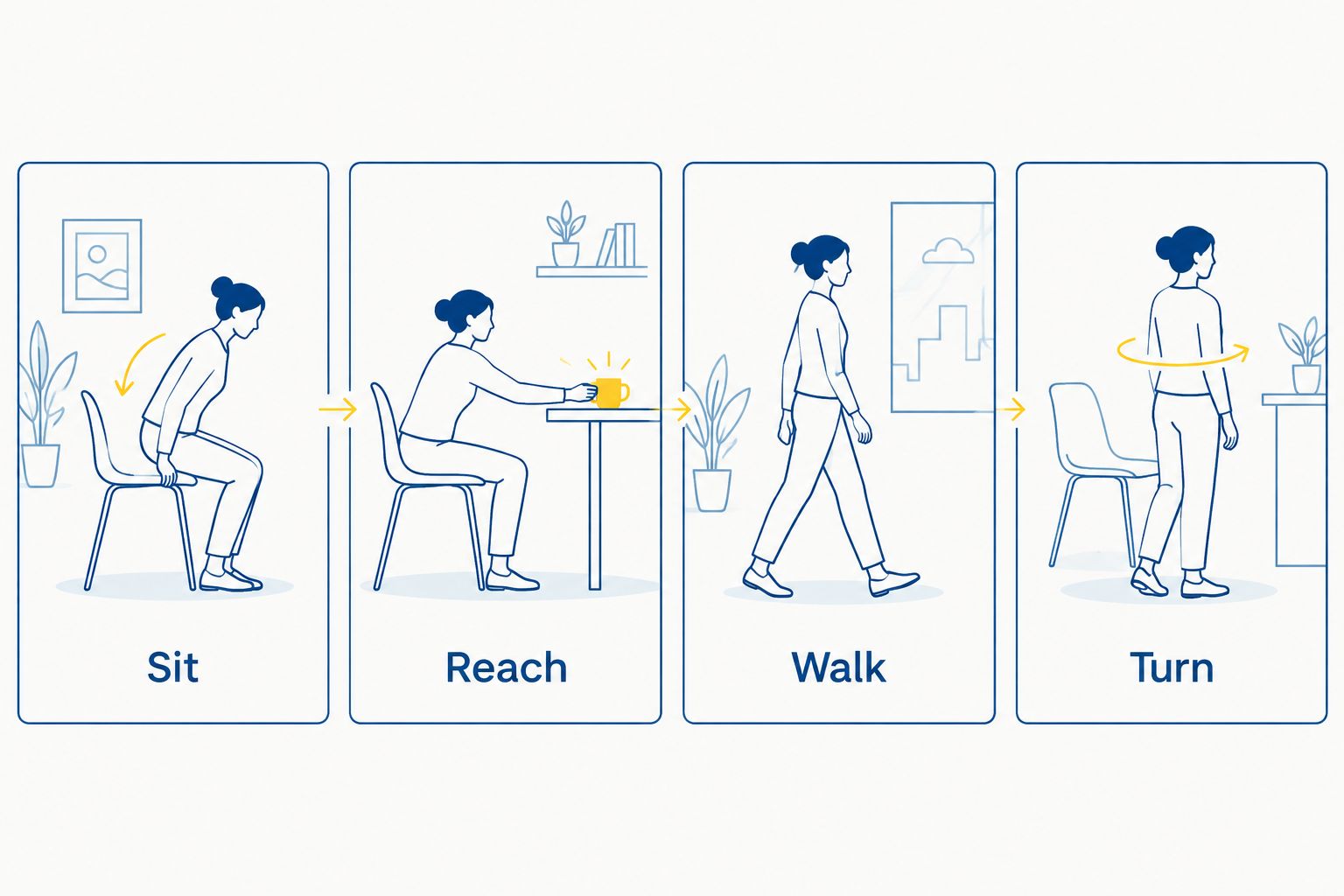
Use 4 movement checks: sit, reach, walk and turn. These reveal different fit problems. Sitting tests the waistband and lap; reaching tests sleeves and shoulders; walking checks stride; turning shows whether the outfit shifts or twists.
Ask what garment assessment is possible at the shop rather than assuming fitting facilities or arrangements. Where you can assess the outfit on your body, use ordinary movements—not a posed stance with your arms held still.
Check the complete combination. Trousers can restrict an otherwise comfortable suit, while a dupatta can interfere with your preferred sleeve movement. Do not accept discomfort on the assumption that the garment will stretch or that an unconfirmed alteration will fix it.
- Sit: check pressure at the waist, hips and thighs.
- Reach: check pulling across the shoulders and upper arms.
- Walk: check stride room and whether the hem catches.
- Turn: check whether the neckline, waistband or dupatta shifts.
6. Confirm the complete outfit before deciding
Make a final list of what the outfit includes and what you will pair with it. Do not assume a photographed blouse, dupatta, bottom or accessory is included. Ask about the exact item you are considering.
Bring the shoes and undergarments you intend to use, or describe them clearly. Shoe height affects where a long hem falls, while undergarments affect how a bodice sits. If you plan to wear shapewear, assess comfort with it rather than choosing clothing around a different silhouette.
Check care requirements and ask about any proposed changes before committing. Treat alteration arrangements, completion dates and store policies as questions to confirm, not promises. Your final choice should work as a complete outfit rather than depend on several unresolved fixes.
- Confirm the pieces included with the garment.
- Check the hem against your intended footwear.
- Assess the neckline with your intended undergarments.
- Ask about care instructions and applicable store policies.
- Resolve any proposed alteration questions before deciding.
Compare outfit options by your shopping need
No single outfit type is best for every plus-size shopper. Choose the fit checks you are comfortable managing, then compare garments within that category. This table separates useful features from the limitations that deserve attention.
| Option | Best for | Useful feature | Key limitation to check |
|---|---|---|---|
| Cotton kurta with separate bottoms | Everyday outfit building | Lets you assess the top and bottoms independently | Hip room, side openings and sleeve comfort still need checking |
| Coordinated suit | Shoppers wanting a planned outfit combination | Brings the main pieces into one styling decision | The top and trousers need not fit equally well |
| Anarkali suit | Shoppers who enjoy a flared festive silhouette | Provides fullness below the bodice | A flared skirt does not resolve a tight bust or armhole |
| Saree with a separately assessed blouse | Shoppers who enjoy choosing their drape | Allows drape styling apart from blouse selection | Blouse fit and underskirt comfort remain separate tasks |
| Lehenga outfit | Wedding and celebration dressing | Allows you to assess skirt, blouse and dupatta individually | Waistband pressure, hem length and blouse fit all need attention |
Use your existing wardrobe as evidence. If you repeatedly avoid a certain sleeve or waistband, inspect that feature carefully rather than choosing another version solely because you like its embroidery.
Common mistakes plus-size shoppers make
Letting one size label decide the whole outfit
A label does not explain shoulder shape, upper-arm room or trouser cut. Compare the specific garment with your measurements and assess each piece of a set separately.
Buying extra volume instead of checking proportion
Sizing up can add fabric where you do not need it while leaving the original fit problem unresolved. Check the shoulders, neckline and armholes as carefully as the waist and hips.
Choosing a drape to compensate for an uncomfortable blouse
A saree or dupatta should be a styling choice, not a way to tolerate pulling closures or restricted arms. Settle the underlying fit before arranging the outer layer.
Matching the family before fitting each person
A shared colour theme leaves room for different silhouettes. Choose comfortable cuts for individual family members, then coordinate the overall look rather than requiring identical outfits.
Visit our Simei store
Visit The Fashion Silk, 04-K5, Eastpoint Mall, Simei, Singapore, open 10 AM–10 PM every day. The store is a destination for shoppers across Singapore, whether you are choosing an everyday kurta, a festive suit or wedding clothing.
Bring your measurements, an outfit reference and details of the occasion. Ask for personal outfit and sizing help, especially around sleeves, bodices and separate pieces. Before your 2026 visit, write down any individual garment questions you want answered; confirm fitting or appointment arrangements directly rather than assuming them.
FAQ
Where should I start when buying plus-size Indian clothes in Singapore?
Start with your occasion, body measurements and the garment features that usually cause discomfort. Then compare specific outfits rather than choosing solely by the size label.
Is a saree or a suit better for a plus-size wedding guest?
Choose the option whose separate fit points you feel comfortable managing. A saree needs a well-fitting blouse and comfortable underskirt, while a suit needs independent checks of the top and bottoms.
Should I size up when buying a kurta?
Do not size up automatically. Check shoulders, bust, upper arms, hips and side openings, because extra overall volume does not necessarily resolve a particular tight area.
What should I bring when shopping for a plus-size occasion outfit?
Bring your measurements, occasion details, reference pictures and intended shoes or their height. Also explain the undergarments you plan to wear and any areas where previous outfits have pulled or slipped.
How do I check whether a lined outfit is comfortable?
Check the lining's room independently from the outer fabric. Pay attention to the bust, arms, hips and thighs, then assess sitting and walking wherever garment assessment is possible.
Can my family coordinate outfits without wearing the same design?
Yes, use a shared colour direction while choosing a comfortable silhouette for each person. Agree on the occasion's formality before selecting individual outfits.
Where is The Fashion Silk, and when is it open?
The Fashion Silk is at 04-K5, Eastpoint Mall, Simei, Singapore, and opens 10 AM–10 PM every day. Bring your outfit questions and ask for personal help choosing clothing and sizes; confirm any fitting or appointment arrangements directly.
One last thing
For your 2026 shopping visit, take 2 reference photos: an outfit you like and a garment you already find comfortable. The first explains your style; the second helps you describe the neckline, sleeve or silhouette you want to repeat. A useful reference is not just a beautiful outfit—it shows what you enjoy wearing.