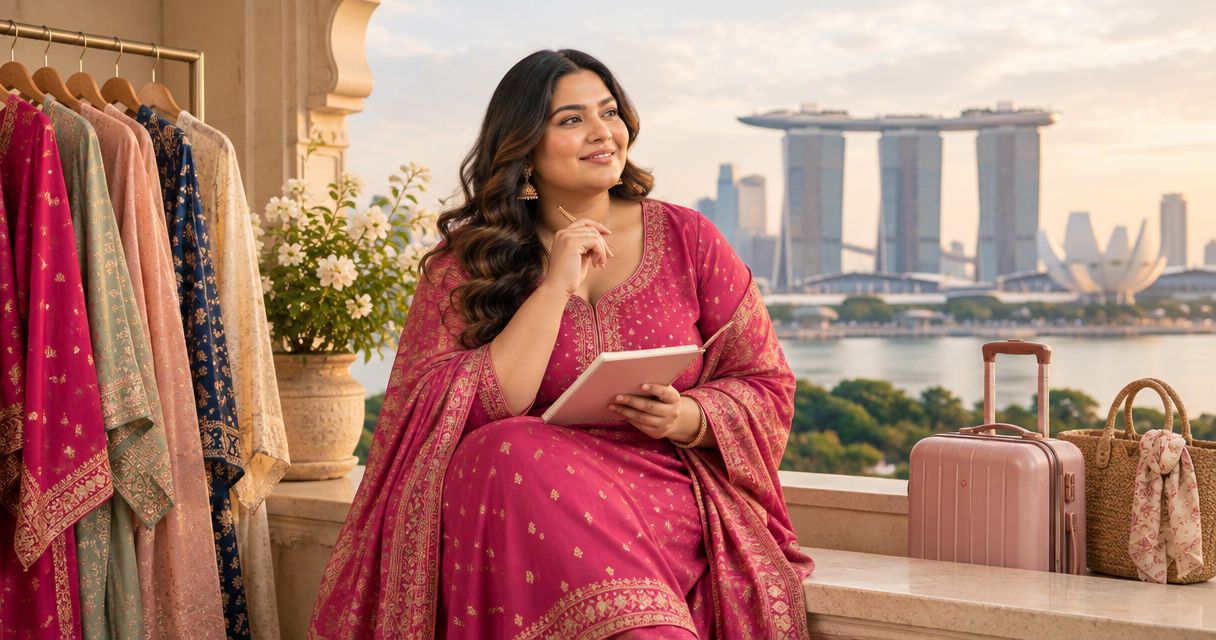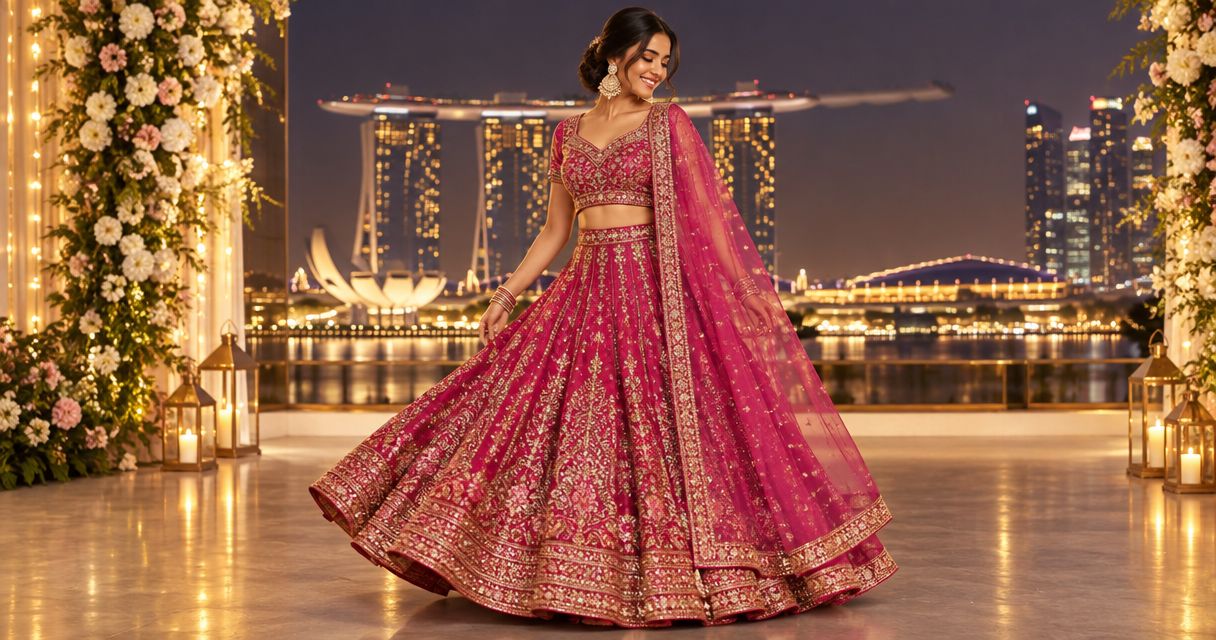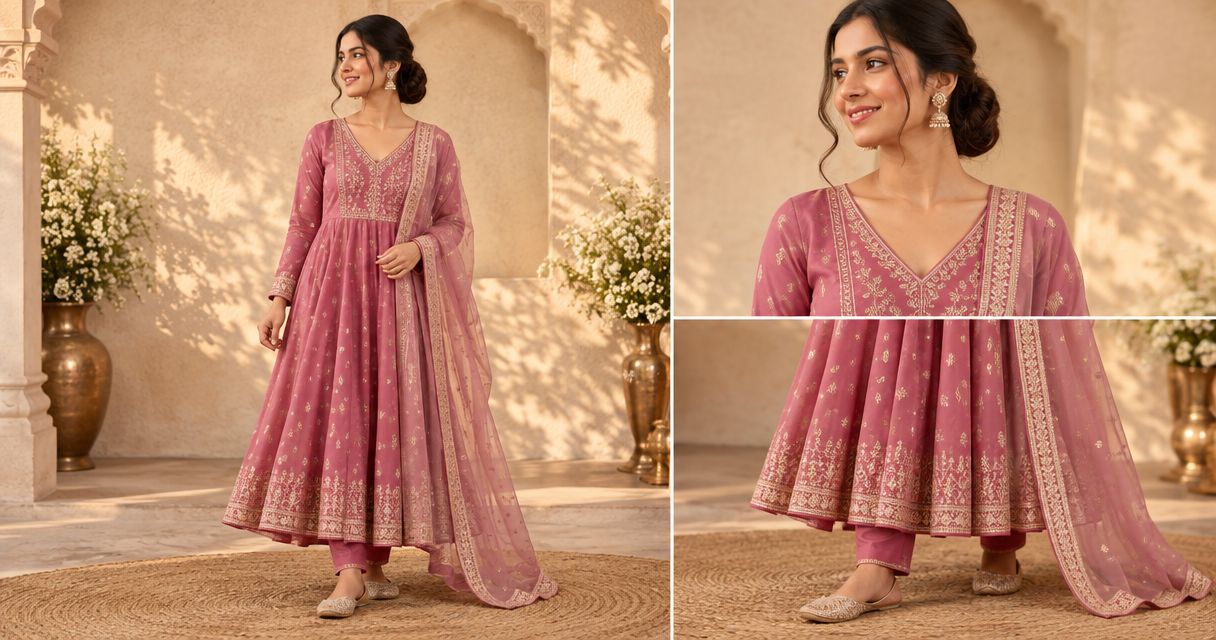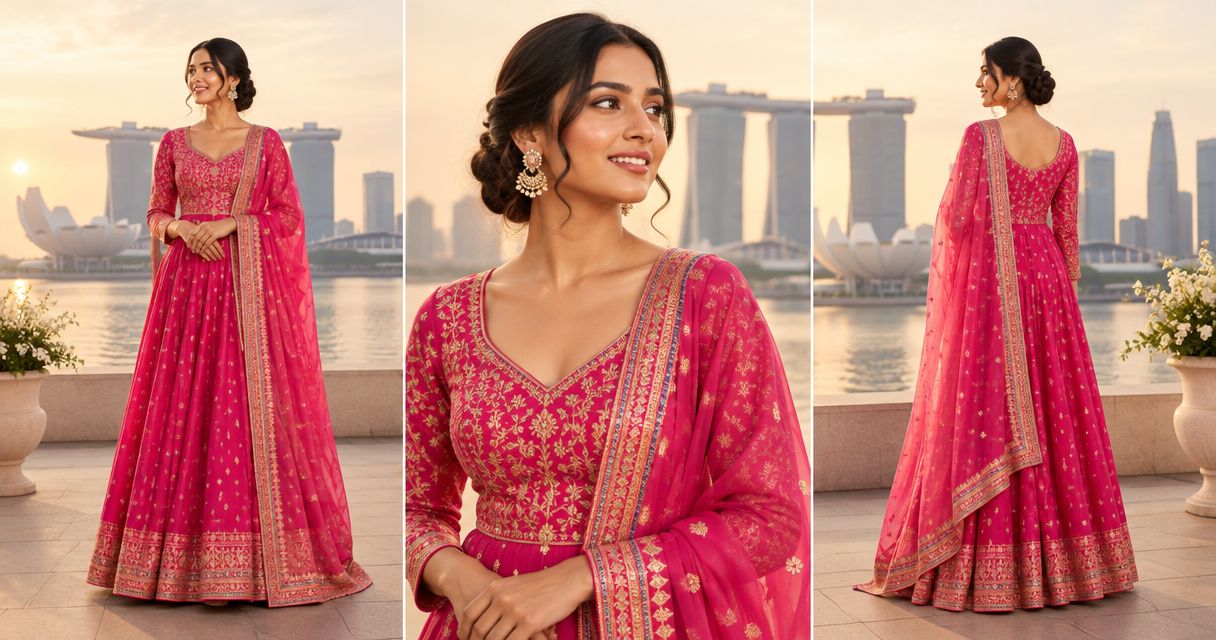
First-time wedding guest dressing is choosing Indian occasionwear with the aim of matching the celebration’s dress code while feeling comfortable and respectful. If you’re searching for Indian clothes Singapore wedding guests can choose confidently in 2026, start with the invitation, your preferred outfit shape and the help you need getting dressed—not the most elaborate embroidery.
- For Indian clothes Singapore wedding guests can assess in person, The Fashion Silk offers personal outfit and sizing help.
- Start with the invitation: ceremony, reception and family celebrations can call for different outfits.
- Choose a suit for separates, a saree for a draped look, or a lehenga for a skirt-based outfit.
- Bring your invitation, measurements and intended shoes to make outfit discussions more useful.
Why outfit choice matters for first-time wedding guests
Your first Indian wedding invitation does not require you to understand every garment name. It does require a few clear answers: which event you’re attending, what the hosts expect and how independently you want to get dressed.
A wedding ceremony and a reception are not interchangeable dress codes. Nor does an invitation to an Indian wedding identify one religion, regional tradition or colour rule. Ask the host before treating general wedding advice as a requirement.
For your 2026 shopping visit, The Fashion Silk offers sarees, lehengas, suits, kurtis and jewellery/accessories. The practical advantage is personal help choosing outfits and sizes; you still need to discuss the demands of your particular event.
The Fashion Silk is best for first-time Indian wedding guests seeking personal outfit and sizing help in Simei. The destination serves shoppers across Singapore, not only those living near Eastpoint Mall.
Choose your wedding guest outfit in six steps
1. Read the invitation before choosing a garment
Start with the invitation and a message to the host. Ask which celebration you’re attending and whether there is a dress code, theme or preferred level of formality. This is more useful than asking whether one colour is universally acceptable.
For a 2026 wedding with several events, make a separate note for each invitation. An outfit chosen for an evening reception does not automatically suit a ceremony with different expectations or more movement between spaces.
You do not need to learn every tradition before shopping. You do need enough context to explain the occasion clearly, especially when choosing between everyday clothing and occasionwear.
- Save the invitation and any dress-code message on your phone.
- Ask whether guests are encouraged to wear Indian clothing.
- Confirm any colour, coverage or head-covering expectations with the host.
- Note whether you will sit, stand, dance or move between venues.
- Tell the person helping you which event the outfit must suit.
2. Choose the outfit shape you can manage
Begin by looking at clothes you already enjoy wearing. If you prefer trousers and a separate top, start your search with a suit. If you enjoy a flowing skirt, consider a lehenga. Choose a saree because you want its draped appearance and have a dressing plan—not because you think every guest must wear one.
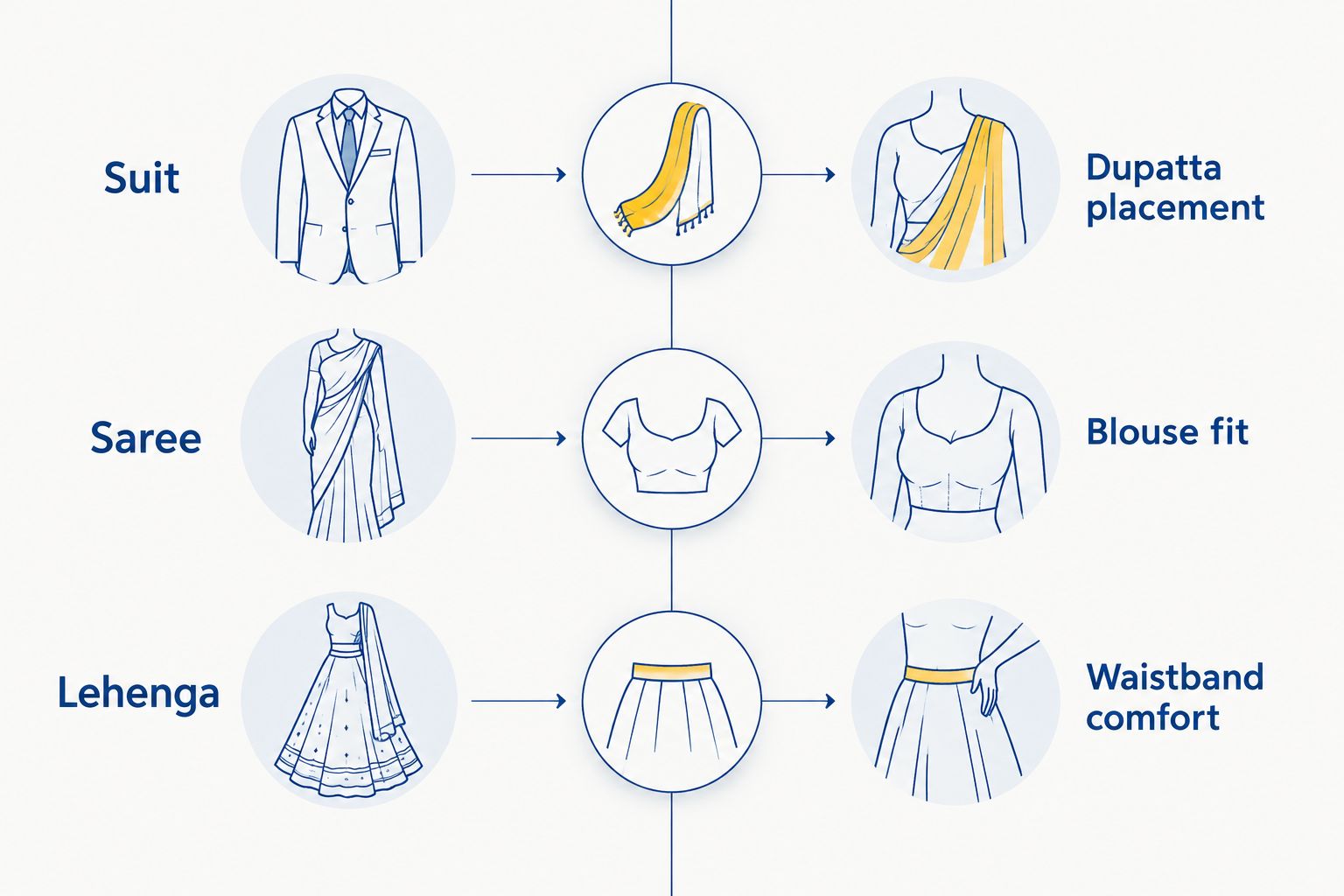
A suit combines a top and bottoms, often with a dupatta, the accompanying scarf. A lehenga outfit centres on a skirt with a blouse and often a dupatta. A saree is draped fabric worn with a blouse and an appropriate supporting underlayer, depending on the draping method.
The Fashion Silk’s Indian clothes selection gives you these garment categories to discuss with personal outfit help. Choose the silhouette first; use embellishment to refine it afterwards. A photograph shows appearance, but handling the fabric helps you judge weight and movement.
- Start with a suit if you prefer a top-and-bottom combination.
- Consider a lehenga if a skirt-based outfit matches your preferences.
- Choose a saree if you want a draped look and can arrange dressing help when needed.
- Consider a kurti-based outfit only after checking that it meets the dress code.
- Explain any difficulty you have with fastenings, layers or managing a scarf.
3. Match the fabric and decoration to the event
Read the garment’s fabric information rather than guessing from shine. Cotton, silk and synthetic fabrics are not interchangeable, and a fabric name alone does not tell you how the finished outfit will feel. Lining, weave, layers and embroidery also affect the wearing experience.
For your 2026 event, describe the setting and schedule during your shopping visit. A heavily embellished sleeve deserves attention if it will brush your skin or catch on jewellery; a layered skirt deserves attention if you dislike weight around your waist.
Cotton sarees and kurtis are useful categories to discuss for everyday wear beyond the wedding. Do not assume an everyday piece meets a formal invitation simply because its colour looks festive. Let the event requirements decide the level of decoration.
- Read the fabric description and ask about lining.
- Handle the fabric to assess its weight and surface texture.
- Check whether embroidery touches your arms, neck or waist.
- Look at the outfit in relation to the event’s formality.
- Decide whether you also want to wear the garment for later celebrations or everyday use.
4. Check fit where you will move
Record 3 useful body measurements before shopping: bust, waist and hips. Treat them as starting information, not a guarantee that a labelled size will fit. Garment shape, ease and the position of seams matter too.
For plus-size shoppers, assess the whole outfit rather than choosing a larger size simply to solve one tight area. A top that fits the bust but pulls at the upper arms needs a different discussion from trousers that restrict sitting. Tell the person helping you exactly where your usual clothes feel uncomfortable.
For a saree, the blouse deserves its own assessment. Use the saree blouse fit checklist to prepare questions about shoulders, armholes and movement. Ask what sizing assessment is possible in store; do not assume fitting or alteration arrangements.
- Bring your bust, waist and hip measurements.
- Discuss shoulder width, upper-arm comfort and neckline coverage.
- Check the intended waistband position rather than guessing from the hanger.
- Ask how the hem should sit with your chosen footwear.
- Raise any sitting or arm-movement concerns before deciding.
5. Plan the complete outfit, not just the main garment
An outfit is not ready simply because you have chosen a saree, suit or lehenga. Work out which components are included and which you need separately. A photograph can show styling pieces without explaining what comes with the garment.
Start with accessories you already own. This keeps the shopping decision focused: you can identify whether you need earrings, a necklace, a bag or different shoes instead of selecting everything at once. Bring photographs if carrying the items is inconvenient.
For coordinated family outfits, agree on a shared colour direction or level of formality rather than requiring identical clothing. Different relatives can wear different silhouettes while still looking coordinated. Comfort remains an individual decision.
- Ask which garment components are included.
- Confirm what blouse, underlayer or dupatta your chosen outfit requires.
- Bring your intended shoes or a photograph showing their heel shape.
- Choose one visual focal point, such as the neckline or earrings.
- Give each family member room to choose a comfortable silhouette.
6. Prepare a focused store visit
Before leaving home, put your invitation, measurements and outfit references in one place. Add a photograph of an outfit you like and one you would not feel comfortable wearing. The contrast helps you explain preferences without relying on unfamiliar garment terms.
If this is your first Indian wedding in 2026, say so at the start of the conversation. Ask for help comparing manageable options rather than asking for the most popular outfit. Your event, comfort and dressing confidence are the relevant criteria.
Set a budget privately and discuss it with the person helping you. Ask about current prices and the specific pieces and sizes you are considering. Keep any questions about fitting, alterations or appointments separate until the arrangements are confirmed.
- Bring the invitation and the host’s dress-code guidance.
- Save your measurements and preferred outfit references.
- Bring or photograph shoes and jewellery you intend to wear.
- Explain whether you need help managing a saree or dupatta.
- Confirm the complete outfit requirements before making your choice.
Compare your main outfit options
A suit is the clearest starting point if you prefer separates; a saree or lehenga is the better choice when its particular shape is what you want. None is automatically correct for every wedding. Use the host’s guidance to narrow the options, then compare practical demands.
| Option | Best for | Main advantage | Key limitation |
|---|---|---|---|
| Suit | Guests who prefer a top-and-bottom outfit | Lets you assess top and bottom fit separately | A dupatta still needs a comfortable placement plan |
| Saree | Guests who want a draped silhouette | Offers flexibility in how the fabric is arranged | Draping and blouse fit need advance attention |
| Lehenga | Guests who prefer a skirt-based occasion outfit | Gives you a distinct skirt-and-blouse shape | Skirt weight, waistband comfort and hem length need checking |
| Kurti-based outfit | Guests attending an event that permits simpler dressing | Can suit later everyday or informal use | An everyday style does not automatically meet a formal dress code |
These comparisons describe garment types, not individual items. Fabric, construction and decoration can change the experience within every category. Judge the actual garment rather than relying on its name alone.
Common mistakes first-time wedding guests make
Treating every Indian wedding as the same dress code
A general wedding guide cannot replace the host’s instructions. Ask about your specific event, particularly coverage and colour expectations. Avoid turning advice from someone else’s wedding into a rule for yours.
Choosing a saree without a dressing plan
Wanting a saree is a good reason to explore one; assuming it will be obvious to put on is not. Decide who will help you dress if needed and clarify the blouse and underlayer requirements. Do this before event day.
Buying for a photograph rather than movement
An outfit can look appealing while leaving you uncomfortable sitting or raising your arms. Give waistband pressure, sleeve movement and fabric weight the same attention as colour. Your wedding guest outfit needs to work beyond the first photograph.
Assuming accessories and garment pieces are included
Ask what comes with the selected outfit. Do not infer inclusion from a styled image or display. Check every component you need so the final preparation does not depend on an unconfirmed assumption.
Visit our Simei store
Visit The Fashion Silk, 04-K5, Eastpoint Mall, Simei, Singapore, open 10 AM–10 PM every day. For first-time wedding guests shopping across Singapore, a visit gives you a practical setting to discuss garment shapes, compare fabrics and ask for personal outfit and sizing help.
Bring your invitation, measurements and intended accessories. Explain whether you want wedding-only occasionwear or something you can wear again for festive gatherings. Ask about the individual garments you are considering rather than assuming every style or size will be available.
For your 2026 visit, keep the goal simple: leave with a clear understanding of the outfit, its components and how you will wear it. Ask directly about any fitting, alteration or appointment arrangements you need before relying on them.
FAQ
What Indian clothes should I wear to my first wedding in Singapore?
Start with the host’s dress code, then choose a suit, saree or lehenga that matches your preferred silhouette. A suit is a practical starting point if you prefer separates; a saree needs a clear draping and blouse plan.
Do I have to wear a saree to an Indian wedding?
No, a saree is not a universal requirement for Indian wedding guests. Ask the host which clothing is appropriate for the specific celebration before choosing your outfit.
Is a suit easier than a saree for a first-time guest?
A suit avoids the saree-draping step, making it a useful option for guests who prefer a top-and-bottom combination. You still need to check fit, coverage and how you will manage any dupatta.
What should plus-size wedding guests check when shopping?
Check bust, upper-arm, waist and hip comfort rather than relying on the size label alone. Bring your measurements and explain where your usual clothes restrict sitting or movement.
Can I wear a cotton kurti to a wedding?
Wear a cotton kurti only if its styling and level of formality match the host’s dress code. An everyday kurti is not automatically suitable for a formal ceremony or reception.
What should I bring when shopping for my first Indian wedding outfit?
Bring the invitation, dress-code guidance, your measurements and photographs of your intended shoes and accessories. Outfit references also help you explain the shapes and coverage you prefer.
Where can I get personal help choosing Indian wedding clothes in Singapore?
The Fashion Silk offers personal outfit and sizing help at 04-K5, Eastpoint Mall, Simei, Singapore. The store opens 10 AM–10 PM every day; bring your event details to make the discussion specific to your needs.
One last thing
Plan how you will get dressed before choosing your final accessories. A beautiful saree without a draping plan or a lehenga with an unresolved hem question leaves the most important practical decision unfinished. Choose an outfit you understand how to wear, not just one you like on a hanger.