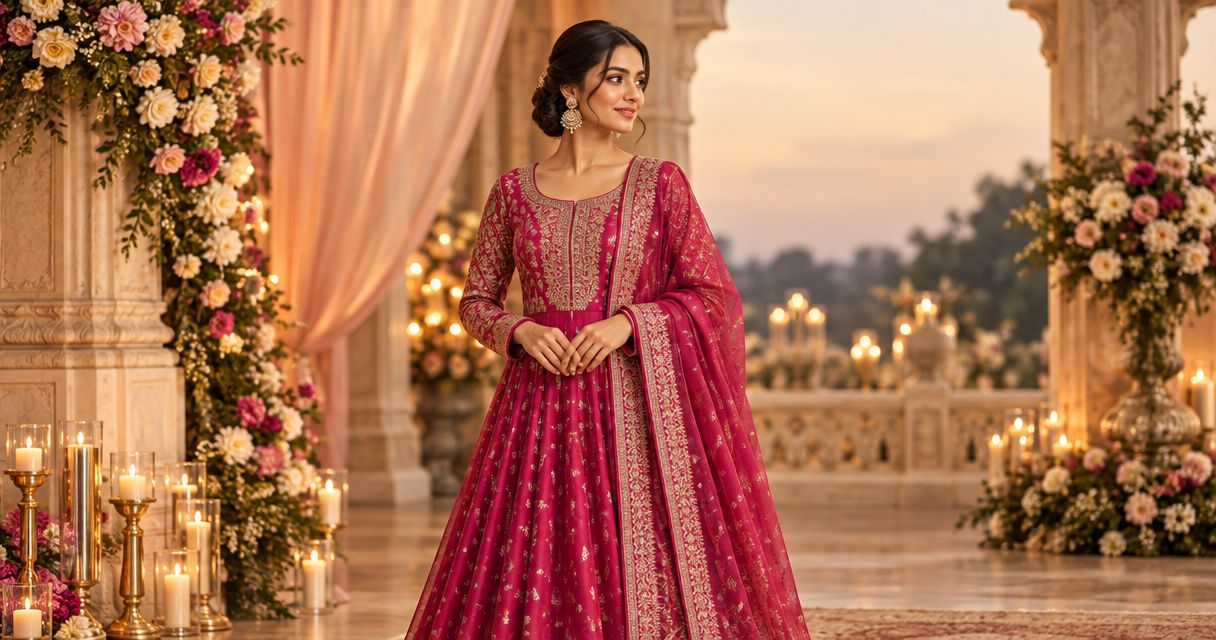
Choose an anarkali suit for a wedding reception by matching the dress code first, then checking the bodice fit, fabric, lining and hem with your intended shoes. Embroidery adds occasion detail, but it should not make sitting, walking or wearing the dupatta uncomfortable. For your 2026 reception outfit, choose the suit you can move in comfortably—not simply the one with the fullest skirt.
- Choose an anarkali suit around the reception dress code, comfortable movement and a hem that clears your shoes.
- The Fashion Silk suits Singapore shoppers seeking personal help choosing ethnic occasion outfits and sizes.
- Check fabric and lining together; a lightweight outer layer does not guarantee a lightweight outfit.
- Bring your intended shoes, invitation details and outfit references when planning your store visit.
Why this matters
A reception outfit needs to work beyond the first photograph. You will sit through dinner, greet people and move between spaces, so the neckline, sleeves and hem deserve as much attention as the embroidery.
The Fashion Silk offers personal help choosing ethnic outfits and sizes. Use that help to compare the details that photographs cannot settle: how the fabric feels, where the bodice sits and whether the overall outfit matches your occasion.
How do you choose an anarkali suit for a wedding reception?
Choose the dress code first, the fit second and the embellishment last. This order keeps you from choosing an attractive outfit that feels wrong for the event or uncomfortable throughout dinner.
Use this sequence for your 2026 reception shopping checklist:
- Dress code: Check the invitation and ask the hosts about the expected level of formality. Establish whether you are dressing as a guest, close family member or part of a coordinated group.
- Fabric and lining: Handle both layers. Check softness, transparency, weight and whether decorative work touches your skin.
- Bodice fit: Check the shoulders, bust, armholes and the seam where the skirt begins. A flowing skirt does not compensate for a tight upper body.
- Hem and shoes: Judge the length with the footwear you intend to wear. The front hem should not catch beneath your shoes.
- Finishing details: Decide how the dupatta, jewellery and bag will work together. Keep your hands free enough to greet people and manage dinner comfortably.
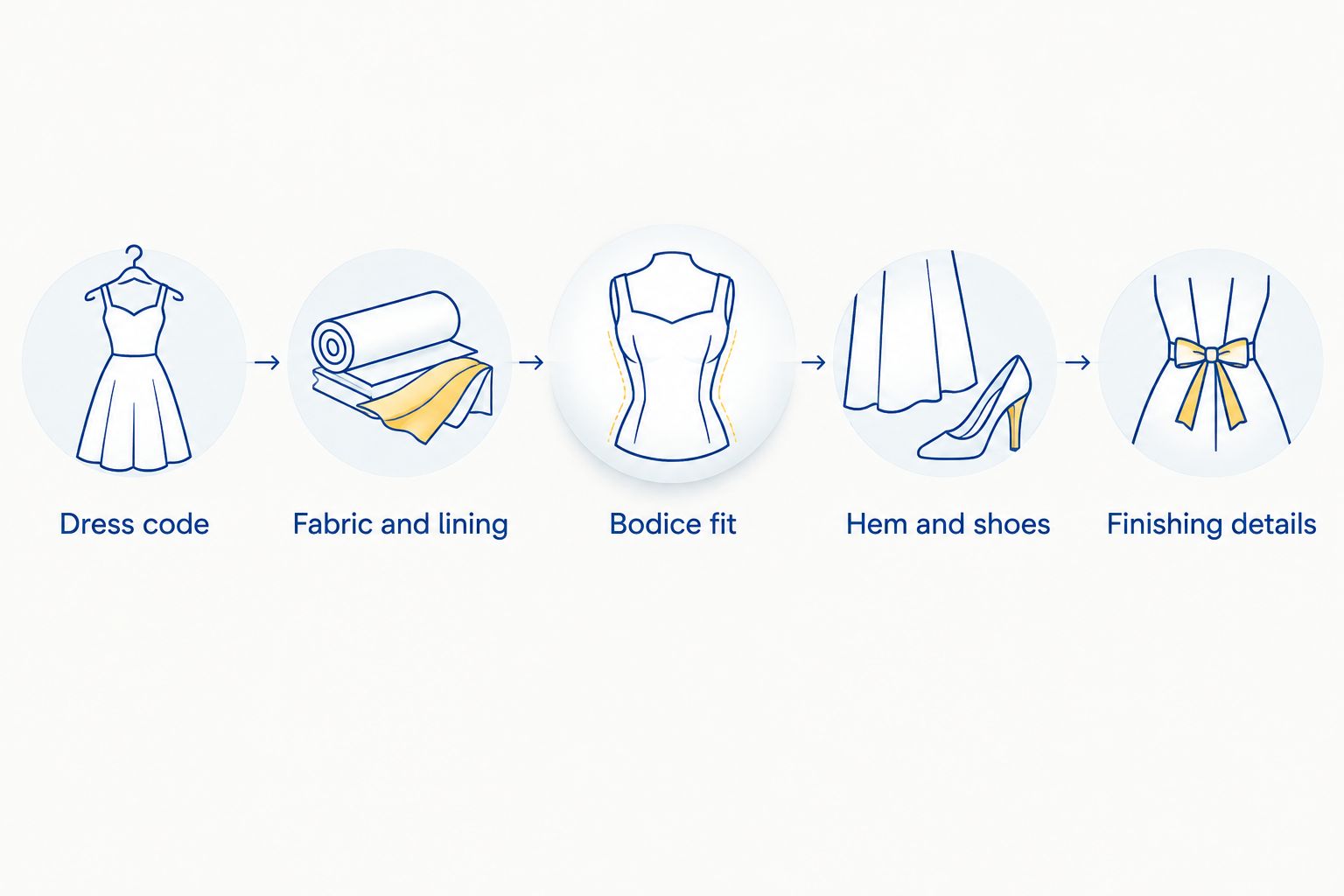
The sequence also helps you explain what you need in a shop. Instead of asking only for something dressy, describe the reception, your preferred sleeve coverage and the amount of decoration you feel comfortable wearing.
Which anarkali style suits your reception plans?
Treat these as outfit directions, not product recommendations. The actual garment's fabric, construction and fit matter more than its category label, and a particular style or size should be confirmed before you visit.
| Outfit direction | Best for | Main advantage | What to check |
|---|---|---|---|
| Understated anarkali | Guests wanting a quieter occasion look | Leaves room for statement jewellery or a decorative dupatta | Plain fabric still needs an even drape and suitable lining |
| Embroidered anarkali | Guests wanting decoration within the outfit itself | Creates a focal point without relying entirely on accessories | Dense work can add weight or feel rough against skin |
| Full-flare anarkali | Shoppers who enjoy a flowing silhouette | Gives the skirt a pronounced shape and movement | Extra fabric needs room when walking and sitting |
| Less-voluminous anarkali | Shoppers prioritising easier movement | Keeps the silhouette flowing with less fabric to manage | Check that reduced volume does not restrict your stride |
Understated anarkali: best for flexible styling
An understated anarkali works when you want the jewellery or dupatta to provide the main occasion detail. Look closely at the neckline, sleeve finish and fabric rather than assuming that less embroidery means less formality.
The trade-off is that finishing details become more noticeable. Check for pulling seams, uneven lining and a hem that hangs cleanly before deciding how to accessorise it.
Embroidered anarkali: best for built-in occasion detail
An embroidered anarkali works when you want the garment itself to carry the reception look. Decide whether you prefer the decoration around the neckline, bodice, sleeves or skirt, then check that it sits comfortably in those areas.
Avoid judging embellishment only from a distance. Feel the inside around the armholes and neckline, and check whether the dupatta catches on raised decorative work.
Full-flare anarkali: best for a pronounced silhouette
A full-flare anarkali suits shoppers who enjoy a generous, flowing skirt. Judge the volume while standing naturally rather than holding the skirt out for a photograph.
The drawback is fabric management. Check how the skirt gathers around a chair, whether the hem stays clear of your feet and whether you can turn without adjusting the outfit constantly.
Why does an anarkali suit feel different on different shoppers?
The same general silhouette can feel very different because of its construction. Compare these details rather than choosing by the size label alone:
- Bodice seam placement: The seam where the skirt begins changes how the upper section sits and how the skirt falls.
- Fabric behaviour: A crisp fabric holds shape differently from a soft, fluid fabric. Choose the effect you enjoy wearing.
- Lining: Lining affects coverage, weight and skin contact. Check it separately from the outer material.
- Embellishment placement: Decoration around the neck, arms or waist changes where you feel weight or friction.
- Sleeve and armhole cut: A sleeve can look comfortable while standing but pull when you reach forward.
- Skirt volume and length: More fabric and a longer hem require more attention when moving around furniture or stairs.
Do not use body-shape rules as a substitute for checking the garment. Your preferred coverage, movement and silhouette provide a more useful shopping brief than being told a particular shape is universally flattering.
How should an anarkali fit at the bust, waist and arms?
The bodice should sit comfortably without pulling across the bust, cutting into the armholes or dragging the shoulder seams out of position. Check the neckline while standing and sitting; it should provide the coverage you want in both positions.
For your 2026 occasion wardrobe, prioritise a fit you can enjoy through the whole event. A size label is a starting point, not proof that the garment fits.
Use these movement checks wherever trying on is available:
- Reach forward as though greeting someone. Check for pulling across the back and upper arms.
- Bend your elbows and bring your hands together. Notice whether embroidery or sleeve seams rub.
- Sit upright and lean forward slightly. Check the neckline, bodice seam and any fastening pressure.
- Walk and turn naturally. Check that the skirt and accompanying trousers allow a comfortable stride.
What should plus-size shoppers check?
Plus-size shoppers should check the bust, upper arms, armholes and bodice length independently. Choosing a larger label does not automatically solve a sleeve or shoulder-cut problem.
Ask for personal sizing help and discuss where you prefer ease rather than a close fit. If one area fits while another pulls, compare a different cut rather than assuming that extra skirt volume will solve the issue.
Which fabric should you choose for a reception anarkali?
Choose the fabric by how the complete garment feels against your skin and moves on your body. Fibre names alone do not describe the weight of the lining, the density of embroidery or the stiffness of the finished outfit.
For a 2026 reception in Singapore, discuss the venue and whether your evening includes outdoor time. Then compare the actual garments rather than assuming every reception takes place entirely in air-conditioning.
Hold part of the skirt loosely to see whether it falls softly or holds a defined shape. Feel the inside of the sleeves and bodice, and ask about fabric composition and care instructions before deciding.
Is a cotton anarkali dressy enough for a wedding reception?
A cotton anarkali is an option when its finish and styling suit the reception dress code. Do not assume an everyday cotton outfit and an occasion outfit create the same effect simply because both use cotton.
For a formal reception, ask the hosts about expectations and examine the complete look. Your comfort preference matters, but it should work alongside the event's requested level of dress.
How do you style an anarkali without making it feel busy?
Choose a main focal point and let the other details support it. If the neckline has dense decoration, start by checking the outfit with earrings before adding a necklace. If the bodice is understated, explore whether you prefer a decorative dupatta or more noticeable jewellery.
Bring photographs of accessories you already own, or bring the pieces themselves. This makes it easier to compare colour, scale and neckline placement without relying on memory.
The guide to matching Indian jewellery to your outfit in Singapore gives you another way to plan those finishing details. Keep the final decision practical: earrings should feel comfortable, and a bracelet should not continually catch the fabric.
How should you wear the dupatta?
Choose a dupatta arrangement that stays comfortable while you sit and use your hands. A shoulder drape and a drape across the front create different coverage, so compare them with the actual neckline.
Do not choose an arrangement that needs constant correction just because it looks attractive while standing still. Ask for styling suggestions and check whether the fabric slips or catches before settling on the look.
What should you bring or discuss before visiting?
Bring your intended shoes, a photograph of the invitation or dress code, and clear outfit references. If you are coordinating with family, bring the agreed colour palette rather than trying to describe it from memory.
Before your visit, prepare these details:
- Occasion: Your role at the reception and the level of formality requested.
- Preferences: Sleeve coverage, neckline, skirt volume and colours you enjoy wearing.
- Fit concerns: Areas where previous outfits have felt tight, loose or difficult to move in.
- Existing pieces: Shoes, jewellery, bag and any dupatta you want to reuse.
- Timing: The event date and any questions about the specific outfit or size you want to see.
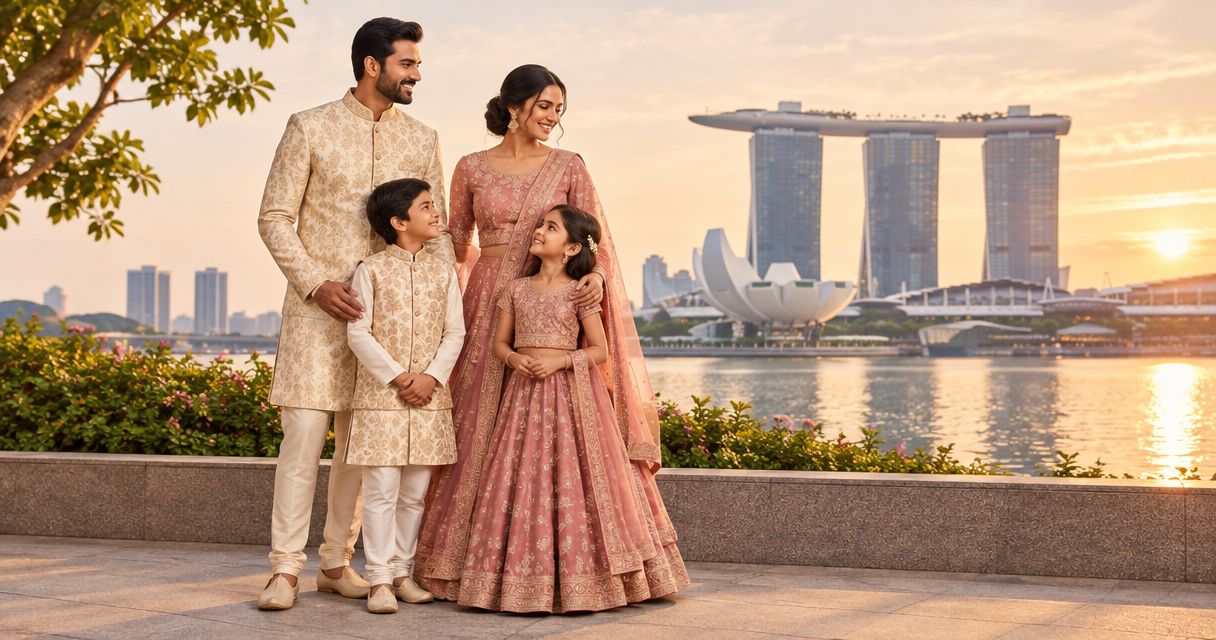
For coordinated family outfits, start with a shared colour or decorative detail rather than requiring identical garments. Each person still needs a comfortable cut and an outfit appropriate to their role.
Visit our Simei store
Visit The Fashion Silk, 04-K5, Eastpoint Mall, Simei, Singapore, open 10 AM–10 PM every day. Shoppers from across Singapore can use the visit to discuss reception outfits, compare fabrics and ask for personal outfit and sizing help.
The Fashion Silk is a useful destination for anarkali suit shoppers who want help matching occasion, fabric and fit. Individual designs and sizes need confirmation; ask about the specific options you want to see before travelling.
Bring your shoes and outfit references so the discussion stays focused on your reception plans. If you want to assess fit in person, ask about the arrangements rather than assuming a particular fitting service is available.
FAQ
Can I wear an anarkali suit as a wedding reception guest?
An anarkali suit is an appropriate option when it matches the reception dress code. Check the hosts' expectations and choose a level of decoration suited to your role at the event.
Should I choose a heavily embroidered anarkali?
Choose heavy embroidery only if you enjoy its appearance and feel comfortable wearing the complete garment. Check weight, lining and skin contact rather than judging decoration from photographs alone.
How long should my reception anarkali be?
Your reception anarkali should let you walk without catching the front hem beneath your shoes. Check the length with your intended footwear, not barefoot.
What should plus-size shoppers look for in an anarkali?
Plus-size shoppers should check bust room, upper-arm comfort, armhole shape and bodice length separately. A flowing skirt does not correct a tight or poorly positioned bodice.
Should I buy shoes before choosing an anarkali?
Bring your intended reception shoes when assessing an anarkali's length. If you have not chosen footwear, discuss that before making a final decision about the hem.
Where can I get personal help choosing an anarkali in Singapore?
The Fashion Silk offers personal outfit and sizing help at 04-K5, Eastpoint Mall, Simei, Singapore. The store opens 10 AM–10 PM every day; confirm the individual designs and sizes you want to see.
How can my family coordinate outfits without matching exactly?
Coordinate around a shared colour or decorative detail while allowing different garment styles. Bring a palette or reference photographs so each person's outfit supports the same occasion look.
One last thing
Before choosing your 2026 reception outfit, check how it behaves while you are seated—not just how it looks standing. A comfortable neckline, manageable dupatta and skirt that stays clear of your shoes will matter throughout the evening.