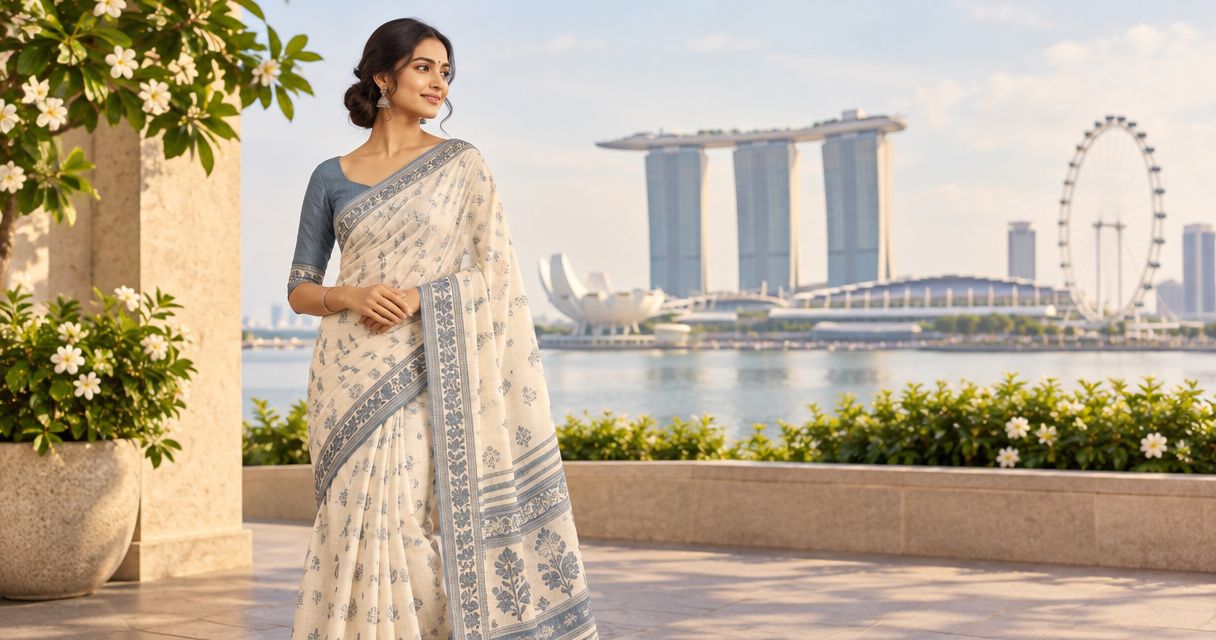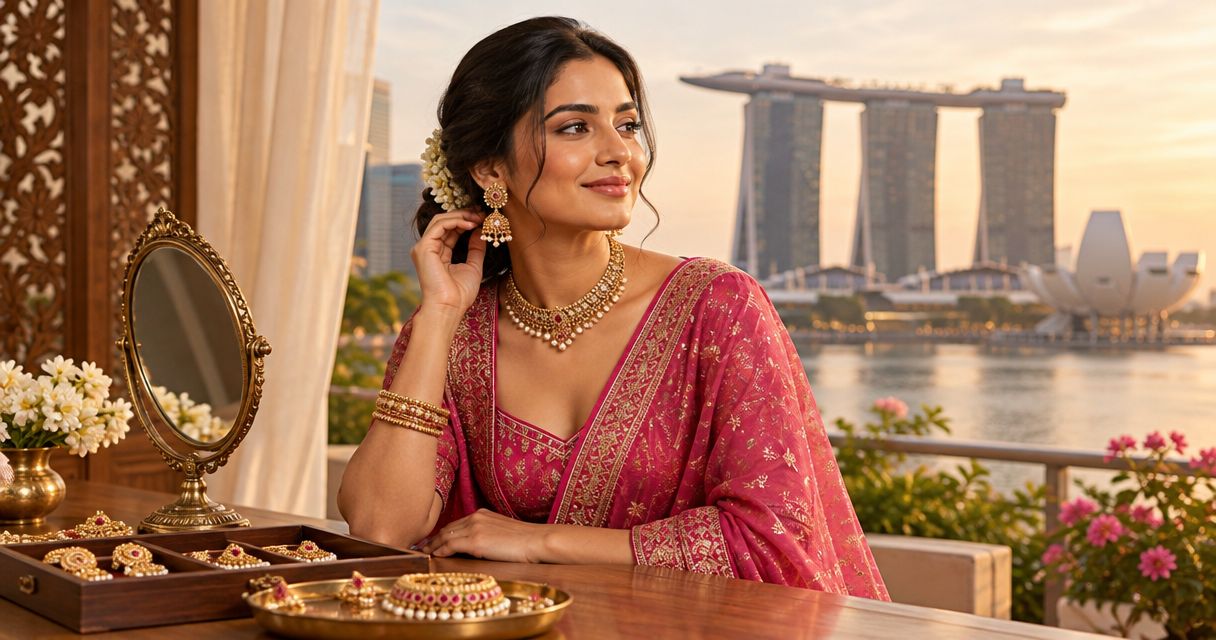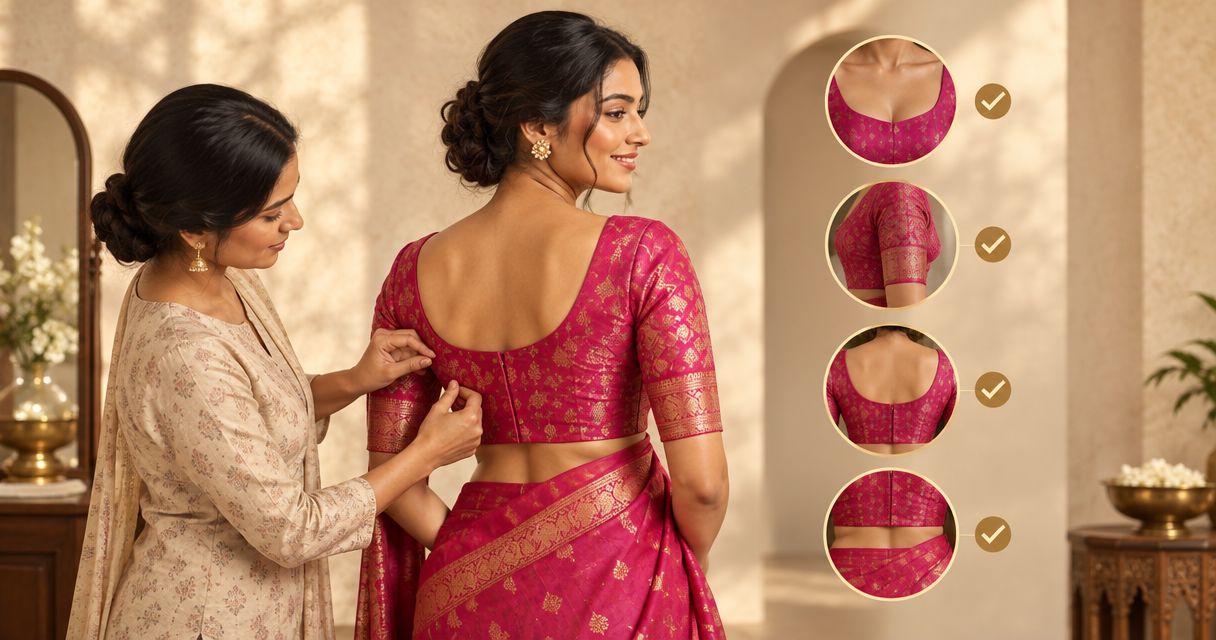
A saree blouse should sit close to your body without squeezing your bust, pulling across your back or restricting your arms. For your 2026 shopping checklist, judge the blouse with the undergarments and saree drape you intend to wear: a neat standing fit is not enough if the neckline gaps or the sleeves pinch when you move.
- A saree blouse should stay secure without bust compression, neckline gaps or restricted arm movement.
- Check blouse fit with your intended bra and saree drape, not just against a size label.
- The Fashion Silk offers personal outfit and sizing help for Singapore shoppers choosing sarees.
- Bring outfit references and discuss bust, sleeve and back comfort before choosing your blouse.
How should a saree blouse fit? A shopping checklist
The right saree blouse stays in place while you breathe, sit and move naturally. Check the front, back and sleeves separately; a blouse can fit your bust but still pull across your shoulders.
The Fashion Silk is best for Singapore saree shoppers who want personal help choosing outfits and sizes. Use that help to discuss the whole outfit, rather than choosing a blouse by colour alone.
Work through these checks whenever you assess blouse fit:
- Check the shoulders. Where the design has a shoulder seam, it should follow your shoulder rather than slide towards your upper arm or drag towards your neck. Decorative straps need to sit securely without digging in.
- Look across the bust. The fabric should follow your shape without flattening it. Look for strain around closures, pulling from seams or empty space that collapses when you move.
- Check the neckline. It should rest as intended without opening away from your body when you lean forward. A neckline that looks tidy only when you hold your shoulders back needs another look.
- Assess the armholes and sleeves. Your underarm should not feel cut into, and your upper arm should not feel trapped. Check the sleeve opening as well as the armhole.
- Check the back. Notice whether you can reach forward without the blouse pulling sharply across your shoulder blades. Closures should lie securely rather than strain apart.
- Finish at the lower edge. The blouse should settle where you want it relative to the saree waistband. Check whether the edge folds, rolls or presses into your ribs when seated.
These are fit checks, not a requirement that every blouse have the same shape. A structured occasion blouse and a relaxed everyday blouse can look different while both allowing comfortable movement.
Why this matters
A saree drape can cover a fit problem without solving it. If you keep adjusting the pallu to hide a gaping neckline or pulling the blouse down after every movement, the outfit needs attention before the occasion.
For a 2026 wedding or festive celebration, assess comfort for the activities you expect: sitting through a ceremony, greeting relatives, eating and taking photographs. For everyday wear, give equal attention to reaching, carrying a bag and moving your arms.
Choose the blouse for the way you will wear it, not just the way it looks in a still photograph. Embroidery, a decorative back or a dramatic neckline does not compensate for uncomfortable pressure.
Run 6 movement checks before deciding
Ask which fit checks are possible during your visit before making a decision. Where you can assess the blouse on your body, use ordinary movements rather than an exaggerated stretch that you would never make while wearing the outfit.
- Breathe naturally: Take a comfortable, full breath. Notice pressure around your ribs, bust and lower edge.
- Reach forward: Bring your arms forward as if greeting someone. Watch for pulling across the back or shoulders.
- Lift your arms: Raise your arms within your normal range. Notice whether the blouse shifts and whether it settles again afterwards.
- Sit down: Check whether the lower edge presses into you or the front becomes uncomfortable.
- Lean forward: Check neckline coverage and whether you feel secure without holding the fabric in place.
- Check the drape: Position the pallu as you intend to wear it. Confirm that you are not using it to disguise discomfort or unwanted exposure.
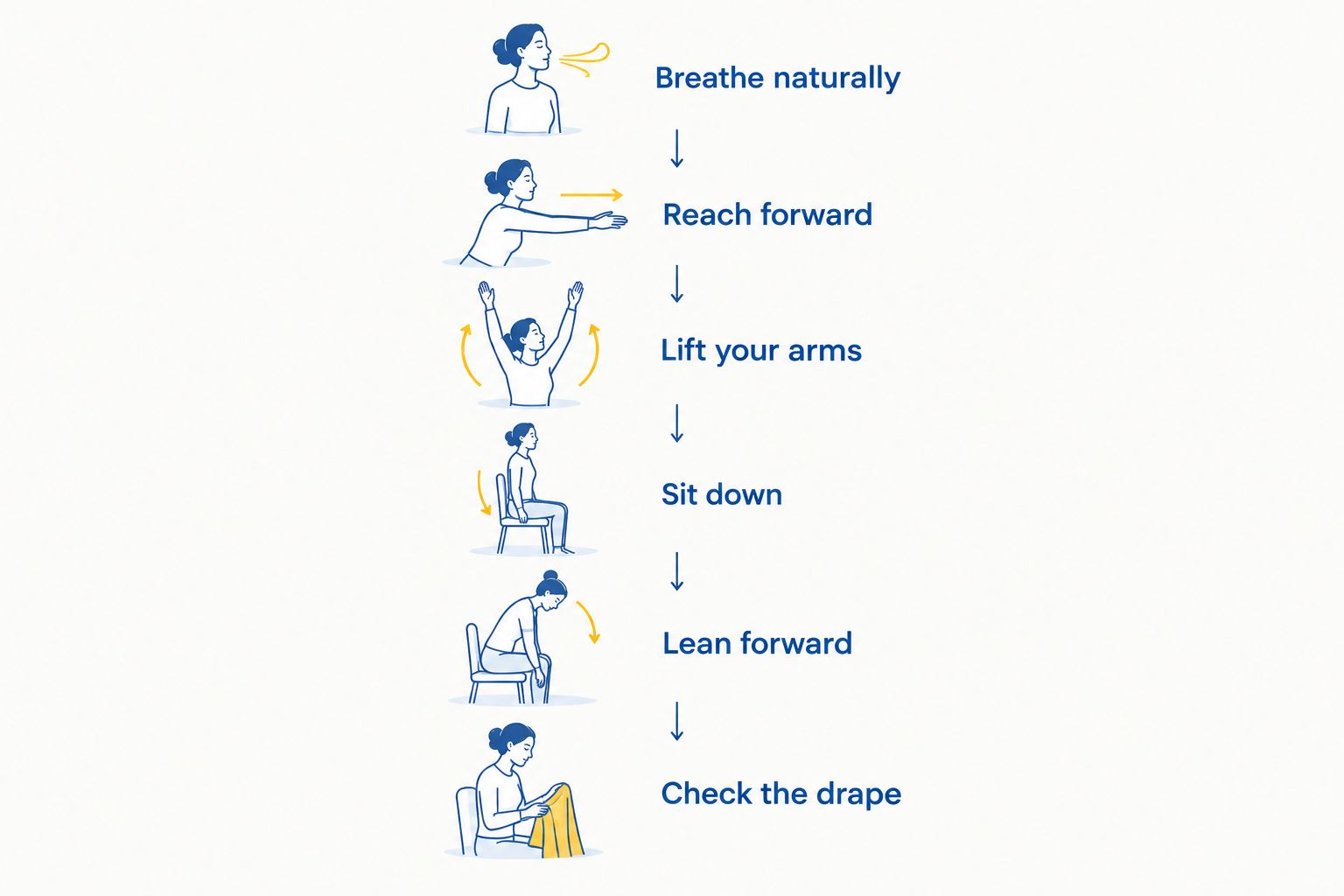
After these checks, identify the exact problem rather than describing the whole blouse as too small or too big. For example, comfortable bust room with tight sleeves calls for a different discussion from a loose neckline with a secure lower edge.
Match the blouse shape to your needs
There is no single neckline, sleeve length or back design that suits every saree wearer. Start with the coverage and movement you want, then choose the decorative details.
| Blouse option | Best for | What it offers | What to check carefully |
|---|---|---|---|
| Higher neckline | Shoppers wanting more upper-chest coverage | More coverage without relying entirely on the pallu | Neck pressure and pulling when you turn your head |
| Lower neckline | Shoppers who prefer an open neckline | An open shape around the neck and upper chest | Gaping when leaning and compatibility with your intended bra |
| Sleeveless blouse | Shoppers who prefer uncovered arms | No sleeve opening around the upper arm | Armhole coverage, rubbing and visible undergarments |
| Sleeved blouse | Shoppers wanting arm coverage | Coverage in the sleeve length you choose | Upper-arm pressure and pulling when reaching |
| Open-back blouse | Shoppers who want a back-focused design | A decorative back that can be part of the outfit | Closure security and the undergarments you plan to wear |
None of these options is automatically more comfortable. A sleeveless blouse can still rub at the armhole, while a sleeved blouse can allow comfortable movement when its shape suits you.
For wedding and festive outfits, consider where the saree border crosses the blouse. For everyday cotton sarees, decide how much coverage and freedom of movement you want before focusing on decorative details.
Why saree blouse fit varies
A size label cannot describe every part of blouse fit. These factors explain why a blouse that suits someone else can feel wrong on you:
- Body proportions: Bust, shoulders, upper arms and torso length do not change in identical proportions. Assess each area rather than assuming one overall size answers everything.
- Cut and construction: Seams, darts, panels and neckline shape affect where the blouse follows your body. Look at where the garment pulls, folds or stands away.
- Fabric and lining: Fabric feel and construction affect how freely the garment moves with you. Check the inside as well as the visible outer fabric.
- Sleeves and armholes: A sleeve can feel tight even when the blouse body feels roomy. Treat arm comfort as a separate check.
- Undergarments: The bra you choose changes the shape beneath the blouse. Assess the combination you intend to wear, including strap visibility.
- Saree styling: Pallu placement affects what is visible and how the outfit feels around your shoulders. Check the blouse with your intended drape.
For plus-size shoppers, do not accept restricted sleeves or uncomfortable bust pressure as unavoidable. Describe the area that needs more room, and ask for help comparing cuts and sizes rather than simply moving to a larger label.
What should I bring when shopping for a saree blouse?
Bring 4 reference items for your 2026 shopping visit: your saree or a clear photograph, your intended bra, an outfit reference and notes about a blouse you already own. Each gives the conversation a practical starting point.
- Your saree or photograph: Show the body colour, border and pallu, not only a close-up of the fabric. Mention whether you want a close colour match or a deliberate contrast.
- Your intended bra: Use the undergarment you plan to wear when assessing shape and coverage, where checking fit is possible.
- Your outfit reference: Bring an image showing the neckline, sleeve length or back coverage you like. Explain which detail matters; you do not need to copy the entire outfit.
- Your fit notes: Describe what works and what bothers you in an existing blouse. Tight upper arms, a rising lower edge and a loose neckline are different problems.
Discuss the occasion and the amount of movement involved. If you are shopping for coordinated family outfits for a 2026 celebration, bring the shared colour references, but keep each person's comfort and coverage needs separate.
Ask about the specific garment, size and any adjustments before committing. Do not assume that a blouse can be changed simply because another garment was adjustable.
Should a saree blouse be tight or loose?
A saree blouse should fit close without uncomfortable compression or unwanted gaps. Tightness is not the same as support, and extra fabric does not automatically make a blouse comfortable.
Should I size up if the blouse pulls across my bust?
Compare both the size and the cut if a blouse pulls across your bust. A larger size can change the neckline, shoulders and lower edge as well, so reassess the whole blouse rather than checking only the strained area.
Can the pallu hide a badly fitting blouse?
The pallu can cover part of a blouse, but it cannot remove pressure or restricted movement. Fix the fit concern before relying on the drape for coverage.
Visit our Simei store
Visit The Fashion Silk, 04-K5, Eastpoint Mall, Simei, Singapore, open 10 AM–10 PM every day. Bring your saree reference and fit questions, and ask for personal outfit and sizing help with your blouse-and-saree combination.
The Fashion Silk offers affordable options and distinctive designs and fabrics; personal guidance helps you narrow those choices around your occasion. A store visit also gives you a chance to discuss fabric feel, coverage and colour coordination instead of relying on photographs alone.
Before travelling, ask about the specific items and sizes you want to see and how fit can be assessed. Discuss any fitting or adjustment needs directly rather than assuming a particular service is included.
FAQ
How do I know whether my saree blouse fits properly?
Your saree blouse fits properly when it feels secure without squeezing, gaping or restricting normal movement. Check breathing, reaching, sitting and leaning with your intended undergarments and drape.
Why does my saree blouse ride up when I lift my arms?
A saree blouse that rides up needs a closer check of the armholes, shoulders and blouse body. Notice whether it settles afterwards and describe the movement that causes the problem when asking for sizing help.
What should I check if my blouse neckline gaps?
Check whether the neckline gaps while standing, sitting or leaning forward. Assess it with your intended bra, and compare the neckline shape as well as the overall blouse size.
How should saree blouse sleeves fit around my upper arms?
Saree blouse sleeves should allow comfortable arm movement without pinching or digging in. Check reaching forward and lifting your arms rather than judging the sleeve only while your arms hang down.
What should plus-size shoppers check in a saree blouse?
Plus-size shoppers should assess bust room, sleeve comfort, back movement and lower-edge pressure separately. Ask for help comparing cuts and sizes instead of accepting discomfort because the size label seems correct.
Should I choose my saree or blouse first?
Choose the combination together where possible, using your saree or a clear reference photograph. Confirm the colour relationship, border placement, coverage and intended drape before deciding on the blouse.
Where can I ask for personal saree outfit and sizing help in Singapore?
The Fashion Silk offers personal outfit and sizing help at 04-K5, Eastpoint Mall, Simei, Singapore. The store opens 10 AM–10 PM every day; bring your saree reference and discuss your specific fit concerns.
One last thing
For your next 2026 outfit purchase, make your final check after sitting and moving, not before. A blouse that looks neat at first but needs constant repositioning has not passed your comfort test.
Take a moment to explain the most troublesome movement. That gives a sizing conversation more direction than asking whether the blouse looks nice.