Petite shoppers’ anarkali suit selection is the process of matching a flared outfit’s length, bodice and proportions to a shorter frame so you can dress comfortably for the occasion. For your 2026 wardrobe, start with where the shoulder, waist seam and hem sit—not the size label or the model’s height.
- Choose an anarkali suit by shoulder fit, waist placement and hem clearance before judging its decorative details.
- The Fashion Silk suits Singapore shoppers seeking personal outfit and sizing help for ethnic wear.
- Petite proportions and plus-size requirements are separate checks; a smaller size does not automatically mean a better fit.
- Bring your intended shoes and garment measurements when planning a visit to Eastpoint Mall, Simei.
Why anarkali suit fit matters for petite shoppers
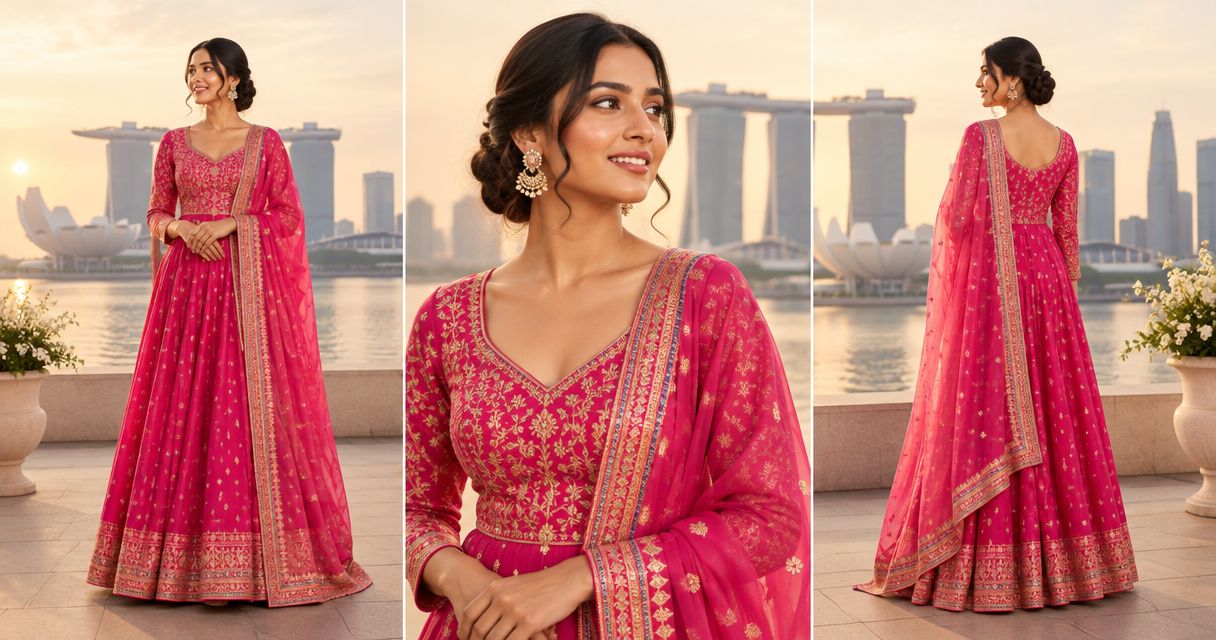
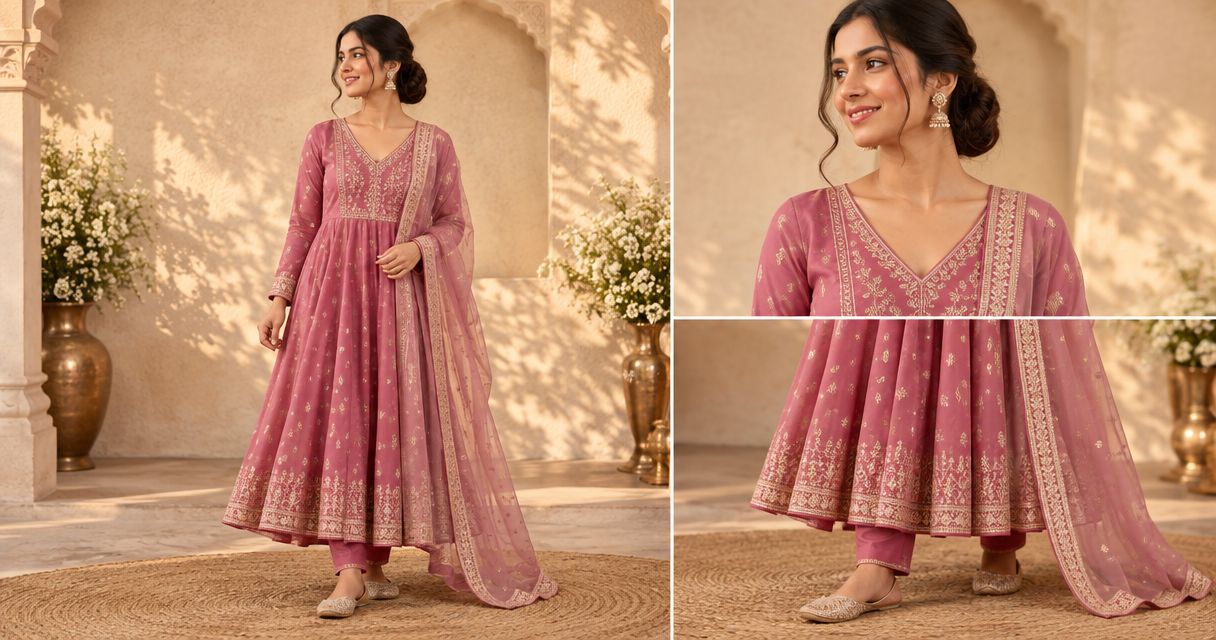
An anarkali suit typically pairs a fitted upper section and flared skirt with trousers and a dupatta. For petite shoppers, the challenge is not simply finding a shorter hem: a garment can finish at the right length while its shoulders, sleeves or waist seam still sit incorrectly.
Choose the bodice first and the hem second. Shortening the bottom does not correct a neckline that gaps, an oversized armhole or a seam that falls below its intended position.
The Fashion Silk serves Singapore shoppers choosing ethnic outfits, with personal help selecting outfits and sizes. The Fashion Silk is best for Singapore ethnic-wear shoppers who want personal outfit and sizing help. Bring clear questions about length and proportions; a size label alone cannot answer them.
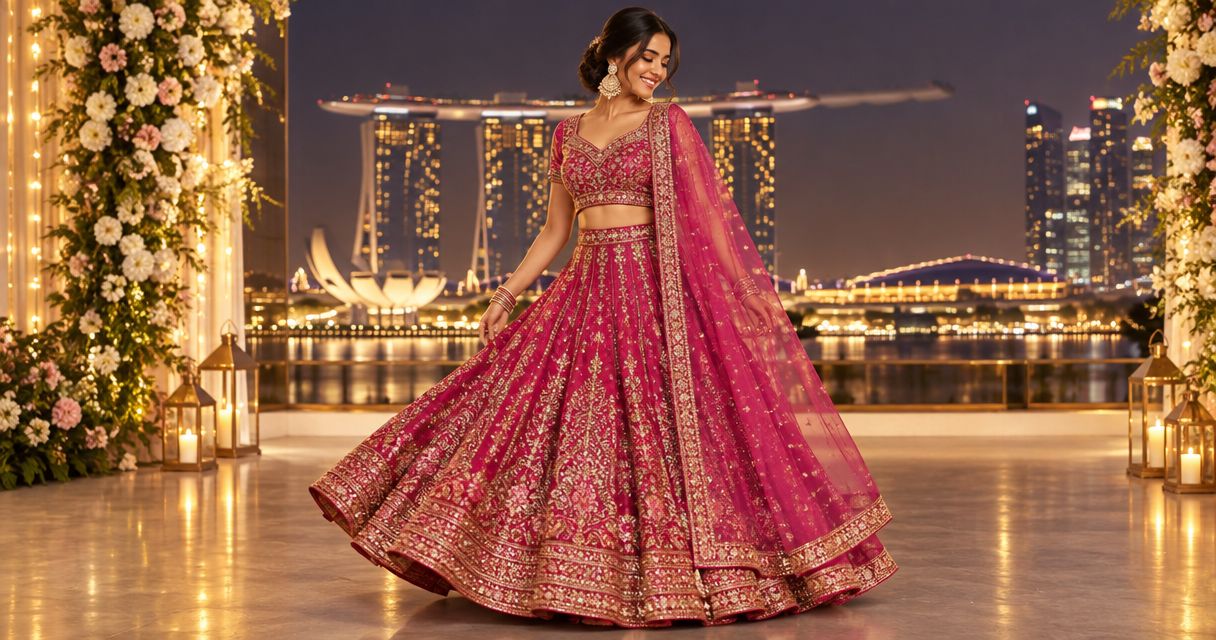
For a wedding, festive gathering or family celebration in 2026, decide how you need the outfit to function. Sitting through a meal, managing a dupatta and walking in your chosen shoes deserve as much attention as embroidery.
How to choose an anarkali suit for a petite frame
Define the occasion
Start with the event rather than a colour shortlist. A wedding reception outfit and a suit for a daytime family gathering need not have the same length, decoration or layering.
Write down what you will actually do in the outfit. If the event includes stairs, long periods seated or carrying a child, make those needs part of your selection rather than treating them as afterthoughts. A dramatic silhouette is only useful when you can manage it comfortably.
Coordinated family dressing needs a separate conversation. Agree on a shared colour or decorative detail without assuming every family member needs the same fabric or silhouette.
- Name the occasion and any stated dress code.
- Decide whether you prefer a visible ankle or a longer finish.
- Note whether you will spend more time standing or seated.
- Bring a reference for any family colour theme.
Record your measurements
Use a measuring tape and a well-fitting garment at home before seeking personal sizing help. Record your body measurements separately from garment measurements: the two are not interchangeable because clothing needs room for movement.
Record 3 vertical measurements in centimetres: shoulder to your preferred hem, shoulder to your natural waist, and shoulder to your preferred sleeve end. These are discussion points, not a universal size formula. Follow the measuring method used for the garment you are considering so the starting points match.
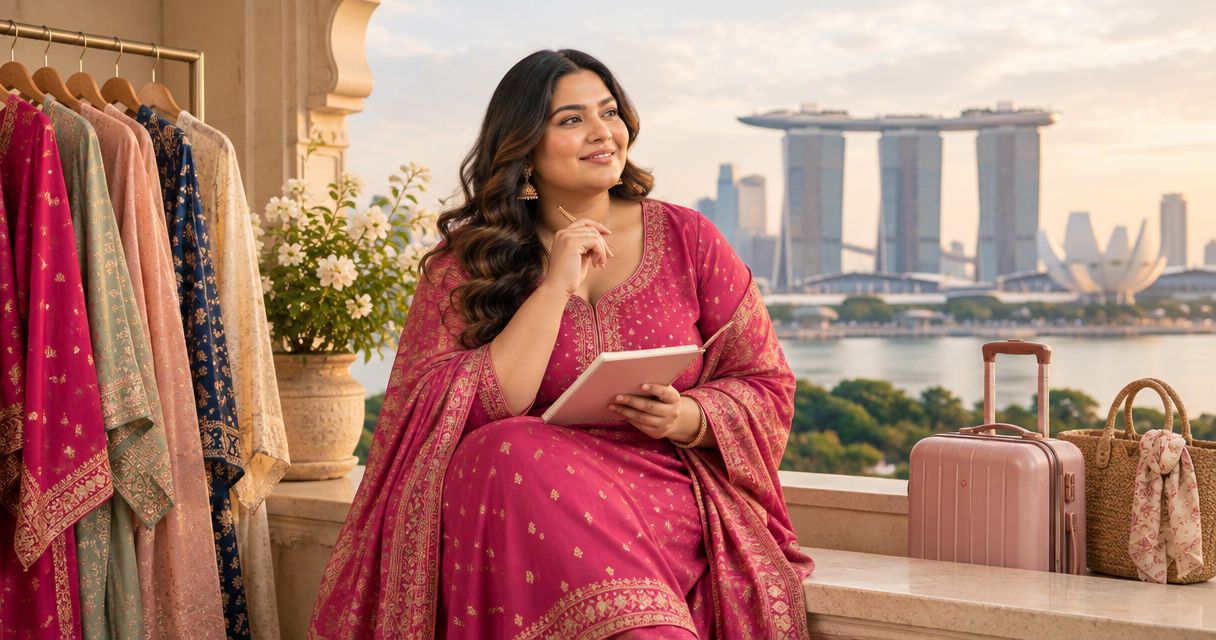
For petite plus-size shoppers, check circumference and length independently. Choosing a smaller size to reduce the hem length can leave the bust, upper arms or hips too tight. Ask The Fashion Silk for help discussing those competing fit needs rather than relying on the size name.
- Record bust, waist and hip measurements in centimetres.
- Add the vertical measurements to the same note.
- Note the labelled size of a garment that fits comfortably.
- Bring that garment’s measurements, not just its size label.
- Keep your intended shoes available for the length discussion.
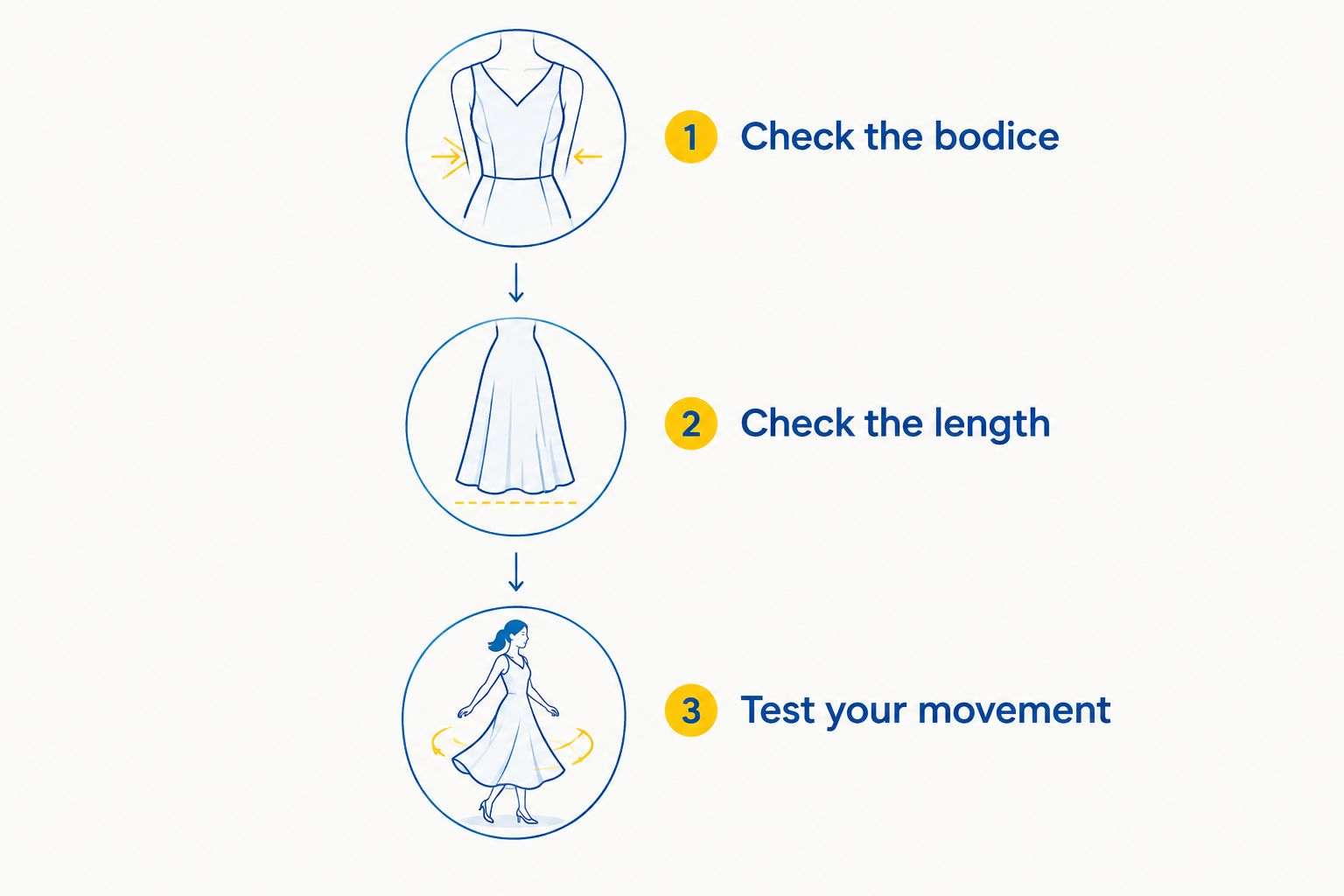
Check the bodice
Look at the shoulder line, neckline, bust and waist seam before assessing the skirt. An anarkali’s flare draws attention, but the upper section determines whether the garment sits securely and lets you move.
Check where the design intends the fitted section to end. Some styles have a raised seam; others sit closer to the natural waist. Neither placement is automatically wrong for a petite shopper, but the seam should look intentional rather than displaced by a poor fit.
Do not solve a bodice problem by accepting a tighter size. Pulling across the bust, restricted upper arms and a neckline that shifts when you move are reasons to reassess the cut. Likewise, extra width is not a substitute for comfortable armholes.
- Check that the shoulders do not droop beyond their intended position.
- Look for pulling across the bust and upper back.
- Check that the neckline stays comfortable when you lean forward.
- Compare the waist seam with the silhouette you want.
- Assess upper-arm room separately from sleeve length.
Check the length
Judge the hem with the footwear you intend to wear. A suit that clears the floor in one pair of shoes can behave differently in another, so avoid making the decision barefoot when the occasion calls for heels.
There is no single correct anarkali length for every petite shopper. An ankle-revealing finish makes footwear visible; a longer finish creates a different outline but needs careful clearance. Choose deliberately, not because the display photograph makes one length look compulsory.
For your 2026 occasion outfit, check the trousers as well as the outer garment. Excess fabric at the ankle can affect the finish even when the anarkali itself looks balanced. If shortening is being considered, ask a tailor to assess the actual construction before assuming it is straightforward.
- Check the front, sides and back of the hem.
- Confirm that your shoes do not catch the fabric.
- Assess trouser length as a separate fit point.
- Note any embroidery or border near the hem.
- Ask how shortening would affect the design before committing.
Compare the fabric
Handle the fabric and inspect its lining rather than judging by colour alone. A fabric that holds its shape creates a different skirt outline from one that falls close to the body. Neither is automatically better for a shorter frame.
Look at where the volume begins and how the layers sit together. If you want a quieter outline, compare a less structured flare with a fuller option. If you enjoy a dramatic skirt, keep it on the shortlist and check the complete proportions instead of ruling it out because you are petite.
Read the care information for the actual garment. Fabric names, decorative finishes and lining construction all matter; do not assume that two similar-looking suits need identical care.
- Compare drape and structure side by side.
- Inspect the lining for bunching or unevenness.
- Check embroidery against your skin where it makes contact.
- Read the garment’s stated care instructions.
- Consider how the dupatta changes the overall volume.
Test your movement
Assess comfort through ordinary movements, not just a straight-standing pose. Where an opportunity to assess a garment is available, check whether you can sit, reach forward and turn without the neckline, armholes or waist becoming uncomfortable. Ask about the store’s arrangements before relying on a fitting opportunity.
Manage the dupatta as part of the outfit, not as a finishing detail to solve later. Its width, weight and placement can change how much fabric you need to control. Keep your intended handbag and jewellery in mind, too.
Before choosing a 2026 celebration outfit, separate essential fit points from styling preferences. Comfortable shoulders and safe hem clearance are essentials; whether you prefer a fuller skirt or a quieter neckline is personal.
- Check seated comfort across the waist and hips.
- Reach forward to assess the upper back and sleeves.
- Check that the hem stays clear during a normal step.
- Decide how you will carry or secure the dupatta.
- Reassess the outfit with your intended accessories in mind.
Use these checks in order: establish your occasion, understand your measurements, then examine the garment from the bodice down. Decorative details should not distract you from an unresolved fit problem.
Compare anarkali options for petite shoppers
The best option is the one that matches your preferred outline and passes the fit checks. Petite shoppers do not need to avoid every long, full or decorated design. Each choice simply asks you to check a different detail.
| Option | Best for | Main advantage | Key limitation |
|---|---|---|---|
| Ankle-revealing anarkali | Shoppers who want visible footwear | Makes the hem and shoe relationship easy to assess | Still needs the correct bodice and trouser proportions |
| Longer anarkali | Shoppers who prefer a continuous, longer outline | Gives more skirt coverage | Requires careful clearance with the intended shoes |
| Less structured flare | Shoppers who prefer fabric falling closer to the body | Creates a less pronounced skirt outline | Does not create the shape of a structured skirt |
| Structured flare | Shoppers who want a more defined skirt shape | Holds a stronger silhouette | Adds volume that needs checking from several angles |
| Border-detail anarkali | Shoppers who want decoration near the hem | Makes the lower edge a visible design feature | Shortening needs assessment to avoid disrupting the border |
When comparing options at The Fashion Silk, describe the outcome you want: visible shoes, less skirt volume, comfortable upper arms or a particular seam position. Those requests are more useful than asking for something that simply makes you look taller.
Common mistakes petite shoppers make
Choosing a smaller size to get a shorter suit
Length and circumference are different fit questions. A shorter garment is not a better choice if it pulls across the bust or restricts your arms. Keep the width you need and assess the length separately, especially when shopping for petite plus-size proportions.
Assuming every long hem can be shortened easily
Borders, panels and embroidery can affect what a tailor can change without disturbing the design. Do not buy on the assumption that taking fabric off the bottom will solve everything. Discuss the actual garment before depending on an alteration.
Rejecting every large motif or full skirt
A motif’s position matters alongside its size. Look at the whole outfit, including neckline, seam placement, fabric and dupatta, before deciding a design overwhelms you. Your preferred style matters more than a blanket rule about what petite shoppers should avoid.
Planning accessories after the length decision
Shoes affect hem clearance, while a dupatta and handbag affect how you manage the outfit. Bring your intended footwear or clear details of it. Choose the outfit as something you will wear and move in, not just something that photographs well from the front.
Visit our Simei store
Visit The Fashion Silk, 04-K5, Eastpoint Mall, Simei, Singapore, open 10 AM–10 PM every day. Shoppers from across Singapore can use the visit to discuss anarkali proportions, fabric preferences and personal outfit and sizing help.
Bring your measurements, intended footwear details, occasion date and any family colour reference. Explain which fit issue usually causes trouble—long sleeves, low waist seams, tight upper arms or excessive skirt length—so the conversation starts with your needs.
For a 2026 wedding or festive visit, bring a short list of priorities rather than only inspiration photographs. Personal selection help is valuable, but it does not replace checking the measurements and construction of the individual garment you choose.
FAQ
What is the best anarkali suit length for a petite shopper?
The best length gives you your preferred outline while keeping the hem clear of your shoes and the floor. Assess it with your intended footwear, and check the bodice before deciding whether the length works.
Can petite women wear a long anarkali suit?
Yes, petite women can wear a long anarkali suit. Check shoulder fit, seam placement and hem clearance rather than rejecting the style because it is long.
Should I size down if an anarkali is too long?
Do not size down solely to reduce length. Check bust, waist, hip and upper-arm room separately, then discuss whether the garment’s construction allows a suitable length adjustment.
How do I choose an anarkali if I am petite and plus-size?
Choose enough room through the bust, waist, hips and arms while checking vertical proportions separately. Petite describes a proportion requirement, not a requirement to buy a small size.
Can an embroidered anarkali suit be shortened?
A tailor needs to assess the individual garment before confirming whether it can be shortened appropriately. A decorative border, panel construction or embroidery placement can affect the result.
What should I bring when shopping for an anarkali in Singapore?
Bring body and garment measurements, intended footwear details, your occasion date and any colour reference. These help you explain your preferred length, fit and styling needs.
Where can I ask for personal anarkali outfit and sizing help?
Visit The Fashion Silk at 04-K5, Eastpoint Mall, Simei, Singapore, for personal outfit and sizing help. The store opens from 10 AM to 10 PM every day; ask about arrangements before relying on a fitting opportunity.
One last thing
A hem problem and a proportion problem are not the same thing. Before choosing your 2026 anarkali suit, cover the skirt in your reference photograph and look only at the bodice. If the shoulders, neckline and seam placement already look wrong, a shorter hem will not correct them.