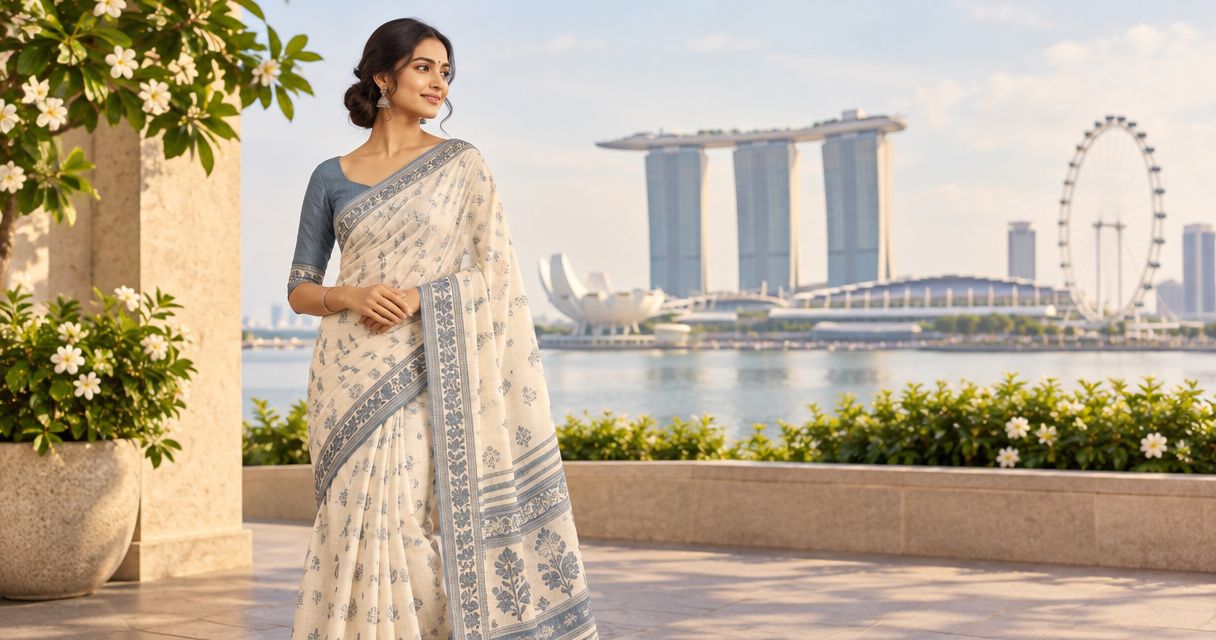
Singapore everyday-wear saree shopping is choosing a cotton saree for routine activities, with the aim of balancing comfort, coverage and manageable care. Your best choice depends on how the fabric feels, how the drape moves and whether the care instructions suit your week—not simply how the saree looks folded.
- The Fashion Silk is best for cotton saree shoppers in Singapore who want personal outfit and sizing help.
- Choose everyday cotton sarees by fabric feel, opacity, drape and care instructions—not colour alone.
- Check cotton blends by their stated composition; the word cotton does not describe the whole fabric.
- Bring your measurements, blouse reference and usual footwear when planning your Simei store visit.
Why cotton saree choice matters for everyday wear
An everyday saree needs to work while you sit, walk, commute and carry a bag. A fabric that looks attractive on a display can still feel too stiff, reveal more than you want or need care you do not want to repeat.
Cotton absorbs moisture, but cotton content alone does not determine comfort. Fabric weight, weave, finishing, blouse construction and the layers underneath also affect how an outfit feels. For your 2026 wardrobe, judge the complete outfit rather than treating a cotton label as a comfort guarantee.
The Fashion Silk is best for cotton saree shoppers in Singapore who want personal outfit and sizing help. Use that help to compare your shortlist against your actual routine, then check the composition and care information for each individual piece.
How to choose an everyday cotton saree
1. Define your everyday routine
Start with the places you expect to wear the saree. An office outfit, a day of errands and a relaxed family lunch do not place identical demands on your clothes. Write down the setting before choosing colours or decorative details.
For work, consider your dress code, desk chair and how the pallu will sit while you use your hands. For errands, think about carrying a shoulder bag and moving between different spaces. If you spend time outdoors, assess the blouse and underskirt alongside the saree rather than assuming a lighter-looking fabric solves everything.
Build your 2026 shortlist around a clear use case. You can take a phone note to the shop; no wardrobe app or elaborate checklist is needed. A saree you can explain in terms of your routine is easier to assess than one selected only because the print catches your eye.
- Name the main setting: work, errands, home or casual outings.
- Note whether you spend more time sitting, standing or walking.
- Identify any workplace expectations for coverage or colour.
- Describe how you usually carry your bag and manage the pallu.
- Decide whether easy care or a particular appearance takes priority.
2. Read the fabric description before judging softness
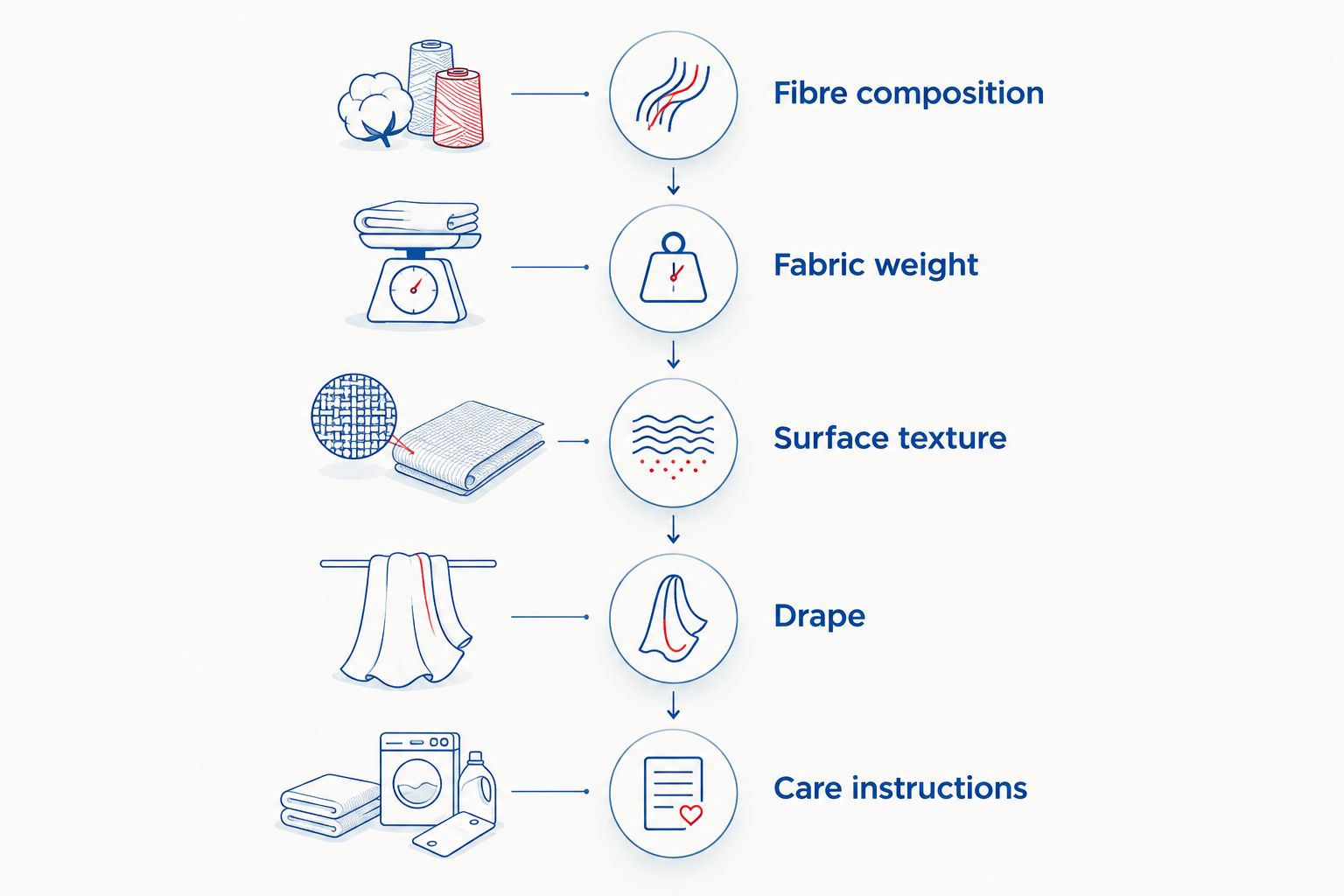
Look for the stated fibre composition first. Pure cotton and a cotton blend are not interchangeable descriptions, and a blend needs more explanation than the word cotton on its own. Ask what the other fibres are and read the care label for the specific saree.
Then assess the fabric with your hands. Notice its weight, surface texture and stiffness, and compare it with a cotton garment you already enjoy wearing. A smooth finish is not proof of pure cotton, while a crisp feel does not automatically mean a fabric is unsuitable for everyday use.
Choose the composition and feel that suit your routine, not a label you cannot verify. If information on a tag and a product description differs, ask for clarification before deciding. Do not use a burn test or another destructive test on shop merchandise.
- Read the stated fibre composition.
- Ask what fibres make up any cotton blend.
- Compare fabric weight and surface texture by hand.
- Check whether the material feels crisp, soft or structured.
- Read the washing, drying and ironing instructions.
3. Check coverage and drape together
Begin with a simple visual check in available light. Hold a section of the fabric against a contrasting background, with permission, and see how readily the background shows through. This is a practical comparison, not a guarantee of how the saree will look under every lighting condition.
Next, ask to see how the fabric falls and how folded layers sit together. The pallu, border and pleats can behave differently from the main body of the saree. A heavier border deserves attention if your aim is an uncomplicated everyday drape.
The Fashion Silk offers personal help choosing outfits and sizes. Use that conversation to discuss coverage, pleat bulk and blouse pairing; personal advice does not replace checking the particular saree yourself. Explain what you find uncomfortable in your current outfits so the discussion stays specific.
- Compare opacity against a contrasting background.
- Ask to see the fabric opened out, where permitted.
- Examine the border separately from the main fabric.
- Look at how several folded layers sit together.
- Discuss your preferred coverage and usual draping style.
4. Plan the blouse and underskirt before buying
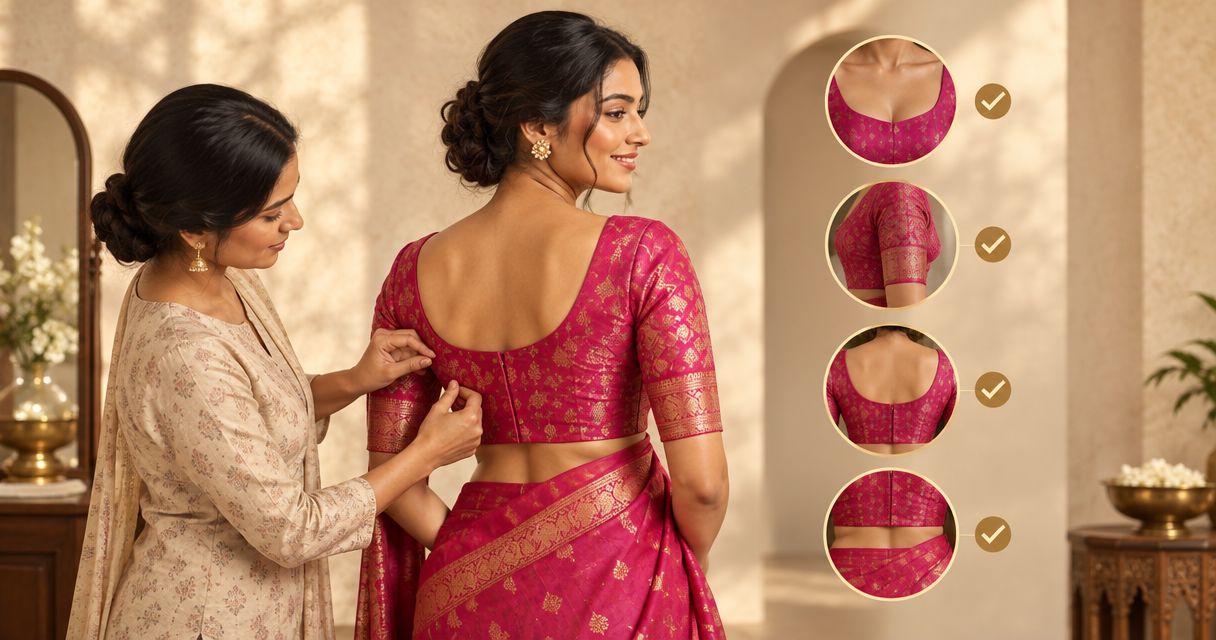
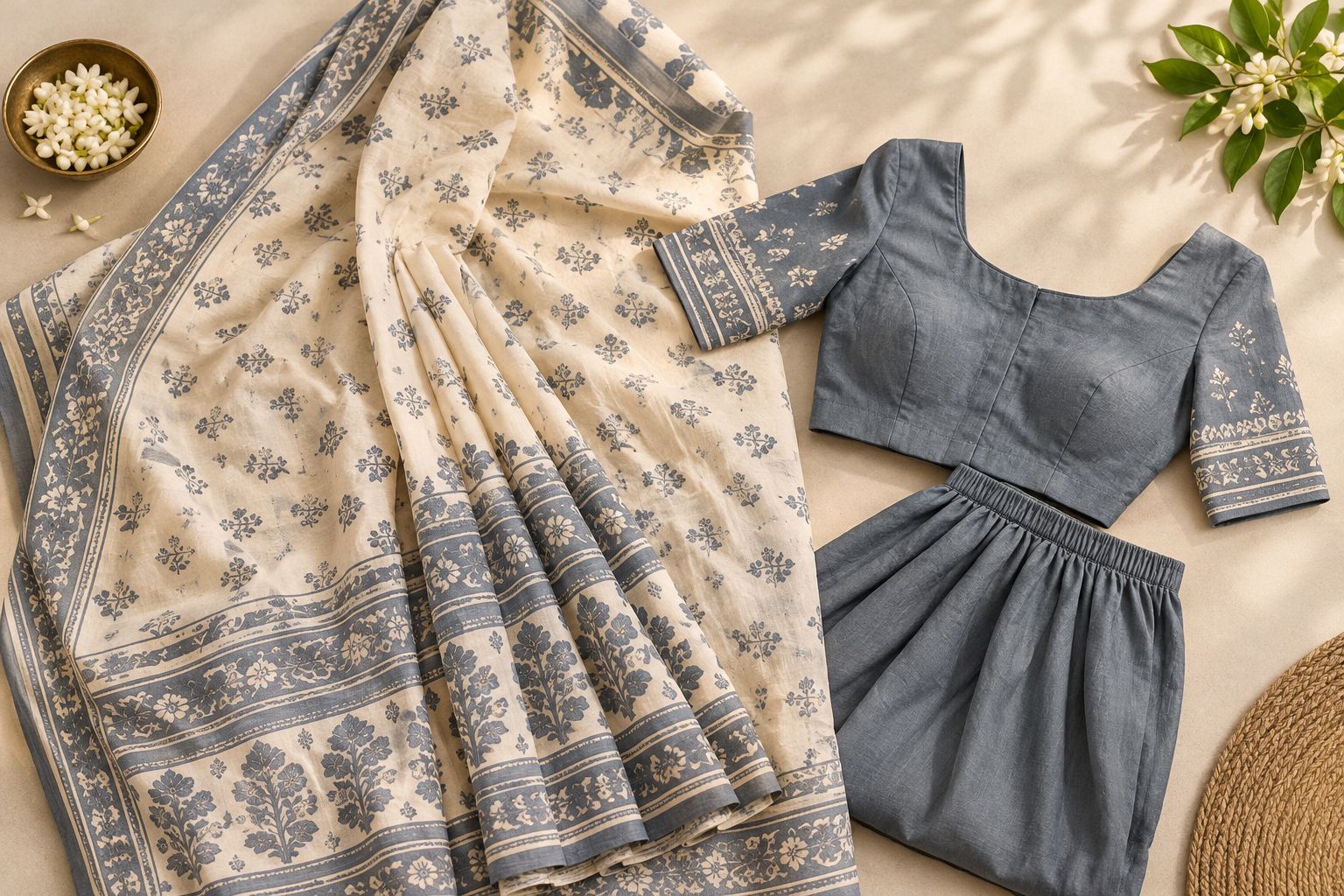
An everyday cotton saree is an outfit, not just a length of fabric. Start with a blouse and underskirt you already own, and bring a photograph or colour reference. Check whether their colour, neckline and shape support the look you want.
A blouse that restricts your shoulders can undermine an otherwise comfortable saree. Likewise, an underskirt that feels tight when seated or creates unwanted bulk deserves attention before you commit to the pairing. Ask what is included with the saree; do not assume a blouse piece means a finished blouse.
For your 2026 shopping list, separate pieces you can wear with existing wardrobe items from those that require additional preparation. This keeps a simple everyday purchase from becoming an unfinished outfit. Any stitching or alteration arrangements need separate confirmation rather than an assumption at the point of selection.
- Bring a blouse photograph or fabric swatch.
- Check whether a blouse piece is included.
- Confirm whether any blouse shown is stitched or unstitched.
- Compare the underskirt colour with the saree's opacity.
- Discuss sleeve, neckline and shoulder comfort.
5. Discuss fit without reducing it to a size label
Use your own measurements as the starting point, not the size printed on a garment you bought elsewhere. Record 3 measurements for a blouse discussion: bust, waist and shoulder width. Ask which additional measurements are needed for the particular blouse or outfit under consideration.
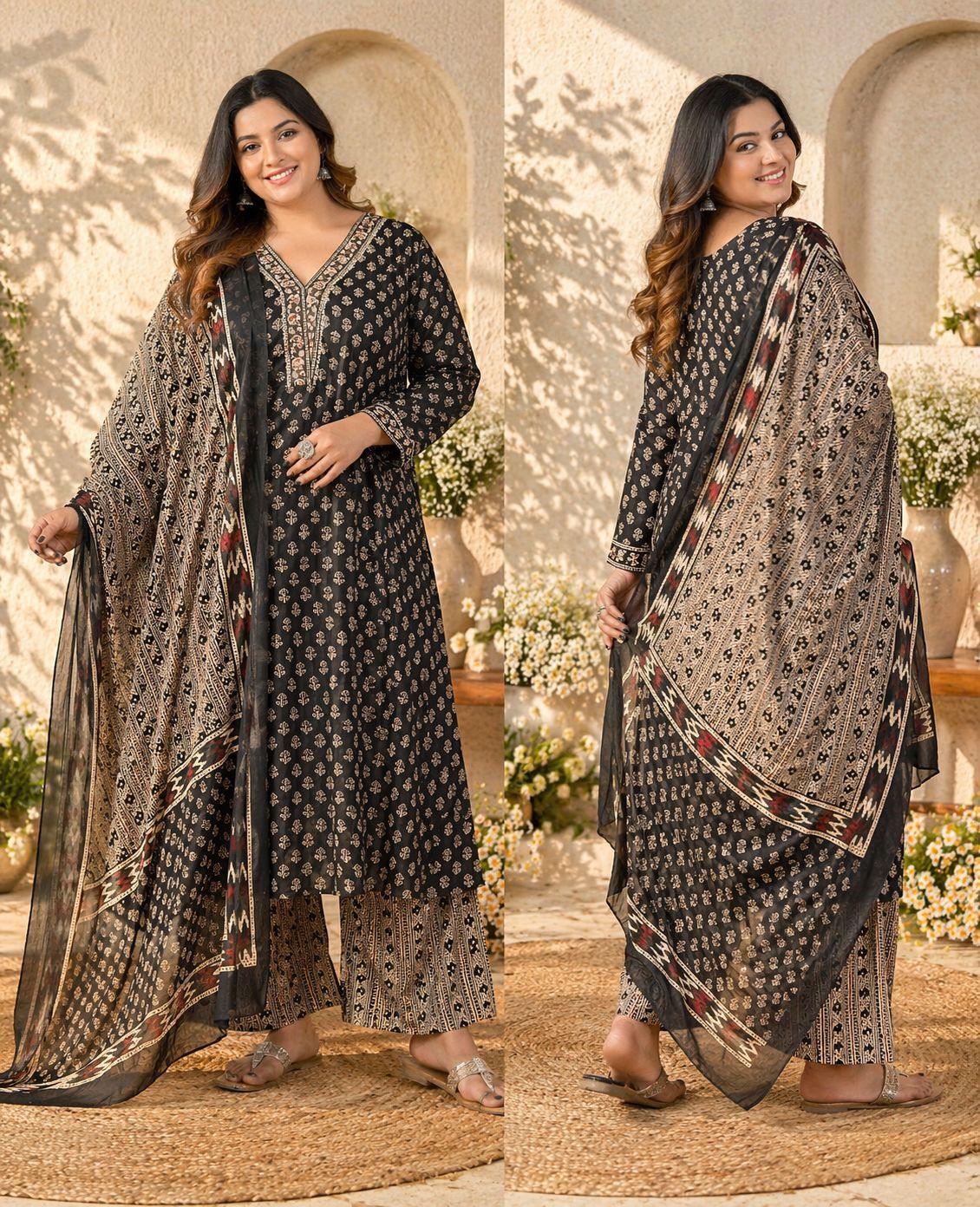
Saree fit also involves how you wrap and secure the fabric. If you prefer a fuller drape, more coverage or a different pallu arrangement, explain that directly. Plus-size shoppers should discuss these preferences alongside blouse comfort rather than being directed only towards a colour or print.
Choose for movement and coverage, not for a smaller label. Share where existing blouses pull or gape, and whether your underskirt waistband remains comfortable while seated. Bring your usual footwear as a reference when discussing hem position, but confirm any fitting arrangements before relying on them.
- Bring current bust, waist and shoulder measurements.
- Mention areas where existing blouses pull or gape.
- Explain your preferred pallu coverage and pleat arrangement.
- Discuss seated comfort at the waistband.
- Bring the footwear you expect to wear with the outfit.
6. Match care requirements to your actual week
Read the care label before treating a cotton saree as an easy-care purchase. Cotton garments can crease, and shrinkage or colour transfer needs to be assessed for the individual fabric. Decorative borders and attached details can also change how a saree should be cleaned.
Start with the manual approach: photograph the care label and compare its instructions with how you normally wash, dry and iron clothes. If the routine is more demanding than you want, choose another option. Do not assume that machine washing, soaking or tumble drying is suitable merely because cotton appears in the description.
Ask how to care for that specific piece, then follow its instructions. A saree that fits your laundry routine is a more practical everyday choice than one you repeatedly avoid wearing because preparing it feels inconvenient.
- Read the care label before making your decision.
- Check instructions for the border and decorative details.
- Ask about first-wash precautions for the particular fabric.
- Confirm the permitted drying and ironing methods.
- Photograph the label so the instructions remain easy to find.
7. Build a shortlist you can explain in store
Make a short phone note with your preferred colours, main use case, measurements and care requirements. Add photographs of clothes you already wear comfortably. This gives you a practical starting point without needing to browse every possible style.
Distinguish an everyday purchase from a wedding or festive purchase. If you also need an occasion outfit, describe that as a separate requirement rather than asking one saree to satisfy incompatible expectations. Families planning coordinated looks should bring a shared colour reference and discuss each person's comfort separately.
Keep your shortlist flexible. A print that looks appealing in a photograph still needs the same fabric, coverage and care checks as a plain saree. Before visiting, ask which relevant pieces are available and confirm individual sizes where applicable; a shortlist is not a reservation or a stock guarantee.
- Save examples of colours and prints you like.
- Bring photographs of comfortable existing outfits.
- Separate everyday needs from wedding and festive needs.
- Share a colour reference for coordinated family dressing.
- Ask about the specific pieces and sizes you want to assess.
Compare everyday cotton saree options
These are fabric and outfit categories to assess, not a list of confirmed store products. For a 2026 everyday wardrobe, the best option is the one whose composition, drape and care requirements match your routine.
| Option | Best for | Main advantage | Key limitation |
|---|---|---|---|
| Pure cotton saree | Shoppers who specifically want cotton fibre | Cotton absorbs moisture; fabric can be assessed by weave and weight | Creasing and care requirements still need attention |
| Cotton-blend saree | Shoppers open to mixed-fibre fabrics | Offers another fabric composition to compare | Behaviour depends on the actual blend, not the cotton label alone |
| Lightweight cotton saree | Shoppers prioritising a less substantial drape | Lighter fabric can reduce the weight you carry | Coverage needs checking with the intended underskirt |
| Structured cotton saree | Shoppers who prefer more defined-looking pleats | A firmer fabric can give the drape more shape | Stiffness and folded bulk need checking |
A lighter saree is not automatically the better purchase. Compare it with the blouse and underskirt you intend to wear, and make the same checks for every option.
Common mistakes everyday saree shoppers make
Buying by print before checking the fabric
A favourite colour cannot compensate for a texture you dislike wearing. Check composition, weight and feel first, then choose among the prints that pass those checks.
Treating every cotton saree as equally suitable
Cotton sarees differ in weave, finish, weight and decoration. Compare the actual pieces instead of assuming the fibre name tells you how they will drape or wash.
Forgetting the blouse and underskirt
An uncomfortable blouse or unsuitable underskirt affects the whole outfit. Bring references for both and ask what is included before treating the purchase as ready to wear.
Using a size label as the whole fit discussion
A label does not explain shoulder restriction, neckline gaps or seated comfort. Bring measurements and describe the specific fit problems you want to avoid, especially when shopping for plus-size blouse or suit options alongside sarees.
Choosing festive details for an everyday need
Decoration can be attractive without fitting your routine. If your main requirement is ordinary daily wear, check that the border and details do not make draping or care more demanding than you want.
Visit our Simei store
Visit The Fashion Silk, 04-K5, Eastpoint Mall, Simei, Singapore. The store is open 10 AM–10 PM every day, giving you a 12-hour daily window to plan your visit.
For everyday cotton saree shopping, the practical reason to visit is to discuss fabric feel, coverage, blouse pairing and your own fit preferences together. Ask for personal outfit and sizing help, and explain whether you need workwear, relaxed everyday dressing or something that also suits a family occasion.
Bring your measurements, a blouse photograph, your preferred colour references and the footwear you expect to wear. If your 2026 shopping list also includes cotton kurtis, plus-size suits or coordinated family outfits, mention those requirements separately. Confirm specific product availability and any fitting, alteration or appointment arrangements before making plans that depend on them.
FAQ
What's the best cotton saree for everyday wear in Singapore?
The best cotton saree for everyday wear is one whose fabric feel, coverage, drape and care instructions suit your routine. Compare the actual fabric with your intended blouse and underskirt rather than choosing by print alone.
Is pure cotton better than a cotton blend for daily wear?
Pure cotton is the better choice when you specifically want cotton fibre, but it does not automatically make the better everyday outfit. A cotton blend needs assessment by its stated composition, fabric feel and care instructions.
How do I check whether a cotton saree is too sheer?
Compare the fabric against a contrasting background in available light, with permission from the shop. Also assess it with the underskirt colour you plan to wear, because the complete outfit determines coverage.
What should I bring when shopping for an everyday cotton saree?
Bring current measurements, a blouse photograph or swatch, colour references and your usual footwear. Explain your main use case and any fit problems with existing outfits so the advice stays practical.
Can plus-size shoppers wear cotton sarees for everyday use?
Plus-size shoppers can choose cotton sarees for everyday use by discussing drape, coverage and comfortable blouse and underskirt fit. Use current measurements and specific movement needs rather than relying only on a size label.
Can I machine wash an everyday cotton saree?
Machine wash a cotton saree only when its care instructions permit it. Check the requirements for the fabric, border and decorative details rather than applying a general cotton washing routine.
Where can I get personal help choosing a cotton saree in Singapore?
The Fashion Silk offers personal outfit and sizing help at 04-K5, Eastpoint Mall, Simei, Singapore. The store opens 10 AM–10 PM every day; bring your measurements and outfit references, and confirm any specific arrangements before visiting.
One last thing
Start with the blouse you already enjoy wearing. Its colour, shoulder comfort and neckline give you a concrete reference for choosing a saree, instead of leaving the whole outfit to chance.
For your next 2026 store visit, photograph that blouse and write down why it works for you. A useful buying conversation starts with those details: comfortable sleeves, preferred coverage, manageable layers and care you can maintain.