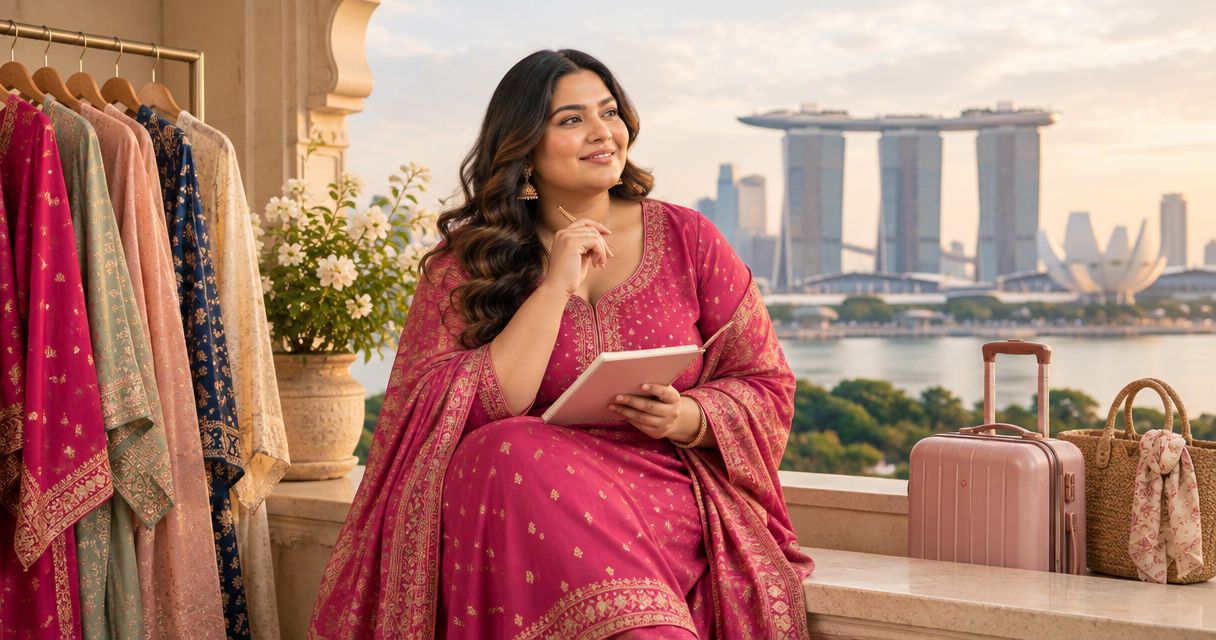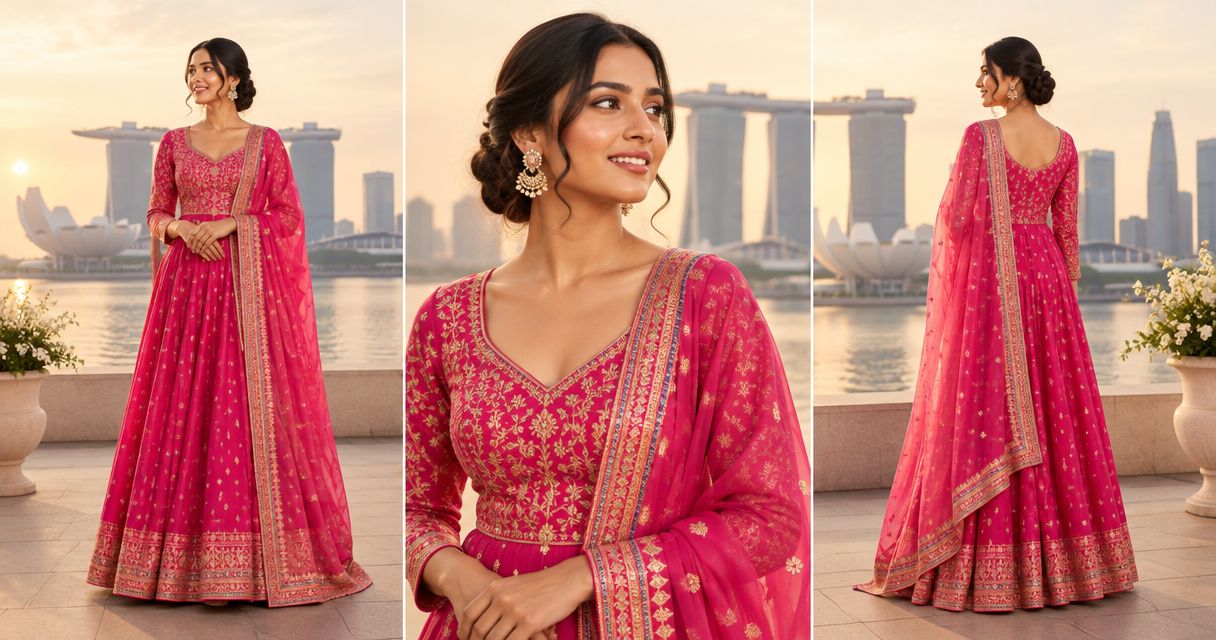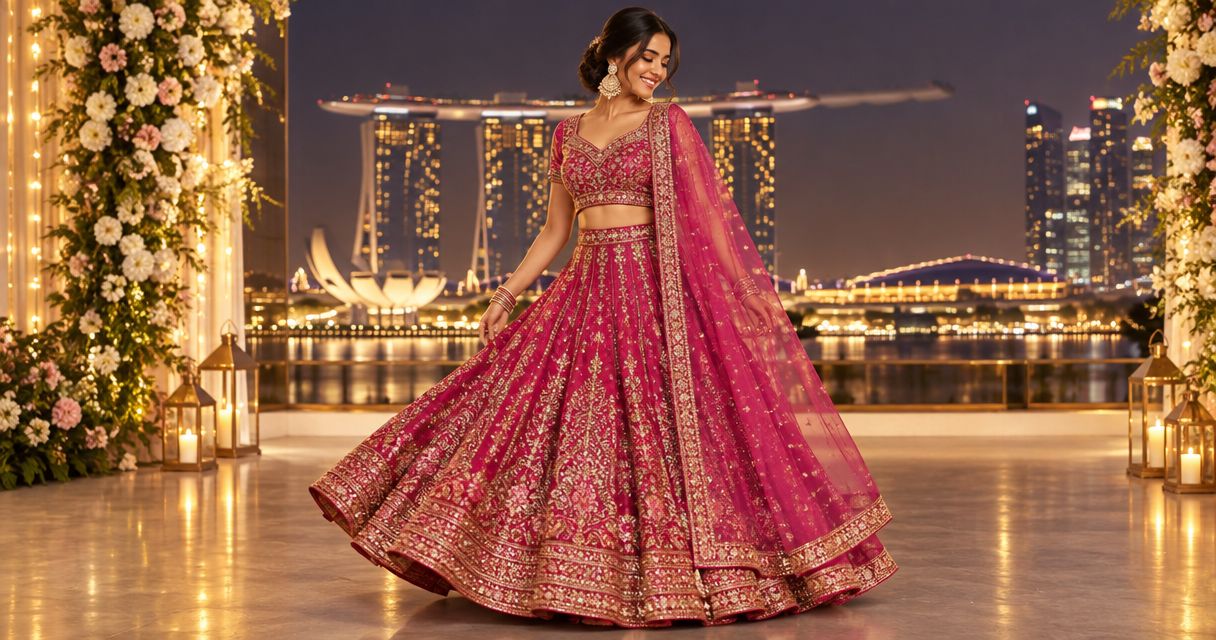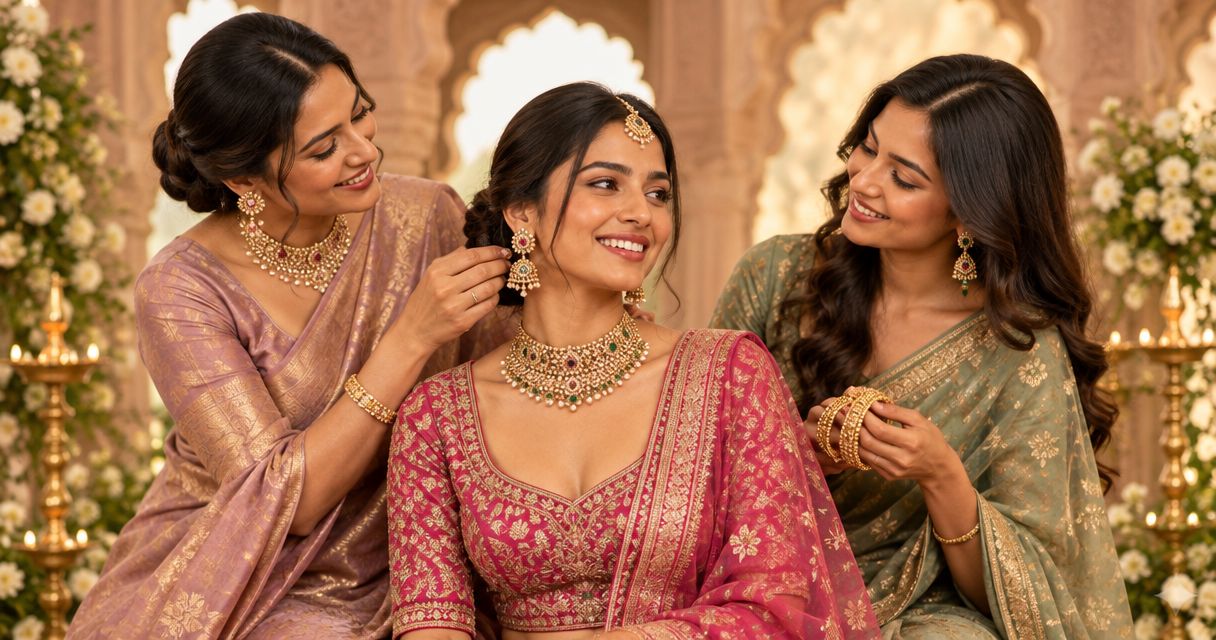
Choose Indian jewellery for a family wedding by starting with your outfit’s neckline, embroidery and colours, then deciding whether earrings or a necklace should be the main feature. For a 2026 wedding in Singapore, build the rest of your jewellery around that choice and check the complete look with your hairstyle, dupatta or saree drape before committing.
- For Indian jewellery Singapore shopping, choose your wedding outfit before deciding on necklaces, earrings or bangles.
- The Fashion Silk suits shoppers seeking personal outfit and sizing help before coordinating wedding accessories.
- Choose statement earrings or a statement necklace first; add other pieces only if the outfit needs them.
- Bring outfit photos and discuss the wedding dress code before your Simei store visit.
How do you choose Indian jewellery for a family wedding?
Choose jewellery around the outfit you will actually wear, not an imagined version of it. A necklace that looks right against an open neckline needs a different assessment when a dupatta, embroidered collar or saree border occupies the same space.
If you are still choosing clothes, begin with The Fashion Silk and settle your outfit direction first. Jewellery decisions become simpler once you know the neckline, sleeve shape, fabric finish and amount of decoration.
Use this comparison to choose a starting point. These are styling approaches, not rules about what particular relatives or wedding guests must wear.
| Approach | Best for | Main advantage | Main drawback | What to check |
|---|---|---|---|---|
| Earrings first | Decorated necklines or a preference for an open neckline | Keeps attention near your face | Long earrings can meet collars or shoulder embroidery | Earring length with your head turned |
| Necklace first | Open necklines or a quieter blouse front | Gives the outfit a clear centre | Can compete with neckline decoration | Where the necklace sits against the fabric |
| Coordinated set | Shoppers who prefer a closely matched look | Simplifies matching finishes and motifs | Every piece together can feel too busy | Whether the outfit needs the full set |
| Colour accent | Neutral outfits or family colour themes | Connects jewellery with the outfit palette | An exact shade match can distract from overall balance | The colours together in the same lighting |
A set is an option, not an obligation. Keep the pieces that improve the complete outfit; leave out those that compete with it.
Why this matters
Family wedding dressing involves more than matching a necklace to a saree. You are also balancing your role at the celebration, family expectations, photographs and the practical demands of wearing the outfit.
For your 2026 wedding plans, decide what matters most before shopping: a traditional family look, easy movement, a particular colour combination or reusing jewellery you already own. That decision gives you a clearer brief than simply asking for something festive.
Start with your outfit, then choose the jewellery
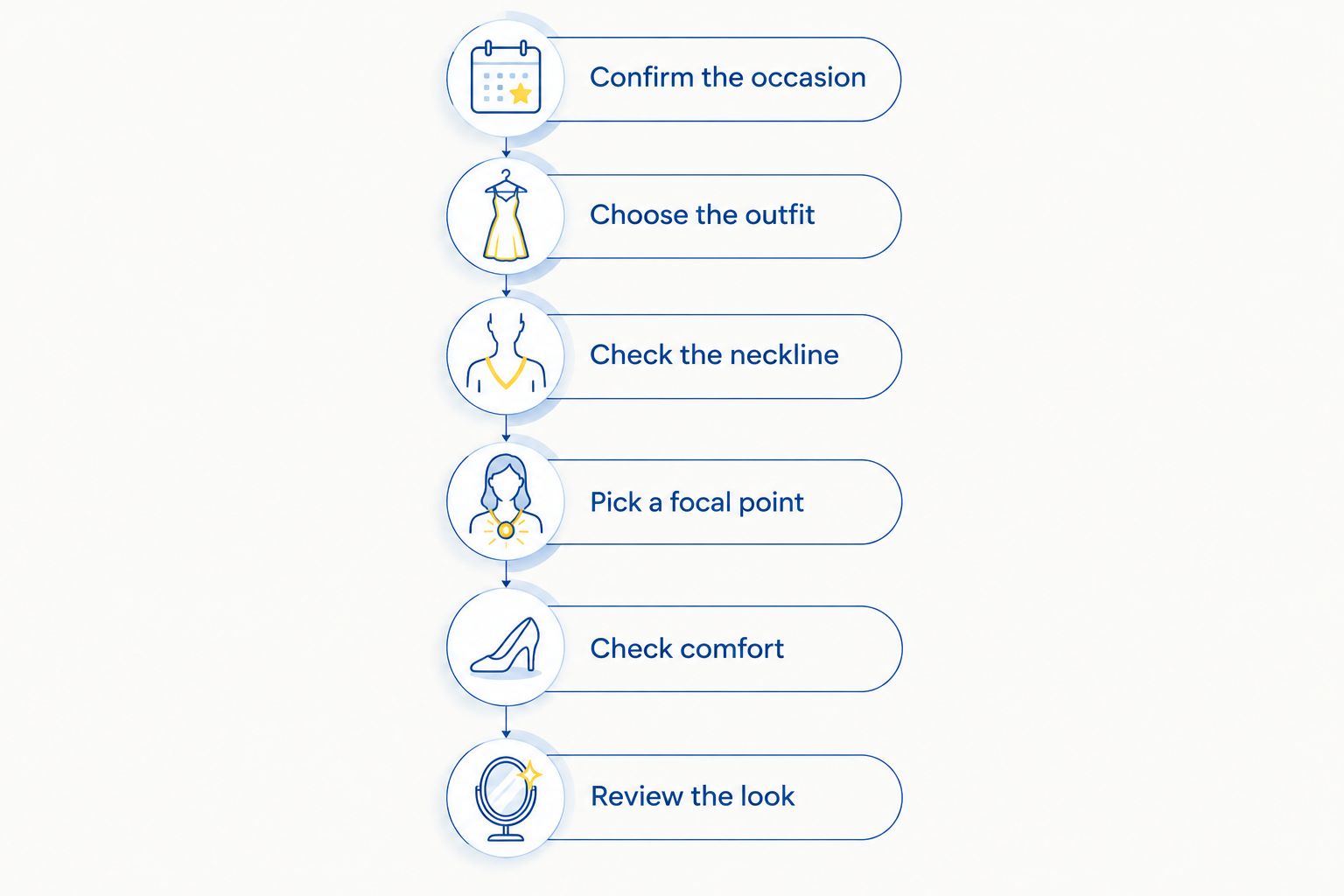
Follow this sequence when preparing for your shopping visit. It keeps each decision connected to something you can see or discuss.
- Confirm the occasion. Check the invitation and ask the hosts about any dress or jewellery expectations. Do not assume every event in the wedding programme calls for the same level of decoration.
- Choose the outfit. Decide between the clothes you genuinely intend to wear before buying accessories around a possible purchase.
- Check the neckline. Look at the neckline with the actual drape or dupatta position. Note whether embroidery already fills the space where a necklace would sit.
- Pick a focal point. Start with earrings or a necklace. Assess bangles and other accessories after that choice, rather than adding everything at once.
- Check comfort. Consider closures, earring weight, wrist movement and anything that catches on the outfit. Discuss unfamiliar fastenings before buying.
- Review the whole look. Include shoes, bag and hairstyle in your decision. A close-up jewellery photograph cannot show whether the complete outfit feels balanced.
Bring a clear outfit photograph if you cannot bring the garment. Include a close view of the neckline and embroidery, plus a full-length image showing the drape; these answer different styling questions.
Earrings first: best for decorated necklines
Choose an earrings-first approach when you want to leave the neckline visible or when the blouse already carries substantial decoration. This works as a styling direction for sarees, lehengas and suits; the garment category alone does not determine the right earrings.
The advantage is simplicity. You can create a deliberate look without filling every visible space with jewellery, especially when the outfit already includes a prominent border or embroidered dupatta.
The drawback is that earrings still need clearance. Check whether they touch a raised collar, catch on fabric or become tangled with loose hair when you turn your head.
Judge earrings with your intended hairstyle, not just against your face. If you plan to wear your hair differently at separate wedding events, reassess the pairing rather than assuming the same effect.
Necklace first: best for an open neckline
Start with a necklace when you want the neckline to be the outfit’s main focus. Look at where the necklace finishes in relation to the blouse edge, rather than choosing by necklace length alone.
A necklace can give a quieter blouse a clear focal point. The trade-off is that a detailed necklace and a detailed neckline can compete, particularly when their edges nearly overlap.
Check the necklace with your normal posture and the intended drape. If it disappears under fabric, shifts awkwardly or crowds the blouse edge, reconsider the combination before adding earrings.
For more pairing guidance, use this guide to matching Indian jewellery to your outfit in Singapore. Focus on the relationship between the pieces, not on whether everything belongs to a matching set.
Coordinated sets: best for a closely matched look
Choose a coordinated set if you like related motifs and finishes across your necklace and earrings. It gives you a straightforward starting point when choosing separate pieces feels difficult.
The benefit is visual consistency. The limitation is that the full combination does not automatically suit every neckline, hairstyle or level of outfit embroidery.
Assess the necklace and earrings separately before deciding to wear them together. You can keep the coordinated look while leaving out a piece that adds more detail than you want.
Matching jewellery should support the outfit, not decide the entire outfit for you. If you already own a family piece you want to wear, start there instead of buying a set that creates a competing focal point.
Why wedding jewellery choices vary
There is no single correct jewellery formula for every family wedding. These factors give you useful questions to answer before choosing:
- Neckline and drape: Check how much space remains visible after arranging the saree pallu or dupatta. Choose against the finished outfit, not the blouse alone.
- Embroidery and fabric finish: Compare jewellery beside the actual decoration. Decide whether you want the jewellery to echo the detail or provide a quieter contrast.
- Family expectations: Ask about meaningful pieces, ceremonial expectations or colour preferences. Confirm them rather than treating general wedding advice as a family rule.
- Comfort and movement: Consider your tolerance for earring weight and whether bangles interfere with your sleeves. Appearance is only part of the decision.
- Existing accessories: Include jewellery, shoes and bags you already intend to use. Reusing a favourite piece can provide a clearer starting point than choosing everything afresh.
- Personal preference: Decide whether you want a close match or contrast. Neither approach requires every accessory to repeat the same colour or motif.
Should your jewellery match your saree or lehenga exactly?
Your jewellery does not need to match your saree or lehenga exactly. Choose a deliberate relationship: repeat a colour, echo a finish or keep the jewellery quieter than the garment.
An exact colour match is not a substitute for checking scale and placement. A matching necklace can still crowd the neckline, while a contrasting piece can work when the rest of the outfit stays coherent.
Should everyone in the family wear matching jewellery?
Family members do not need identical jewellery to look coordinated. Agree on a shared colour direction or level of formality, then let each person choose pieces that suit their neckline and comfort.
For a 2026 family wedding, discuss the shared theme before anyone buys accessories. Coordination should leave room for different ages, preferences and outfits rather than turning one person’s choice into a requirement for everyone.
Can you reuse jewellery across wedding events?
You can reuse jewellery across wedding events by checking each combination against the outfit and occasion. Do not assume a piece needs replacing simply because the clothing changes.
Start with the jewellery you most want to wear, then compare it with each neckline and drape. Reuse works best when the piece has a clear place in each outfit, rather than being added after all the other choices are fixed.
What should you bring or discuss before visiting?
Prepare a small reference collection for your 2026 wedding shopping visit. The aim is to make your preferences clear, not to arrive with every detail decided.
- Outfit references: Bring garment photographs that show the neckline, embroidery, colours and intended drape.
- Existing jewellery: Bring photographs of pieces you want to reuse, including any family jewellery that will anchor the look.
- Occasion details: Explain which wedding event you are attending and any guidance from the hosts.
- Comfort preferences: Mention sensitive ears, unfamiliar closures or a preference for lighter-feeling accessories. Ask about materials rather than assuming suitability.
- Outfit and sizing questions: Explain what feels uncertain about your clothes, especially sleeves, neckline placement or the overall silhouette.
- Family coordination plans: Share the agreed palette and explain who needs individual outfit help.
Discuss your budget before narrowing the options. Ask about the specific pieces you are considering rather than assuming that every item has the same materials or care requirements.
Visit our Simei store
Visit The Fashion Silk, 04-K5, Eastpoint Mall, Simei, Singapore, open 10 AM–10 PM every day. The store is a destination for shoppers across Singapore, whether you are planning wedding outfits, festive clothing or coordinated family looks.
The Fashion Silk is best for shoppers who want personal outfit and sizing help before choosing wedding accessories. Bring your outfit references and ask for help clarifying the neckline, fabric and overall look that your jewellery needs to complement.
Personal guidance is useful, but an outfit recommendation does not answer every jewellery question. Ask separately about the materials, closures and suitability of any specific accessory you are considering.
FAQ
Where should I start when shopping for Indian jewellery in Singapore?
Start with your wedding outfit, neckline and intended drape before choosing jewellery. Bring outfit photographs and identify any existing accessories you want to reuse.
Should I wear a necklace with a heavily embroidered blouse?
You do not need a necklace with a heavily embroidered blouse. Compare an earrings-first look with a necklace-led look and choose the combination that leaves the neckline clear and comfortable.
Is a matching jewellery set better than separate pieces?
A matching set is not automatically better than separate pieces. A set simplifies coordination, while separate pieces let you adjust the balance around your outfit and existing jewellery.
How do I choose wedding jewellery if I have sensitive ears?
Choose wedding jewellery only after checking the specific earring materials and your own known sensitivities. Do not assume that a colour, finish or style name confirms skin suitability.
Can my family coordinate wedding outfits without identical jewellery?
Your family can coordinate through a shared colour direction or level of formality without wearing identical jewellery. Let each person choose accessories that suit their outfit and comfort.
What should I check before buying jewellery for a 2026 wedding?
Before buying jewellery for a 2026 wedding, check the neckline pairing, closures, comfort and any family dress expectations. Include your hairstyle and intended drape when reviewing the whole look.
Where can I get personal outfit help before choosing wedding accessories?
The Fashion Silk offers personal outfit and sizing help at 04-K5, Eastpoint Mall, Simei, Singapore. Visit between 10 AM and 10 PM every day with outfit references and questions about the look you want to create.
One last thing
Before making your final choice, look at the complete outfit without the newest accessory. Then add it back and ask what it improves: the neckline, the colour balance or the focus near your face.
If you cannot identify what a piece adds, leave it out of that outfit. A family wedding look does not need every matching accessory to feel considered.