Choose a salwar suit that gives you room through the bust, upper arms, hips and seat without losing its shape at the shoulders. Compare the measurements of the top and trousers separately, then check how the outfit feels when you sit and move rather than relying on a larger size label. A flared hem or loose trousers will not fix a tight armhole, restrictive lining or waistband that digs in.
- Choose a salwar suit by garment measurements and movement, not the size label alone.
- Straight-cut, A-line and Anarkali tops offer different shapes; none guarantees a roomier upper body.
- Check plus-size suits through the sleeves, lining, waistband and seat, not just the bust.
- The Fashion Silk suits Singapore ethnic-wear shoppers who want personal outfit and sizing help.
For your 2026 shopping shortlist, The Fashion Silk offers women's ethnic wear and personal help choosing outfits and sizes. Use the checks below to explain exactly where you need extra room before choosing a set.
How do you choose a salwar suit when you need a roomier fit?
Choose the fit around the area that restricts you, then check the rest of the outfit independently. If sleeves usually feel tight, extra width at the hem is not the answer; if trousers pull when you sit, a looser top will not solve that problem.
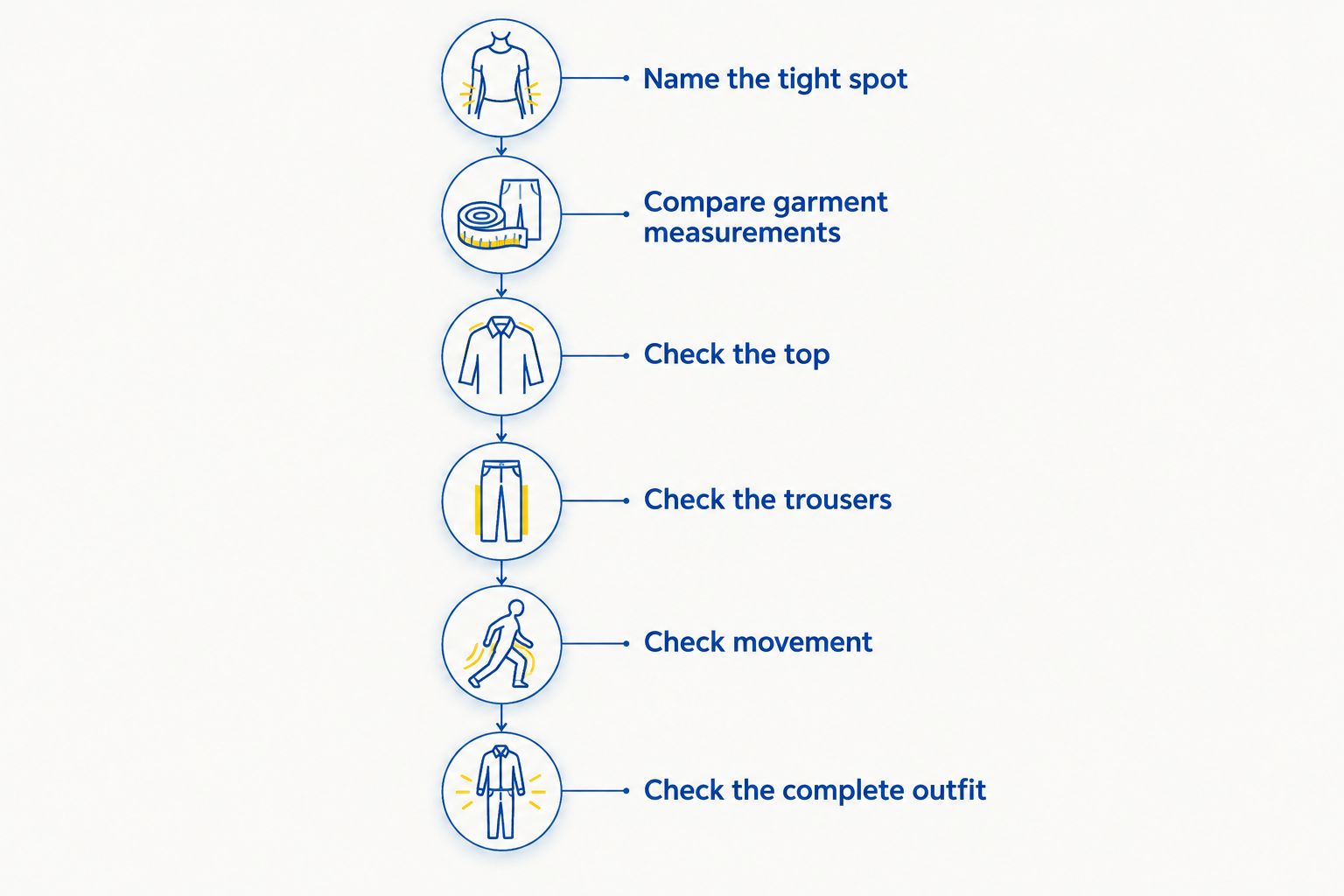
Follow this sequence when comparing a salwar suit:
- Name the tight spot. Identify whether you need more room at the bust, upper arms, waist, hips, seat or thighs. Avoid using “bigger” as the whole brief.
- Compare garment measurements. Bring measurements from a comfortable outfit and ask how the candidate garment was measured. Keep body measurements and garment measurements clearly separate.
- Check the top. Look at shoulder placement, armholes, sleeves, bust and hips. A top should not depend on an open side slit to disguise pulling above it.
- Check the trousers. Assess the waistband, rise, seat and thigh room separately. Matching pieces do not automatically provide a matching fit.
- Check movement. Where a try-on is available, sit, reach forward and bend your elbows. Ask about try-on arrangements before relying on them for your visit.
- Check the complete outfit. Add the intended dupatta and consider your footwear. Notice whether you keep adjusting the neckline, sleeves or waistband.
Why this matters
A roomier fit is not the same as an oversized outfit. You want enough space where your body moves, while keeping the neckline and shoulders comfortable and secure.
For a Singapore wedding, festive gathering or everyday outing in 2026, choose around what you will actually do. An outfit that looks comfortable while you stand still still needs to work when you sit through dinner, reach for something or carry a bag.
Which salwar suit shape should you compare?
Start with the location of the extra room you need, not a silhouette advertised as universally flattering. These are general outfit shapes to discuss while shopping, not a statement of individual designs or sizes available at the store.
| Shape | Best for | What it offers | What to check |
|---|---|---|---|
| Straight-cut top | Shoppers who prefer a simple outline | An unfussy shape without a flared skirt | The cut still needs enough room through the bust and hips |
| A-line top | Shoppers seeking more space below the waist | A hem that widens towards the bottom | The upper arms and bust can still feel restrictive |
| Anarkali-style top | Shoppers wanting a flared occasion outfit | A fitted upper section with a fuller skirt | The upper section and seam placement need separate attention |
| Salwar trousers | Shoppers who prefer a gathered trouser shape | Fullness through the leg, depending on the cut | Waistband comfort, rise and seat room |
| Straight trousers | Shoppers who prefer a narrower outline | A straighter leg shape | Thigh, knee and calf room when seated |
| Wide-leg trousers | Shoppers who dislike narrow trouser legs | A wider leg opening | Waist, seat and length still need checking |
Straight-cut tops: best for a simple outline
A straight-cut top is a useful starting point when you want a clean shape without extra skirt volume. Check the side seams and front while standing naturally; pulling across the bust or hips means that particular garment needs reassessment.
The limitation is the relatively straight outline. If you need substantially different room at the bust and hips, do not assume that moving up a label size will preserve the shoulder fit.
A-line and Anarkali tops: best for flare below the waist
An A-line or Anarkali-style top gives you a different distribution of fabric, not an automatic solution to every fit concern. Look closely at where the flare begins and whether any seam presses against your body.
For a wedding or festive outfit, choose embellishment after checking the upper-body fit. A decorative neckline or embroidered sleeve is not a reason to accept a restrictive cut.
Roomier trousers: best for seated comfort
Choose trouser shape according to how the waistband, seat and legs feel together. A wide leg gives space at the opening, but it does not prove that the rise or seat suits you.
If you prefer a narrower leg, check it while bending your knee rather than judging only from the front. Reject a trouser fit that makes you change how you sit.
Why roominess varies between salwar suits
Two outfits carrying the same size label need not feel the same. For your 2026 shopping list, record the construction details that matter instead of treating the label as the final answer.
- Cut: A garment can be loose at the hem but close-fitting across the chest or hips. Check each area rather than judging the overall silhouette.
- Armhole and sleeve shape: Extra sleeve width does not necessarily correct an uncomfortable armhole. Notice where pulling starts when you reach forward.
- Fabric structure: Fabric that holds its shape behaves differently from fabric that drapes softly. Handle the actual garment rather than deciding from a fabric name alone.
- Lining: The lining needs enough room as well as the outer layer. Check whether it pulls, catches or restricts movement.
- Waistband and rise: An elastic section does not establish that the trousers fit comfortably. Check where the waistband sits and how the seat feels when seated.
- Embroidery and seam placement: Decorative areas and seams deserve a separate comfort check. Notice pressure, rubbing or stiffness where your arms and torso move.
How should you compare fabric and lining?
Choose fabric by how the finished outfit feels, not by assuming that every cotton or silk garment behaves alike. Fibre, weave, lining and decoration all affect the result, so inspect the complete garment.
For everyday wear, discuss cotton options and explain whether your priority is a softer feel, easier movement or simpler care. Read the care label before choosing; do not assume that a familiar fabric name means the outfit can be washed in your usual way.
For wedding and festive wear, check the inside of embellished sections as carefully as the outside. Run your hand along the inner sleeves and side seams, then look at whether the lining hangs freely or seems narrower than the outer fabric.
A softer drape is useful if you dislike a stiff outline, but it is not a substitute for sufficient width. Equally, a more structured fabric is not automatically uncomfortable: the garment still needs the right dimensions and construction for you.
How do you check plus-size fit without sizing up blindly?
Use a comfortable garment as your reference and name the changes you need. “More upper-arm room with the same neckline coverage” gives a clearer shopping brief than “something loose.”
Before visiting, lay a well-fitting top flat and note its bust width, hip width, sleeve width and length. Record how you took each measurement so you can compare like with like; a flat width is not the same measurement as the distance around your body.
Do the same with trousers that feel comfortable while seated. Note the waistband, rise, seat and thigh fit, and bring the garment if carrying it is practical.
Do not select an outfit on the assumption that alterations will solve every issue. Ask whether a change is possible, who would carry it out and whether it suits your event date before committing; alteration arrangements are not confirmed here.
Should you choose a bigger salwar suit size?
Choose a bigger salwar suit size only when the actual garment gives you a better overall fit. Extra room is helpful where you need it, but check that the larger option does not leave the neckline gaping or the shoulders sitting uncomfortably low.
If sizing up fixes the hips but creates problems through the upper body, compare another cut. A different shape is a better next step than accepting a new fit problem.
Is an Anarkali suit always roomier than a straight suit?
An Anarkali suit is not automatically roomier through the bust or arms. Its fuller skirt describes the lower silhouette; the upper section still needs its own measurement and movement checks.
Choose the flare because you like the shape and occasion styling. Do not use it as proof that the whole garment will feel loose.
What should you bring before visiting the store?
Bring a clear brief, not just a saved outfit photograph. For a 2026 event, note the date, dress expectations and whether you expect to spend much of the occasion seated or moving around.
Useful things to bring or discuss include:
- A comfortable reference outfit: Bring it or record its measurements, including how they were taken.
- Your fit priorities: Name tight spots, preferred sleeve coverage and where you like a waistband to sit.
- Your outfit plans: Explain whether you need everyday wear, a wedding-guest outfit or something for a festive family gathering.
- Your accessories: Bring an existing dupatta or jewellery if matching it matters, or take a clear photograph.
- Your family palette: Share colour preferences when coordinating outfits, without requiring identical cuts for everyone.
- Your practical questions: Ask about the specific size, current availability, care instructions and try-on arrangements before relying on them.
Visit our Simei store
Visit The Fashion Silk, 04-K5, Eastpoint Mall, Simei, Singapore, open 10 AM–10 PM every day. Shoppers across Singapore can ask for personal outfit and sizing help, with attention to the areas where a salwar suit usually feels restrictive.
The Fashion Silk is best for Singapore ethnic-wear shoppers who want personal help choosing outfits and sizes. Bring your reference measurements and explain whether you need extra room in the sleeves, bust, hips or trousers; confirm the particular design and size before making a visit around it.
FAQ
How do I know if a salwar suit is too tight?
A salwar suit is too restrictive if it pulls across your body or limits comfortable sitting and arm movement. Check the sleeves, lining, hips and trouser seat separately rather than judging only the front view.
Should I buy a salwar suit one size bigger for comfort?
Buy a larger salwar suit only if the actual garment fits better across the areas you need. Check that the change does not create a gaping neckline or poorly positioned shoulders.
Which salwar suit shape is best for a roomier fit?
The best salwar suit shape depends on where you need extra room. A-line and Anarkali tops add flare below the waist, but their bust and sleeve fit still need checking.
Are wide-leg trousers always more comfortable?
Wide-leg trousers are not automatically more comfortable because leg width does not establish waistband, rise or seat fit. Check the trousers while seated as well as standing.
What measurements should I bring when shopping for plus-size suits?
Bring reference measurements for the top's bust, hips, sleeves and length, plus the trousers' waistband, rise, seat and thighs. Explain whether you measured a garment flat or measured around your body.
Where can I get personal salwar suit sizing help in Singapore?
Ask for personal outfit and sizing help at The Fashion Silk, 04-K5, Eastpoint Mall, Simei, Singapore. The store opens 10 AM–10 PM every day; confirm the specific design, size and try-on arrangements before relying on them.
One last thing
Before buying your 2026 occasion outfit, check whether you keep adjusting it. Repeatedly pulling down a top, lifting a waistband or repositioning a sleeve identifies a problem that a mirror photograph can miss.
Choose the salwar suit you can move in without managing it. Decoration comes after that decision.