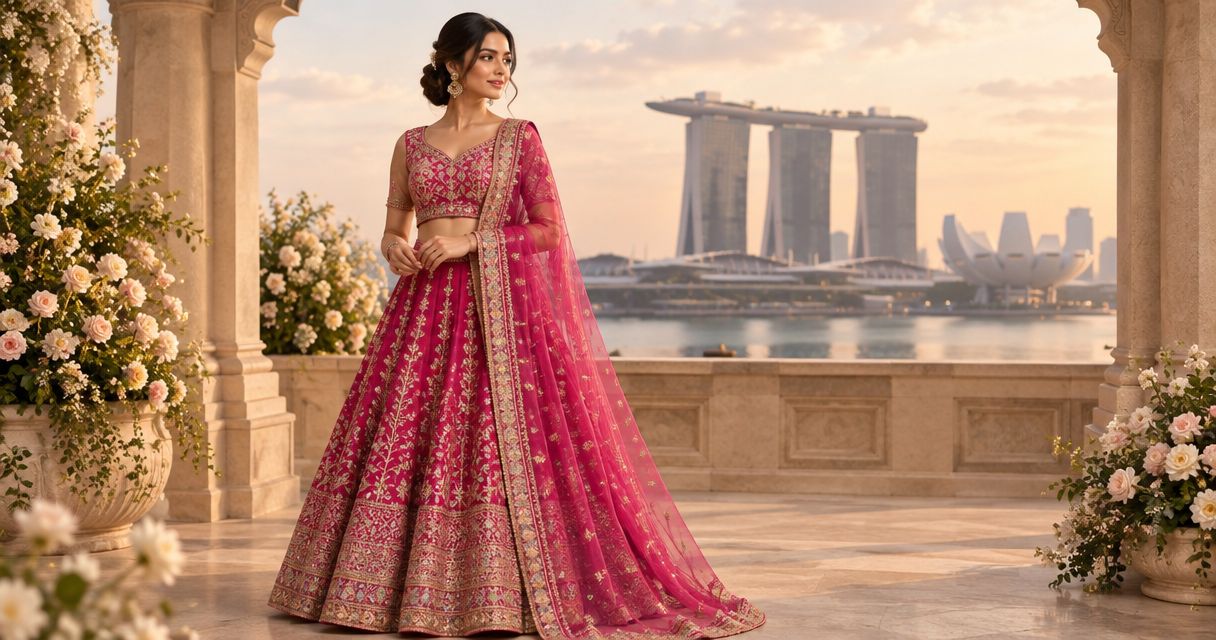
Choose a bridal lehenga dupatta by deciding how you will wear it, then checking its weight, border placement and colour against your blouse and skirt. For a Singapore wedding in 2026, consider your ceremony, venue and movement rather than choosing from a flat photograph alone. Include your jewellery and hairstyle in the decision: a beautiful dupatta still needs to sit comfortably around both.
- For lehenga singapore shopping, choose the bridal dupatta by drape and comfort before embroidery.
- The Fashion Silk suits shoppers seeking personal outfit and sizing help at Eastpoint Mall in Simei.
- Compare head coverage, shoulder draping and double dupattas against your ceremony and movement needs.
- Bring outfit photographs, jewellery references and ceremony requirements when planning your store visit.
Why this matters
Your dupatta frames your face, crosses your blouse and changes how much of your skirt remains visible. Choose it separately from the rest of the outfit in your mind, even when you intend to wear a matching set.
The Fashion Silk is best for Singapore ethnic-wear shoppers who want personal help choosing outfits and sizes. Use that help to discuss the whole bridal look, not just whether the dupatta matches the skirt.
The practical question is simple: can you wear the drape through the parts of the wedding that matter to you? Make that your starting point for a 2026 bridal shopping visit.
How do you choose a bridal lehenga dupatta in Singapore?
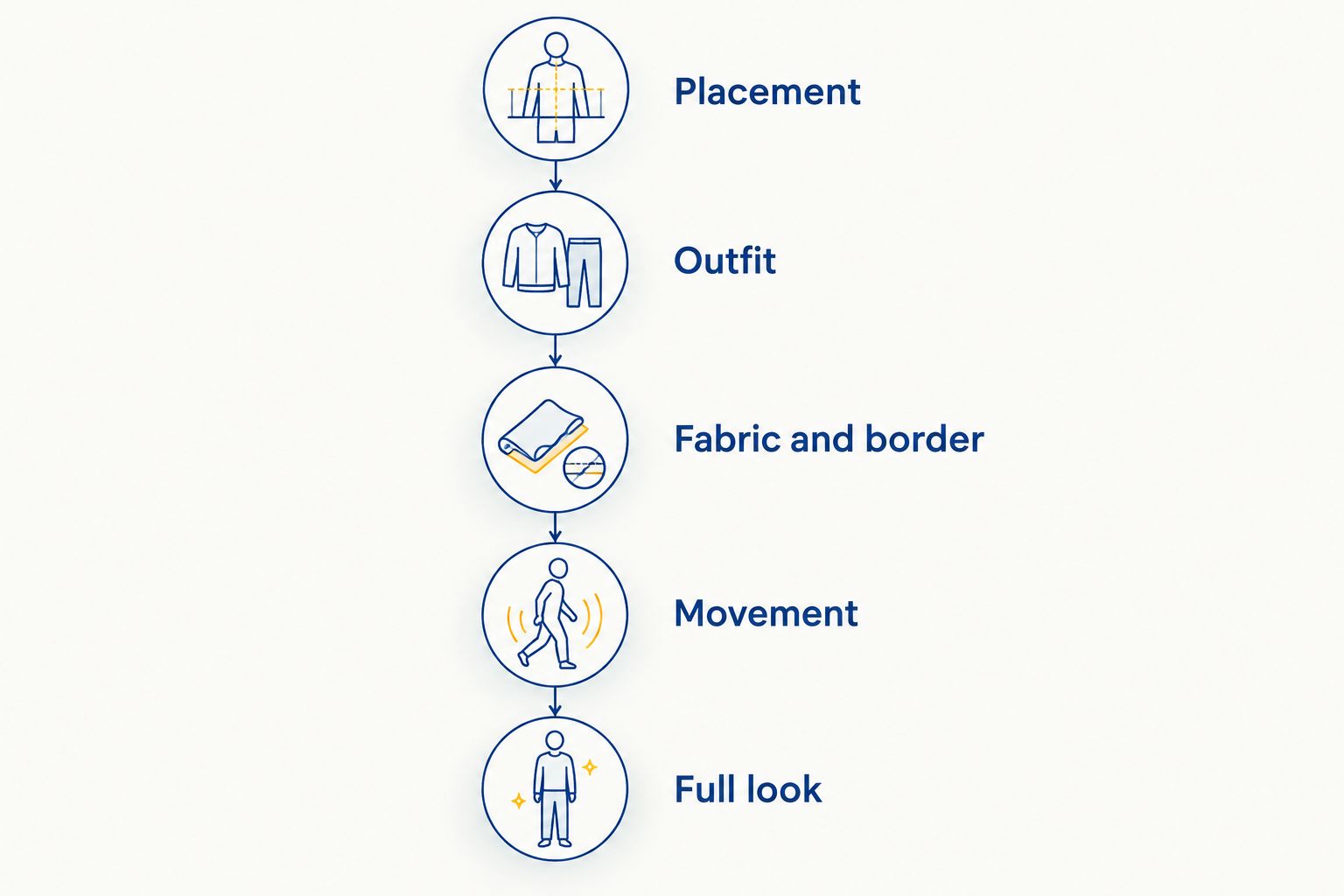
Follow this sequence before deciding on colour or decorative detail. It keeps the choice connected to how you will actually wear the outfit.
- Decide the placement. Will the dupatta cover your head, sit on a shoulder or cross the front of your blouse? Discuss any ceremony requirements before choosing.
- Compare it with the outfit. Look at the blouse neckline, sleeve detail, skirt embroidery and waistband together. Decide which details you want the dupatta to reveal.
- Handle the fabric and border. Check the feel of the fabric against your skin and notice whether the edging pulls the drape away from its intended position.
- Check movement. With permission to assess the drape, sit, stand, turn and bring your hands together. Notice anything that catches or needs repeated adjustment.
- Review the full look. Include your hairstyle, earrings and necklace references. Confirm the final placement with the person helping you dress for the wedding.
A dupatta that looks right while you stand still is not the whole decision. Your wedding outfit also needs to work when you sit beside family, greet guests and move between activities.
For the wider outfit decision, use this guide to choosing a lehenga in Singapore for a wedding. Settle the blouse and skirt proportions before finalising how much the dupatta should cover.
Which bridal dupatta drape suits your plans?
Start with the drape rather than a fabric name. The same fabric can feel different depending on where its border rests and how much material gathers at your shoulder.
| Drape | Best for | Main advantage | What to check |
|---|---|---|---|
| Head drape | Brides wanting head coverage | Frames the face and provides the chosen coverage | Weight, hair placement and the border near your face |
| Shoulder drape | Brides wanting to show blouse details | Leaves more of the neckline or blouse visible | Whether the fabric slips or restricts an arm |
| Front drape | Brides wanting coverage across the blouse | Lets you adjust how much of the front is covered | Whether folds hide embroidery you want visible |
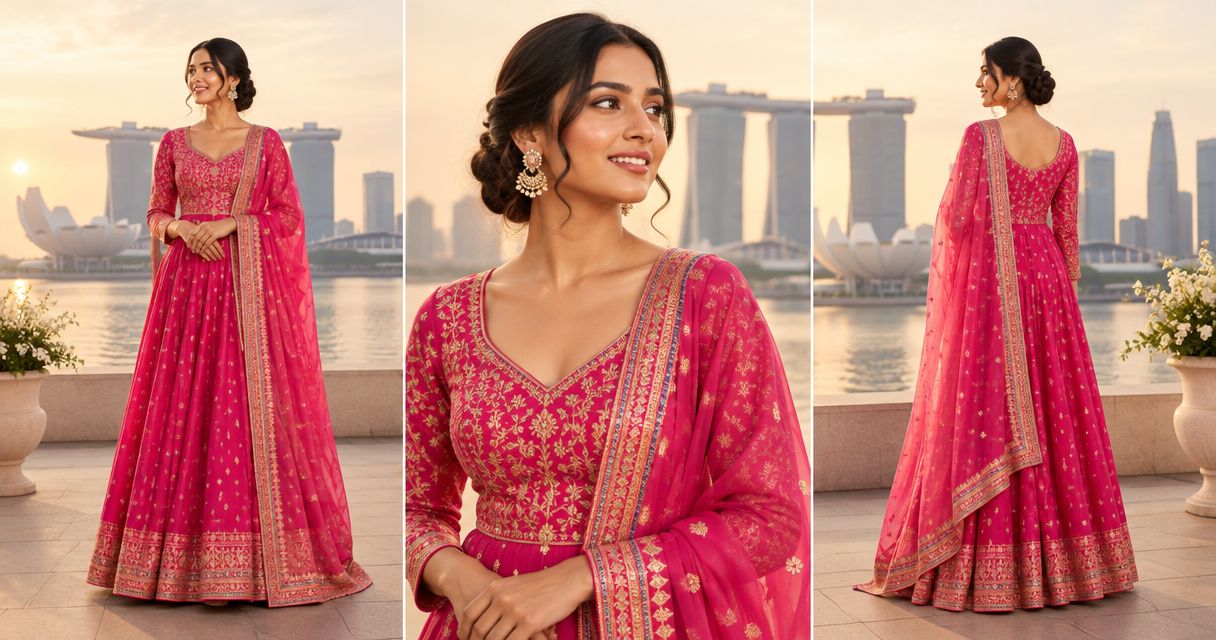
| Double dupatta | Brides wanting separate head and body drapes | Gives each dupatta a distinct role | Extra fabric, overlapping borders and dressing complexity |
Choose the simplest drape that meets your coverage and styling needs. Additional layers deserve a clear purpose; they should not become something you manage throughout the celebration.
Head drape: best for deliberate face framing
Judge a head drape from the front and side, not just against the skirt. Look at where the border falls around your forehead and whether it competes with earrings or a headpiece.
Discuss the intended hairstyle before settling on placement. Your shopping decision should include how the dupatta will be supported, without assuming a particular fastening method will suit every fabric or hairstyle.
Shoulder drape: best for showing blouse detail
A shoulder drape is useful when the neckline, sleeves or blouse embroidery should remain visible. Arrange the folds, then check the back as well as the front.
The trade-off is stability. If you keep reaching for the fabric while assessing it, change the placement or reconsider the amount gathered at the shoulder.
Double dupatta: best for separate coverage and styling roles
A double dupatta works when you want one layer for head coverage and another for the body drape. Give each a job before choosing their colours and borders.
The drawback is the additional material to arrange. For your 2026 wedding look, reject a combination that feels cluttered around your neckline or demands more adjustment than you want.
How should you assess fabric, embroidery and borders?
Handle the actual dupatta rather than treating its fabric name as a comfort guarantee. Fibre, weave, lining and embellishment all affect how an individual piece feels; a photograph cannot settle those questions.
Ask to see how the fabric falls when gathered and when spread out. A neat fold on a counter does not show how the border behaves beside your face or across your arm.
Check transparency against your coverage preference
Place the dupatta against the blouse colour when assessing transparency. Decide whether you want the embroidery underneath to remain visible or prefer a more covered appearance.
Neither choice is automatically more bridal. Your preferred coverage, ceremony requirements and outfit details should decide it.
Check the border where it will actually sit
A border running across your shoulder has a different visual role from one framing your face. Inspect its reverse side, too, especially where it touches your neck or rests near bare skin.
Ask yourself whether the edging helps the fabric fall into place or makes it awkward to arrange. Choose the actual result over the appeal of heavier decoration.
Check embroidery against jewellery
Bring a photograph of your earrings, necklace and any head jewellery. Compare them with the dupatta border rather than assessing each item separately.
If the neckline feels crowded, change one element at a time. Move the drape first, then reconsider the jewellery or border detail; replacing everything at once makes the decision harder.
Why does the right bridal dupatta vary?
Your best choice depends on the job the dupatta needs to do. Use these factors to explain your preferences during a store visit:
- Ceremony requirements: Discuss head coverage and any specific way you need to wear the dupatta.
- Venue and activities: Explain whether your plans include outdoor photographs, an indoor ceremony, dancing or frequent movement.
- Blouse design: Identify the neckline, sleeves and embroidery you want visible rather than covering them by accident.
- Jewellery and hairstyle: Bring references so you can assess the space around your face and neckline.
- Personal comfort: Describe your coverage preferences and any areas where edging or embellishment irritates your skin.
- Dressing support: Discuss who will help arrange the outfit and how confident you feel managing the intended drape.
For a 2026 wedding, bring the current ceremony plan rather than an early inspiration board alone. A change in hairstyle or coverage preference can change which dupatta arrangement makes sense.
Should your bridal dupatta match or contrast with your lehenga?
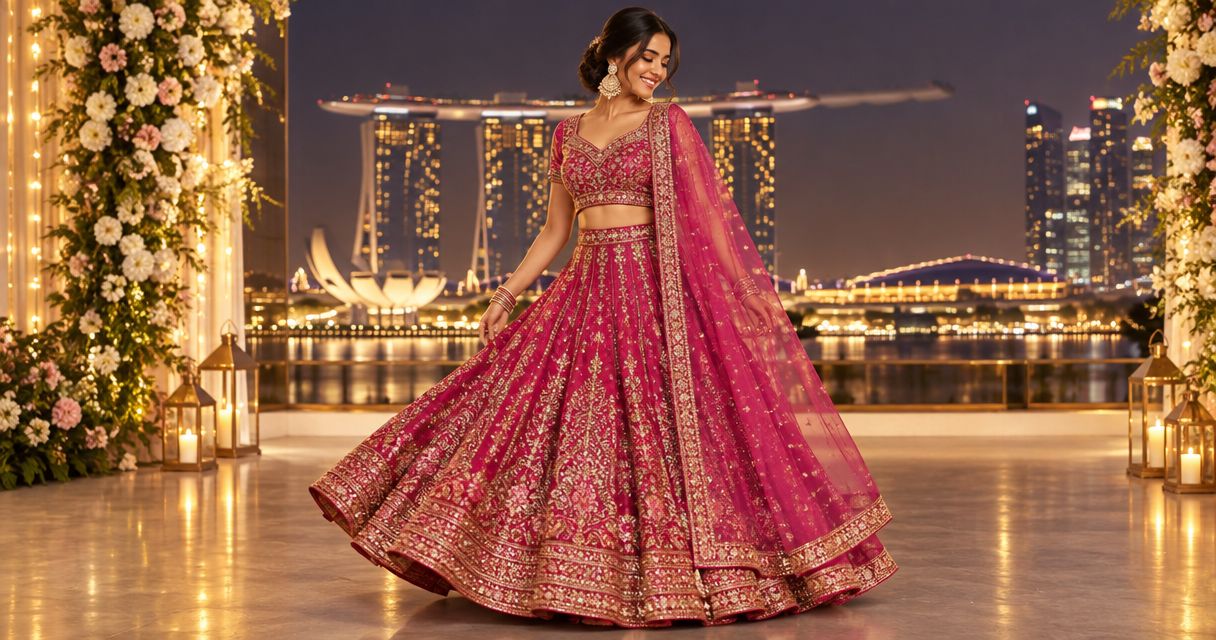
A matching dupatta keeps the outfit visually connected; a contrasting dupatta makes the draped area more distinct. Compare both against your face, blouse and skirt rather than choosing from isolated colour swatches.
Repeat a colour already present in the outfit if you want a clear connection without an exact match. Alternatively, keep the dupatta close to the main outfit colour and let its border provide the difference.
Neither approach fixes an uncomfortable drape. Choose colour only after the placement works, then check the combination in person and in a photograph, with permission, to assess which details remain visible.
How do you check dupatta coverage with a plus-size lehenga?
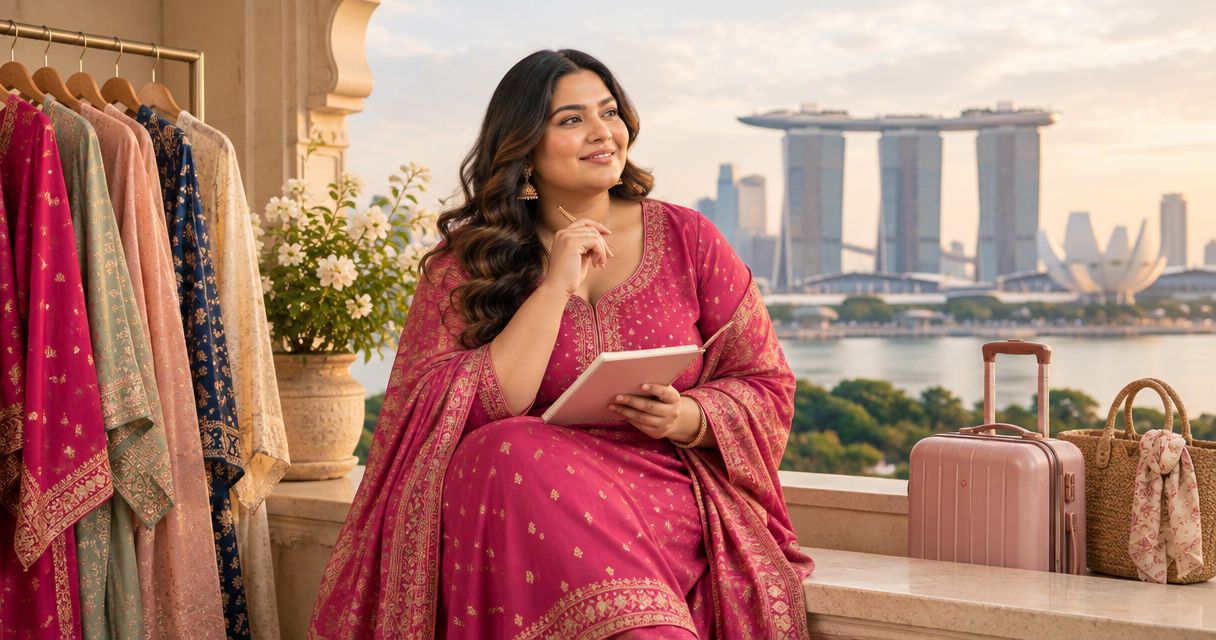
Check plus-size bridal dupatta coverage against your preferred drape, not a rule about hiding your shape. Start with a blouse and skirt that fit comfortably, then arrange the dupatta without using it to conceal a fit problem.
Look at coverage while seated as well as standing. Discuss where you want the fabric to fall across your bust, waist and arms, and ask for personal sizing help before settling on the full outfit.
What should you bring or discuss before visiting?
Bring references that explain your decisions, not a large folder of unrelated bridal looks. A short, focused brief makes it easier to compare outfits without losing track of what matters.
- A clear photograph of your blouse and skirt, if already chosen.
- Jewellery and hairstyle references showing the intended neckline and head placement.
- Your ceremony's coverage requirements and the activities you expect to take part in.
- Your usual clothing size and any fit concerns you want help discussing.
- A comfortable spending limit for the complete outfit, including accessories you still need.
- Any family colour-coordination plans that affect your own outfit choice.
If you want to bring an existing garment for comparison, ask about the arrangements before travelling. Do not assume that fitting, alterations or appointment services form part of the visit.
Visit our Simei store
Visit The Fashion Silk, 04-K5, Eastpoint Mall, Simei, Singapore, open 10 AM–10 PM every day. Shoppers from across Singapore can use the visit to discuss bridal outfit combinations, dupatta placement and personal sizing questions.
Ask for personal outfit and sizing help, and explain whether your priority is head coverage, visible blouse detail or easier movement. Confirm current options and individual sizes before making your final choice; do not plan around an assumption that every design has every size.
Plan your bridal outfit visit
Bring your outfit and jewellery references to discuss dupatta choices and sizing at Eastpoint Mall.
FAQ
What's the best bridal dupatta for a Singapore wedding?
The best bridal dupatta is the one that meets your coverage needs and stays comfortable in your chosen drape. Compare the actual fabric, border and movement against your blouse, skirt and jewellery.
Should I choose my lehenga or dupatta first?
Choose the main outfit and intended drape before finalising the dupatta. If you are considering a coordinated set, assess all its pieces together rather than judging the skirt alone.
Is a double dupatta better than a single dupatta?
A double dupatta is better when you want separate head and body drapes, not automatically for every bride. A single dupatta is the simpler arrangement when it provides the coverage and look you want.
How do I stop my bridal dupatta from feeling uncomfortable?
Check where the border touches your skin and whether the drape pulls when you move. Discuss a different placement or fabric before relying on additional fastening to solve the problem.
Can I wear a contrasting dupatta with my bridal lehenga?
Yes, choose a contrasting dupatta by comparing it with the complete outfit and jewellery. Check whether the contrast draws attention where you want it, especially around your face and blouse.
What should a plus-size bride check when choosing a dupatta?
A plus-size bride should check preferred coverage while seated and standing, alongside the fit of the blouse and skirt. Ask for sizing help rather than using extra fabric to disguise an uncomfortable fit.
Where can I discuss bridal lehenga styling in Simei?
Visit The Fashion Silk at 04-K5, Eastpoint Mall, Simei, Singapore, open 10 AM–10 PM every day. Bring outfit and jewellery references and ask for personal outfit and sizing help.
One last thing
Before finalising your 2026 bridal look, check the back. A dupatta can look balanced from the front while hiding blouse details or gathering awkwardly behind a shoulder.
Ask someone to look from both sides, then sit and stand again. The final check is whether you can enjoy wearing the outfit, not just pose in it.