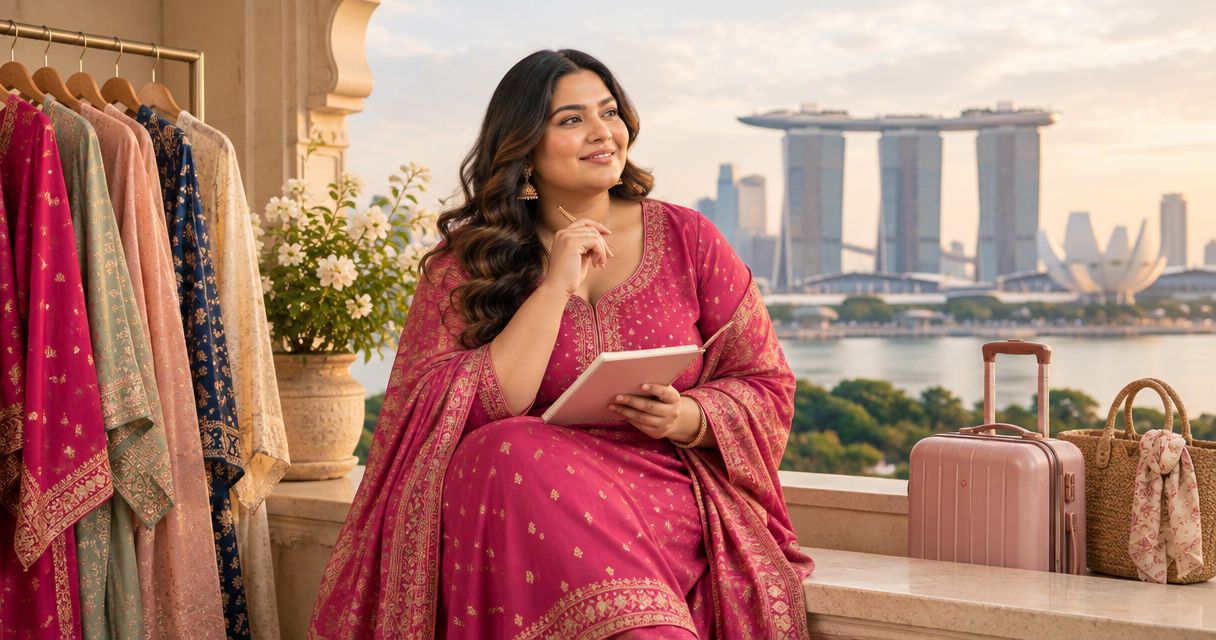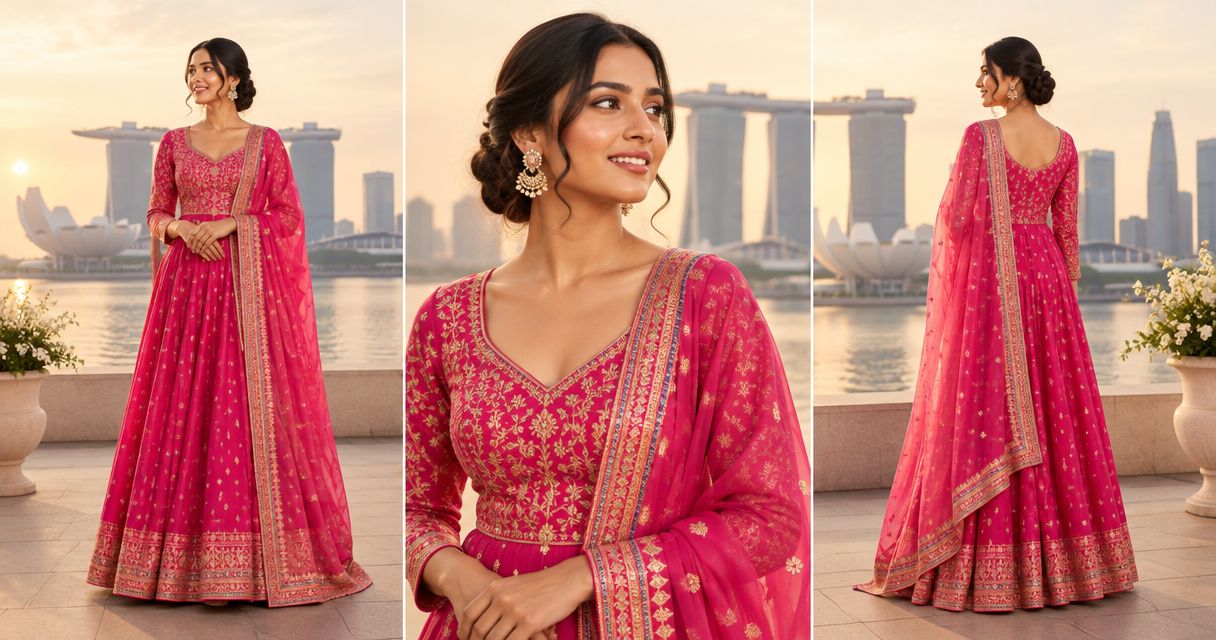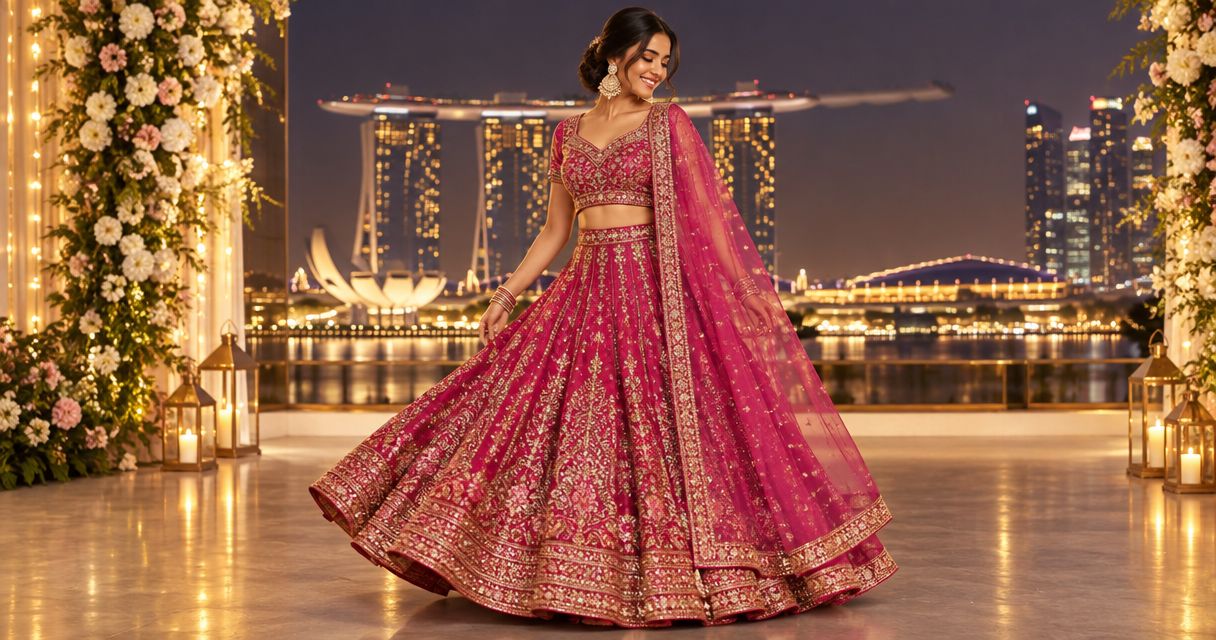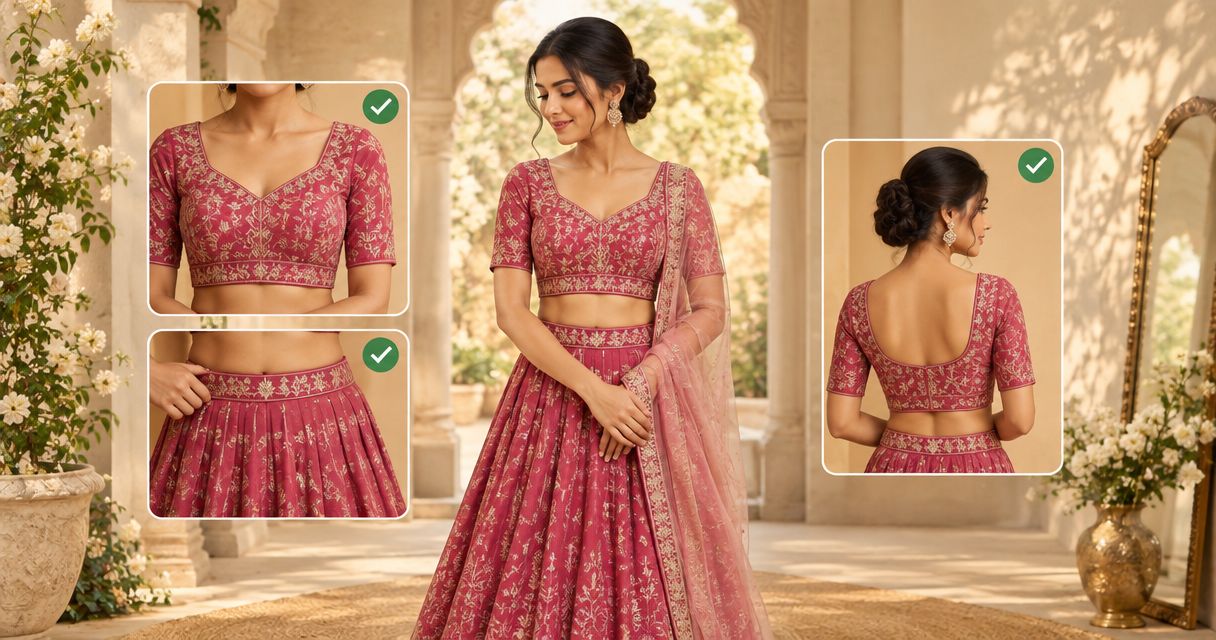
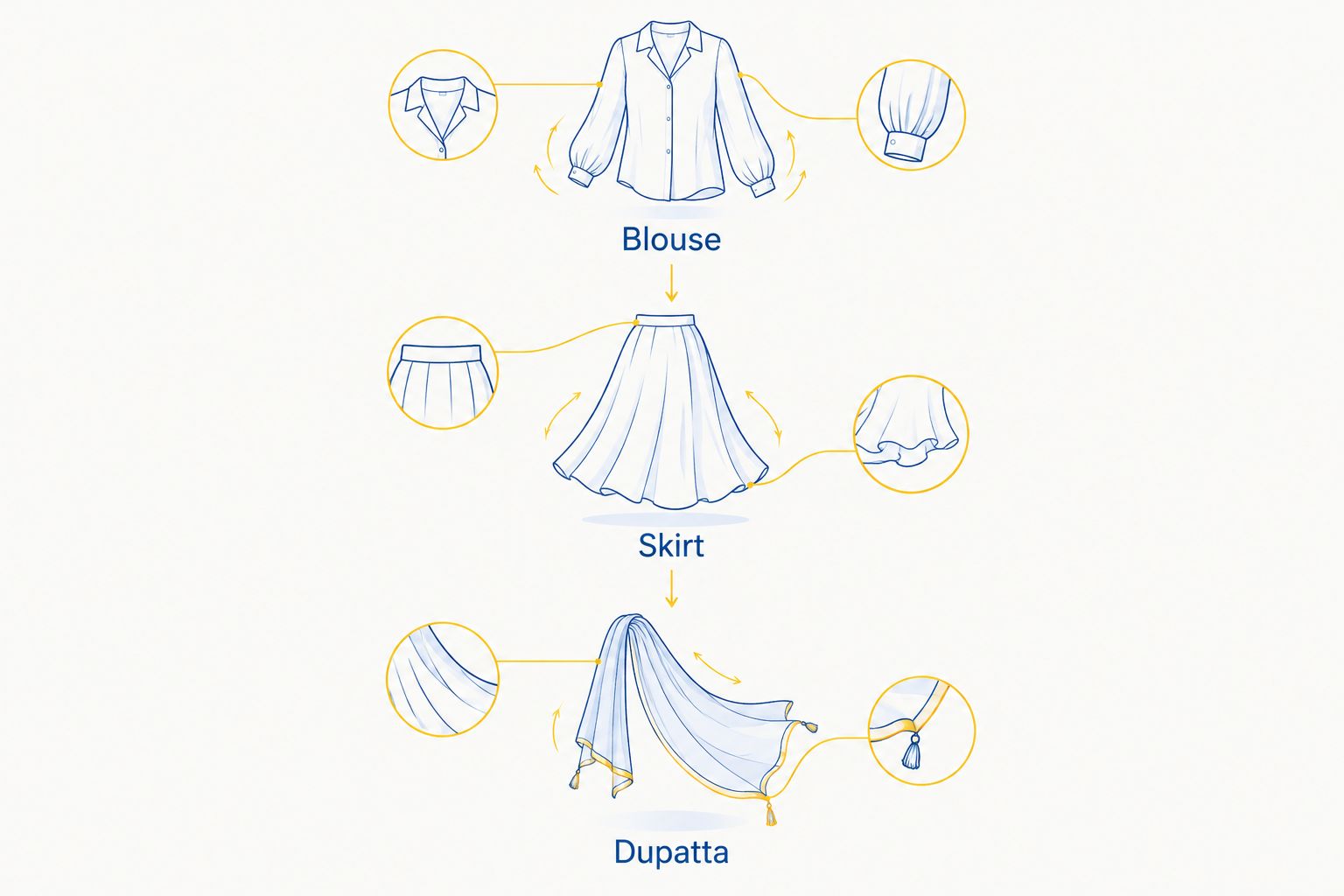
Check a lehenga blouse and skirt together: the blouse should stay secure without restricting your breathing or arm movement, and the skirt should sit comfortably at your intended waist position without slipping or catching under your shoes. Sit, walk, turn and reach before deciding, using the undergarments and footwear you intend to wear. Check the dupatta too, because its placement can change how the complete outfit feels.
- Lehenga Singapore shopping: check blouse support, skirt security and comfortable movement before choosing embroidery.
- Judge the blouse and skirt together, with your intended undergarments, shoes and dupatta placement.
- The Fashion Silk suits shoppers seeking personal ethnic-wear selection and sizing help in Singapore.
- Ask about the individual outfit’s construction; do not assume a tight blouse can be enlarged.
Why this matters
A lehenga can look right while you stand still and feel wrong as soon as you sit down. Pulling across the blouse, a shifting waistband or a hem caught beneath your shoe are reasons to pause rather than buy on appearance alone.
For your 2026 wedding or festive shopping, use The Fashion Silk as a starting point for ethnic-wear browsing, then bring your fit questions to the store. Personal selection help is useful, but it does not replace checking the individual garment against your body and plans.
Buy for the movements your occasion requires, not just the photograph you want. A seated ceremony, a family meal and dancing put different demands on the same outfit.
How do you check lehenga blouse and skirt fit before buying?
Work through the following checks in order. Start with the pieces separately, then assess the complete outfit with the dupatta in its intended position.
| Component | Best for checking | A comfortable result | Reason to pause |
|---|---|---|---|
| Blouse | Upper-body fit and coverage | Stays positioned while you breathe, sit and reach | Pulling, digging, gaping or repeated readjustment |
| Skirt | Waist security and walking clearance | Sits where intended without squeezing or slipping | Rolling waistband, downward movement or hem catching |
| Dupatta | The complete outfit in motion | Remains manageable without pulling the blouse out of place | Neck pressure, restricted arms or awkward trailing fabric |
A blouse that passes on its own can behave differently beneath a dupatta. Likewise, a skirt that feels secure while standing needs a seated check before you decide.
1. Set up the outfit as you intend to wear it
Use your intended undergarments and footwear when assessing the outfit, where trying it on is permitted. Different bra shapes change how a blouse sits, while shoe height changes the skirt’s clearance from the floor.
Place the waistband at the position you actually want to wear it. Moving it higher just to shorten the hem can change the blouse-to-skirt proportion and leave you with an uncomfortable waist position.
Bring a reference photo if you have a particular coverage or draping preference. Explain what you like about it rather than assuming the same silhouette will feel identical on you.
2. Check the blouse neckline, shoulders and bust
Look at the neckline while standing naturally, then lean slightly forward. Check that the coverage still suits you and that the edge does not gape away from your body.
The shoulders should feel settled rather than pulled towards your neck or slipping down your arms. Look for visible strain across the bust, especially around fastenings and seams; decorative work should not distract you from tension in the fabric.
A fitted blouse should follow your shape without forcing you to hold your breath. For more detail on upper-body checks, use the saree blouse fit checklist alongside the lehenga-specific movement checks here.
3. Test the sleeves, armholes and fastening
Reach forward as though greeting someone, then bend your elbows and lift your arms comfortably. Notice whether the sleeves pinch, the armholes cut in or the entire blouse shifts upward.
Check the fastening in its intended position rather than judging the blouse while it is loosely held together. Hooks, buttons, ties or a zip should close without you forcing the garment into place.
Do not treat a fastening under strain as an acceptable fit. If the blouse only feels comfortable when partly open, ask about a different size or construction instead of assuming the issue will disappear during wear.
4. Check the skirt waistband while standing and sitting
Fasten the skirt as intended and stand without holding it in place. The waistband should feel secure without digging into your waist or folding uncomfortably against your body.
Next, sit down and breathe normally. Check whether the waistband becomes restrictive, whether a fastening presses into you, and whether the skirt shifts away from your chosen position when you stand again.
If the skirt uses a drawstring, check comfort as well as security. Pulling it tighter is not a satisfactory answer when it creates painful pressure or uneven bunching.
5. Walk and turn in the intended shoes
Take natural steps and turn in both directions. Watch the front hem and notice whether your shoes catch the outer fabric, lining or any inner layers.
Check the back and sides too, using a mirror or help from someone accompanying you. A clear front view does not confirm that the entire hem is manageable.
For an occasion in 2026, assess the shoes you intend to wear rather than a convenient substitute. If you expect to change footwear during the event, discuss that before deciding on the skirt length.
6. Add the dupatta and repeat the movement checks
Arrange the dupatta in your preferred style, then repeat a short walk, a seated check and an arm movement. Notice whether its weight or placement pulls at the neckline, catches on embellishment or limits your reach.
Ask before attaching pins or changing the display arrangement. A comfortable drape should not depend on you holding a shoulder rigid or repeatedly pulling fabric back into position.
What should a well-fitting lehenga blouse feel like?
A well-fitting lehenga blouse feels secure without requiring you to brace your shoulders or restrict your breathing. You should be able to sit, reach forward and bend your elbows without sharp pressure or constant adjustment.
Check the inside as well as the outside. A seam, fastening edge or embellished area that rubs during a brief check deserves attention before you commit to wearing it for an occasion.
Structured styles offer a defined shape, but that shape comes with less flexibility than a looser cut. Decide whether the structure suits your comfort preferences rather than treating tightness as proof of good tailoring.
Where should a lehenga skirt sit?
A lehenga skirt should sit at the waist position intended by its construction and comfortable for you. Assess that position together with the blouse length, because the combination determines your preferred coverage and proportions.
Do not move the waistband repeatedly to solve unrelated problems. Raising it to clear the floor or lowering it to change the visible gap can create a new issue with security or comfort.
For plus-size shoppers, assess the blouse and skirt separately rather than assuming a set fits both equally well. Tell the team where you need room, where you want support and how much midriff coverage you prefer.
Why lehenga fit varies between outfits
The size label is a starting point, not a complete description of how a lehenga will feel. These construction differences explain why another outfit in the same labelled size needs its own check:
- Blouse structure: Shaping seams, lining and built-in support affect how the blouse follows your body.
- Fabric flexibility: A fabric with little give needs enough room for your intended movement; do not expect it to behave like stretch fabric.
- Sleeve design: Sleeve width and armhole shape affect reaching, bending and upper-arm comfort.
- Waist construction: A fixed waistband, drawstring or elasticated section creates a different balance of adjustment and pressure.
- Skirt layers: Outer fabric, lining and inner layers each need checking for movement and shoe clearance.
- Dupatta placement: Draping across the arms or over a shoulder changes how freely you move in the complete outfit.
When comparing outfits for a 2026 celebration, repeat the same movements in each. That gives you a useful comparison instead of relying on which outfit felt better during a different pose.
Can a tight lehenga blouse be altered?
A tight lehenga blouse can only be assessed for enlargement after someone checks its seams, construction and embellishment placement. Do not buy on the assumption that extra fabric is available inside.
Ask someone qualified to assess the individual garment before relying on an alteration. The Fashion Silk offers personal outfit and sizing help; alteration services, arrangements and completion times need separate confirmation.
If the proposed solution is unclear, continue comparing outfits. An outfit that fits your essential comfort needs is a safer choice than an unconfirmed alteration plan.
Should you buy the blouse and skirt in the same size?
Buy the blouse and skirt according to how each fits your body, not because matching size labels sound reassuring. A comfortable blouse does not prove that the waistband or skirt length is right.
Ask how the particular outfit is sold and what sizing choices apply to that set. Do not assume the pieces can be exchanged between sets or ordered separately.
What should you bring when checking lehenga fit?
Bring your intended shoes, suitable undergarments, a reference photo and any coordinating fabric you want to match. If you cannot bring an item, explain it clearly before judging length, neckline coverage or colour coordination.
For your 2026 visit, prepare a short list of priorities: the occasion, your budget, preferred coverage and movements that matter to you. Mention sensitive areas, such as pressure at the waist or discomfort around the upper arms, so the conversation starts with your actual needs.
Visit our Simei store
Visit The Fashion Silk, 04-K5, Eastpoint Mall, Simei, Singapore, open 10 AM–10 PM every day. Shoppers from across Singapore can ask for personal outfit and sizing help when choosing wedding and festive ethnic wear.
Bring your shoe choice and describe how you expect to wear the dupatta. Ask what try-on arrangements apply before planning a fitting, and confirm the individual outfit’s size and availability rather than assuming every option is ready for you.
The Fashion Silk is best for Singapore ethnic-wear shoppers who want personal help choosing outfits and sizes. Use that help to compare your comfort priorities; check the garment itself before making the final decision.
FAQ
How do I know if a lehenga blouse is too tight?
A lehenga blouse is too tight for you when it restricts comfortable breathing or movement, digs into your body, or pulls visibly at seams and fastenings. Check it while sitting and reaching, not only while standing still.
Should my lehenga skirt touch the floor?
Your lehenga skirt should not catch beneath your shoes during normal walking. Check the front, sides and back with your intended footwear rather than choosing length from a standing photograph.
Can I check lehenga fit without my event shoes?
You can check blouse comfort and waistband security without your event shoes, but you cannot judge the final skirt clearance reliably. Bring the intended footwear before deciding that the length works.
What should plus-size shoppers check when buying a lehenga?
Plus-size shoppers should check blouse movement, upper-arm comfort, seated waistband pressure and preferred coverage separately. A matching size label does not confirm that both pieces suit your proportions.
Should I size up if a lehenga blouse pulls across the bust?
Compare another size or cut if a lehenga blouse pulls across the bust. Check the shoulders, neckline and sleeves again, because a larger label alone does not guarantee a better overall fit.
Where can I ask for personal lehenga sizing help in Singapore?
Ask for personal outfit and sizing help at The Fashion Silk, 04-K5, Eastpoint Mall, Simei, Singapore. The store opens 10 AM–10 PM every day; confirm the individual outfit’s size, availability and try-on arrangements before relying on them.
One last thing
Before choosing your 2026 occasion outfit, stop adjusting it and stand naturally. Then sit and walk again without arranging everything for a mirror pose.
If the blouse shifts or the skirt needs constant attention, that is useful information. Choose the outfit you can wear comfortably, not the one that only works while you hold it in position.