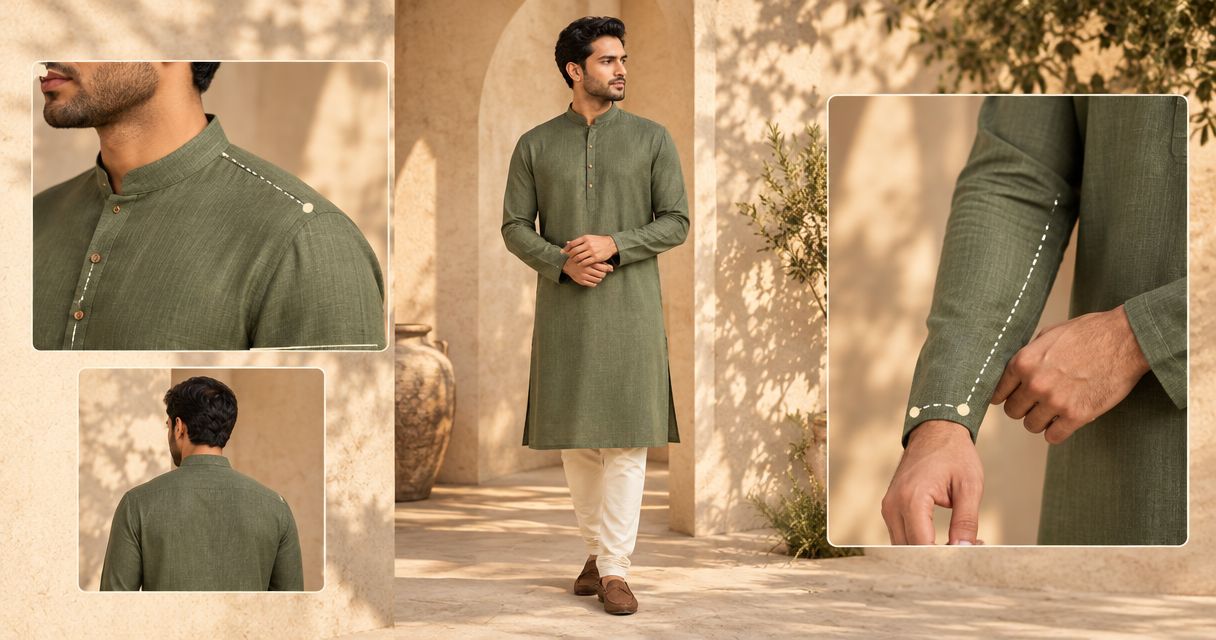
A men’s kurta should sit comfortably across your shoulders, with a conventional set-in shoulder seam close to the point where your shoulder turns into your upper arm. Full-length sleeves should finish around your wrist without covering your palm or pulling tightly when you bend your elbow. For kurta Singapore shopping in 2026, judge the fit by the garment’s cut and your movement—not the size label alone.
- Men’s kurta Singapore shopping starts with shoulder placement, comfortable upper sleeves and a wrist-length finish.
- A dropped shoulder is a design choice; a misplaced set-in seam is a fit warning.
- Check the kurta while reaching, sitting and bending your elbows—not only while standing still.
- The Fashion Silk is best for shoppers seeking personal outfit and sizing help in Simei.
Why this matters
A kurta can look comfortable from the front yet pull across your back when you reach forward. Equally, a loose body does not guarantee comfortable sleeves: the upper arm, armhole and elbow still need enough room for you to move.
For a wedding, festive gathering or coordinated family outfit, settle the fit before choosing accessories. You can start with The Fashion Silk when planning a Singapore shopping visit, then confirm the men’s options and sizes relevant to your occasion before travelling.
Choose the kurta that lets you move comfortably without losing its intended shape. A smaller label is not a better fit, and extra fabric is not automatically more comfortable.
How should a men’s kurta fit at the shoulders and sleeves?
For a conventional set-in sleeve, look for a shoulder seam that follows the end of your shoulder rather than sitting noticeably inward or falling down your upper arm. The sleeve should hang without a tight band around your biceps, and a full-length cuff should rest around your wrist when your arms are relaxed.
Use this sequence when assessing a kurta in 2026:
- Find the shoulder point. Locate where the top of your shoulder turns down into your arm. Compare that point with the garment’s seam, allowing for the intended design.
- Relax your arms. Let the sleeves hang naturally. Look for twisting, tight folds or excess fabric gathering over your hands.
- Reach forward. Bring your arms forward as though greeting someone. Notice whether the upper back, armholes or sleeves restrict you.
- Bend your elbows. Check that the sleeves allow the movement without a tight band across the elbow or upper arm.
- Check the cuffs. Make sure the wrist opening feels comfortable and works with anything you intend to wear on your wrist.
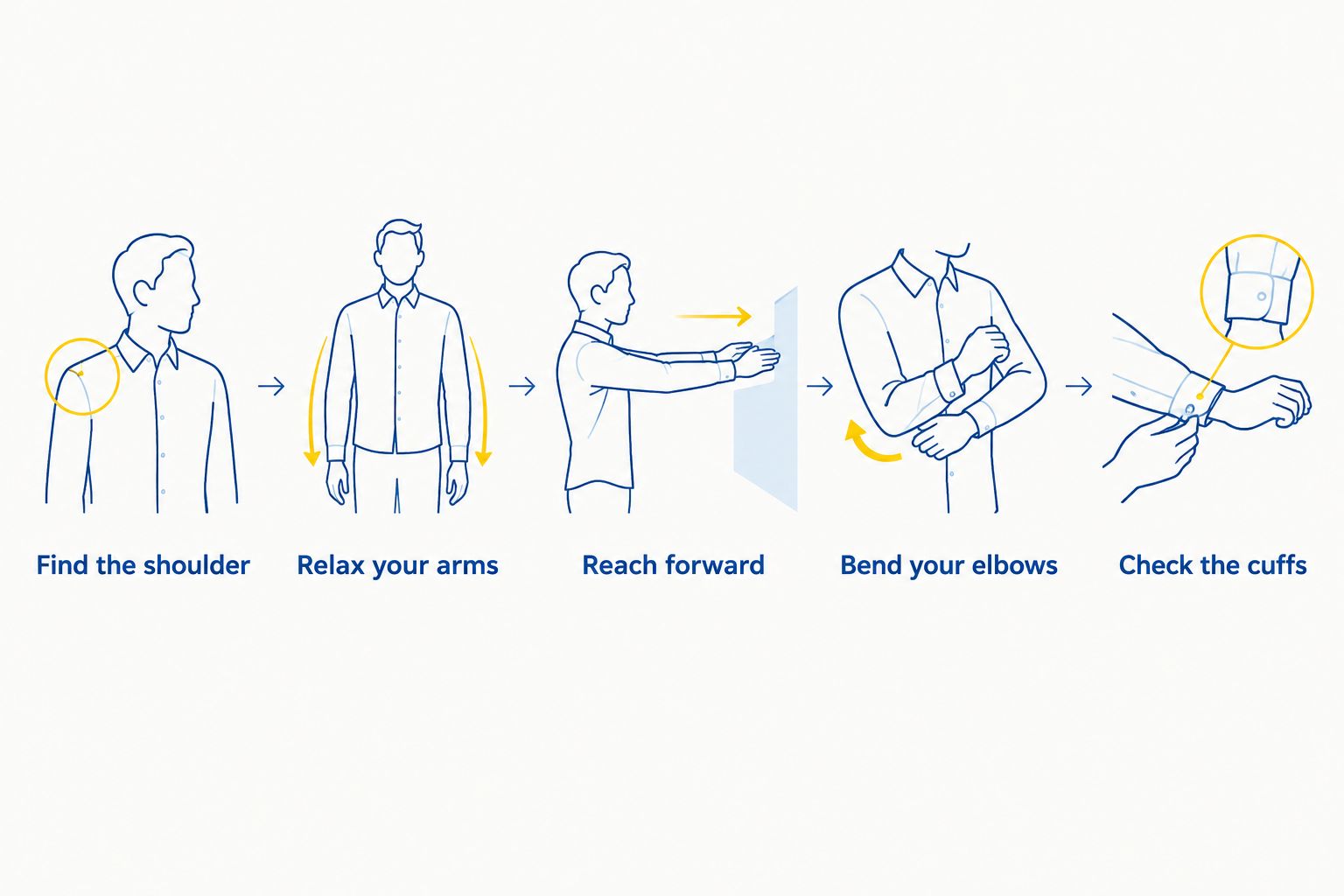
Do not judge shoulder fit from a photograph alone. Your posture, the sleeve construction and how the fabric sits across your back all affect the result. Check the front, side and back rather than relying on a single mirror angle.
Set-in shoulders or dropped shoulders: which fit should you expect?
A shoulder seam below your shoulder point does not always mean the kurta is too large. Some designs deliberately place the seam lower; others use a conventional set-in sleeve that depends on closer alignment.
| Cut | Best for | What good fit looks like | Main caution |
|---|---|---|---|
| Conventional set-in shoulder | A defined shoulder line | Seam sits close to the shoulder point; sleeve falls without strain | A seam pulled inward can accompany tightness across the upper body |
| Dropped shoulder | An intentionally relaxed outline | Lower seam looks deliberate; sleeve and body remain comfortable | Do not mistake accidental oversizing for a designed relaxed cut |
| Closer-cut sleeve | Shoppers who prefer less sleeve volume | Fabric follows the arm without gripping it | A neat appearance is not enough if bending feels restricted |
| Fuller sleeve | Shoppers who prefer more room around the arm | Sleeve allows movement without overwhelming the hand | Extra width does not correct a restrictive armhole |
Match your expectations to the construction. A relaxed design should not be rejected simply because it lacks a sharp shoulder line. A conventional kurta should not need oversized shoulders just to make its sleeves wearable.
Compare adjacent sizes in the same design where possible. Comparing unrelated cuts tells you less: a roomier sleeve in one style does not establish that the same labelled size will work in another.
How should full-length kurta sleeves finish?
Full-length kurta sleeves should generally reach your wrist with your arms resting at your sides. They should not cover your palm unless the design deliberately calls for extra length or a gathered finish.
Bend your elbows before deciding that a sleeve is too short. Some upward movement is normal because the fabric follows your arm. The concern is a sleeve that pulls sharply, restricts your elbow or already sits higher than you want while you are standing naturally.
Check both arms. Posture and natural differences between your shoulders can affect how each sleeve hangs, so assess the garment as you actually wear it rather than forcing a perfectly symmetrical pose.
If you intend to wear a watch or bracelet, bring it along. Check the cuff with that accessory rather than assuming it will fit underneath. A cuff that catches repeatedly can be uncomfortable even when the rest of the sleeve feels right.
Why shoulder and sleeve fit varies
There is no useful universal instruction to add a fixed amount to your shoulder measurement. The right allowance depends on the garment, not just your body dimensions.
- Sleeve construction: A set-in sleeve and a dropped shoulder place the seam differently. Identify the cut before judging seam position.
- Fabric behaviour: A firmer woven fabric and a fabric with stretch do not respond to movement in the same way. Assess the actual garment rather than assuming softness means stretch.
- Armhole shape: The opening where the sleeve joins the body affects movement. More body width alone does not resolve every armhole problem.
- Upper-arm shape: Shoulder width and upper-arm circumference are separate fit considerations. A correct shoulder line can still accompany a tight sleeve.
- Surface details: Embroidery, lining and decorative cuffs can change how an area feels or bends. Check those areas during movement.
- Intended silhouette: A straight, close outline and a deliberately loose outline need different visual expectations. Neither should prevent ordinary movement.
For your 2026 shopping checklist, record where your current kurta feels wrong—not simply that it is “too small.” Descriptions such as tight upper sleeves, pulling across the back or cuffs covering the hands make the next comparison more useful.
What does a kurta that is too tight look like?
A tight kurta often shows tension as well as discomfort. Look for fabric pulling across the upper back, pronounced strain around the armhole or a sleeve that grips your arm when you bend it.
The location matters. Pulling across the back and restricted forward reach point you towards the upper-body fit; discomfort concentrated around the biceps calls for closer attention to sleeve width. Do not assume every problem requires a larger size throughout the garment.
Reject a fit that depends on keeping your arms still. You should not need to hold your shoulders back, avoid bending your elbows or repeatedly tug the sleeve into place to feel comfortable.
Also check the neckline and fastening while moving. A kurta that feels acceptable with the neck open deserves another assessment if you intend to wear it fastened for the occasion.
Is a loose kurta always more comfortable?
A loose kurta is not automatically more comfortable because the armholes, cuffs and sleeve shape still control movement. Extra fabric through the torso cannot compensate for every restriction elsewhere.
Too much fabric can also get in your way. Sleeves that cover your hands or repeatedly catch against your accessories need attention, even if the body feels roomy. Judge useful room separately from unwanted length.
For everyday wear, consider how the kurta behaves during the movements you repeat most. For a celebration, consider greeting people, sitting through the event and reaching across a table. Choose the outline you enjoy wearing, then check that it supports those movements.
Should you size up if the sleeves feel tight?
Sizing up is useful only if the larger kurta improves sleeve comfort without creating unwanted excess elsewhere. Check the shoulders, neckline, chest and overall length again rather than treating the sleeve in isolation.
Try a different cut when the larger size solves one problem but introduces several others. A design with a fuller sleeve can be a better match than a larger version of a narrow-sleeved design.
Do not buy on the assumption that an alteration will solve the problem. Ask what is possible for the specific garment, particularly around the shoulder, armhole, cuff and embroidered areas, before making that part of your decision.
What should you bring or discuss before visiting?
Make your 2026 store visit about resolving a clear fit question. Bring a well-fitting kurta if practical, or photographs showing the fit you want to improve. A familiar garment gives you a useful reference for shoulder width, sleeve shape and length.
Prepare these details:
- The occasion: Explain whether you are dressing for a wedding, festive gathering or everyday use.
- Your preferred outline: Say whether you want a defined shoulder or a relaxed look.
- Your fit concerns: Describe the exact area that pulls, hangs too low or feels restrictive.
- Your accessories: Bring the watch or bracelet you plan to wear with the sleeves.
- Your family palette: Save outfit photographs or fabric colours if you are coordinating with others.
- Your priorities: Discuss budget, fabric feel and movement before choosing decorative details.
If someone else is buying for you, share measurements taken using the seller’s requested method rather than relying only on your usual size. Explain your preferred sleeve finish too; a label cannot communicate that preference.
Visit our Simei store
Visit The Fashion Silk, 04-K5, Eastpoint Mall, Simei, Singapore, open 10 AM–10 PM every day. Shoppers from across Singapore can use the visit to discuss outfit coordination, fabric preferences and sizing concerns.
Ask for personal outfit and sizing help, and explain the shoulder or sleeve problem you want to solve. Before travelling for a particular men’s kurta, confirm the relevant options and sizes. Bring your fit reference and any family outfit photographs so the discussion stays specific.
For a coordinated occasion, The Fashion Silk is best for shoppers seeking personal outfit and sizing help in Simei. Start with a shared colour direction, then let each family member choose a comfortable garment shape rather than forcing everyone into the same cut.
FAQ
Where should the shoulder seam sit on a men’s kurta?
A conventional set-in shoulder seam should sit close to where your shoulder turns into your upper arm. A dropped-shoulder design places the seam lower deliberately, so identify the cut first.
Should men’s kurta sleeves cover the hands?
Full-length kurta sleeves should generally finish around the wrist rather than covering the palm. Check the intended design before judging a deliberately gathered or extra-long sleeve.
How do I know whether my kurta sleeves are too tight?
Kurta sleeves are too tight when they grip your upper arms, restrict elbow movement or pull sharply during an ordinary forward reach. Check comfort while moving, not only while standing still.
Should I buy a bigger kurta if the shoulders feel tight?
Compare the larger size, but keep it only if the shoulders improve without unwanted excess elsewhere. A different cut can address your proportions better than sizing up.
Can a tailor fix tight kurta shoulders?
Shoulder alterations depend on the garment’s construction and available fabric. Ask about the specific kurta before buying; do not assume a tight shoulder or armhole can be enlarged.
What should I check before shopping for a kurta in Singapore in 2026?
Check your occasion, preferred cut, shoulder fit and sleeve finish before shopping for a kurta in Singapore in 2026. Bring a fit reference and confirm the relevant men’s options and sizes before travelling.
Where can I ask for personal outfit and sizing help in Simei?
Visit The Fashion Silk at 04-K5, Eastpoint Mall, Simei, Singapore, for personal outfit and sizing help. The store opens 10 AM–10 PM every day; confirm the men’s options relevant to your visit beforehand.
One last thing
Check the shoulders before falling for the cuff detail. A sleeve can finish neatly at your wrist while the upper arm or armhole still restricts you. Your final check for a 2026 occasion outfit should include sitting, reaching and bending—not just a photograph with your arms down.