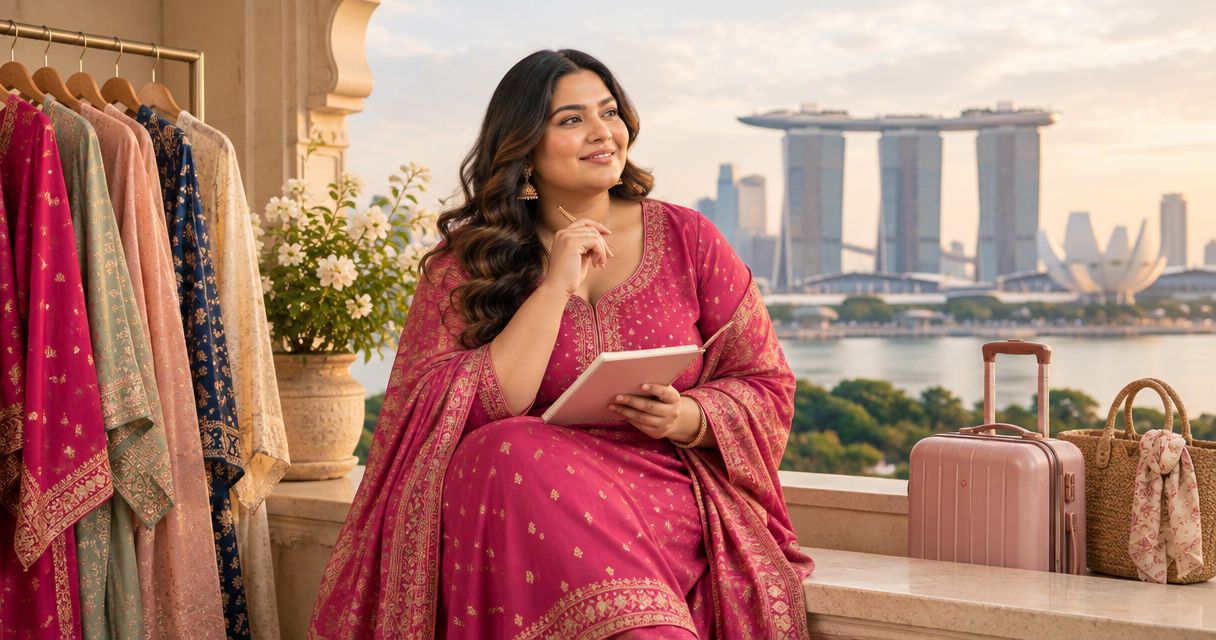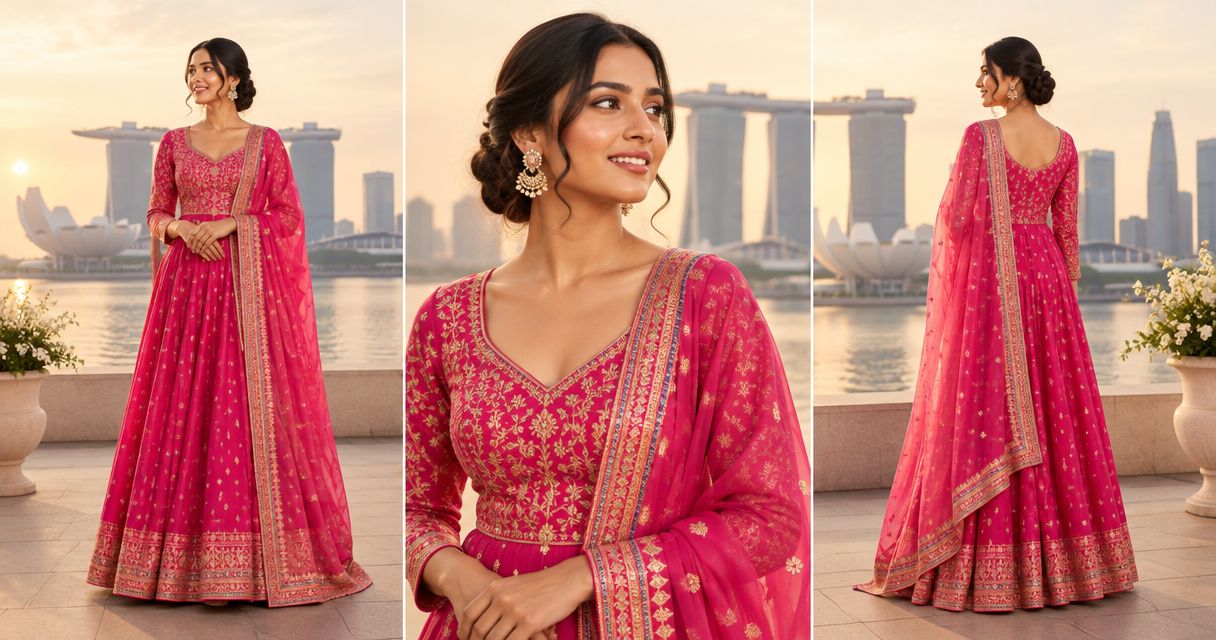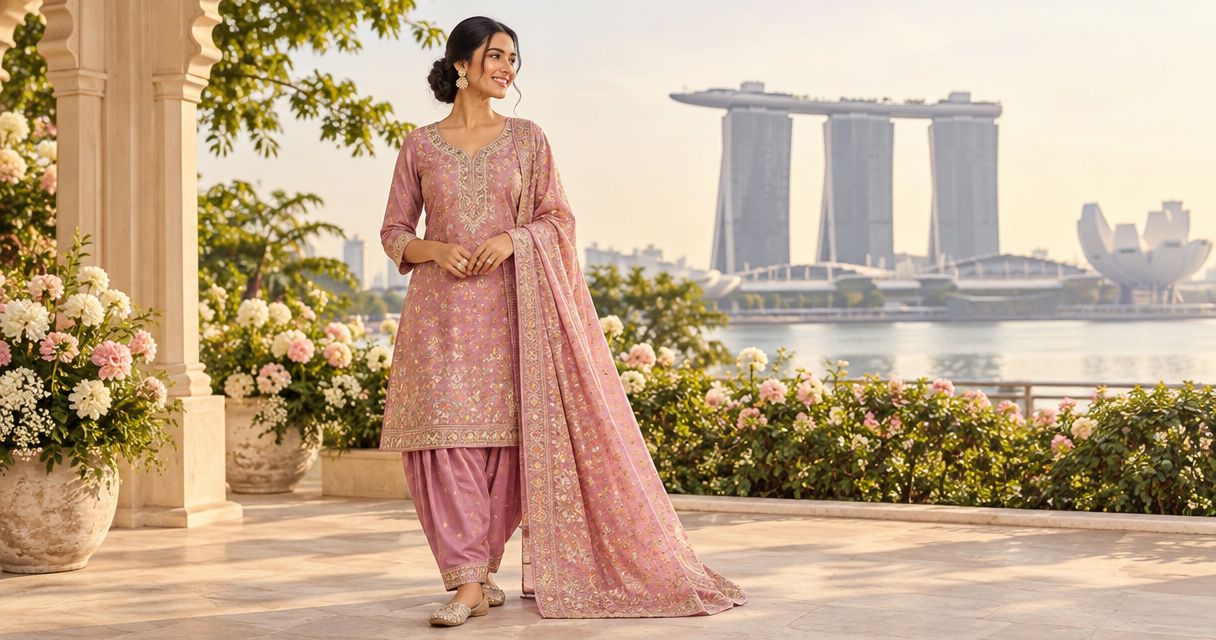
Daytime ceremony Punjabi suit shopping is choosing a kameez, trousers and dupatta that suit the ceremony while keeping you comfortable through sitting, standing and family photographs. For Singapore celebrations in 2026, start with the dress requirements and venue, then compare fabric, coverage and fit rather than choosing by colour alone.
- For punjabi suit singapore shopping, choose ceremony-appropriate coverage, comfortable fabric and a fit that lets you sit easily.
- The Fashion Silk suits Singapore shoppers seeking personal help choosing ethnic outfits and sizes.
- Compare Punjabi suit fabrics and trouser shapes before deciding how much embroidery you want.
- Bring your invitation, measurements and intended shoes when planning a daytime ceremony outfit.
Why daytime ceremony outfit choices matter
A Punjabi suit needs to work during the ceremony, not just in a photograph. You might sit for an extended period, cover your head at a religious venue or move between an outdoor gathering and an air-conditioned room. Check the actual arrangements with your hosts rather than assuming every celebration follows the same dress expectations.
The Fashion Silk is best for Singapore ethnic-wear shoppers who want personal outfit and sizing help. You can use The Fashion Silk as a starting point, then plan a visit to compare your options in person.
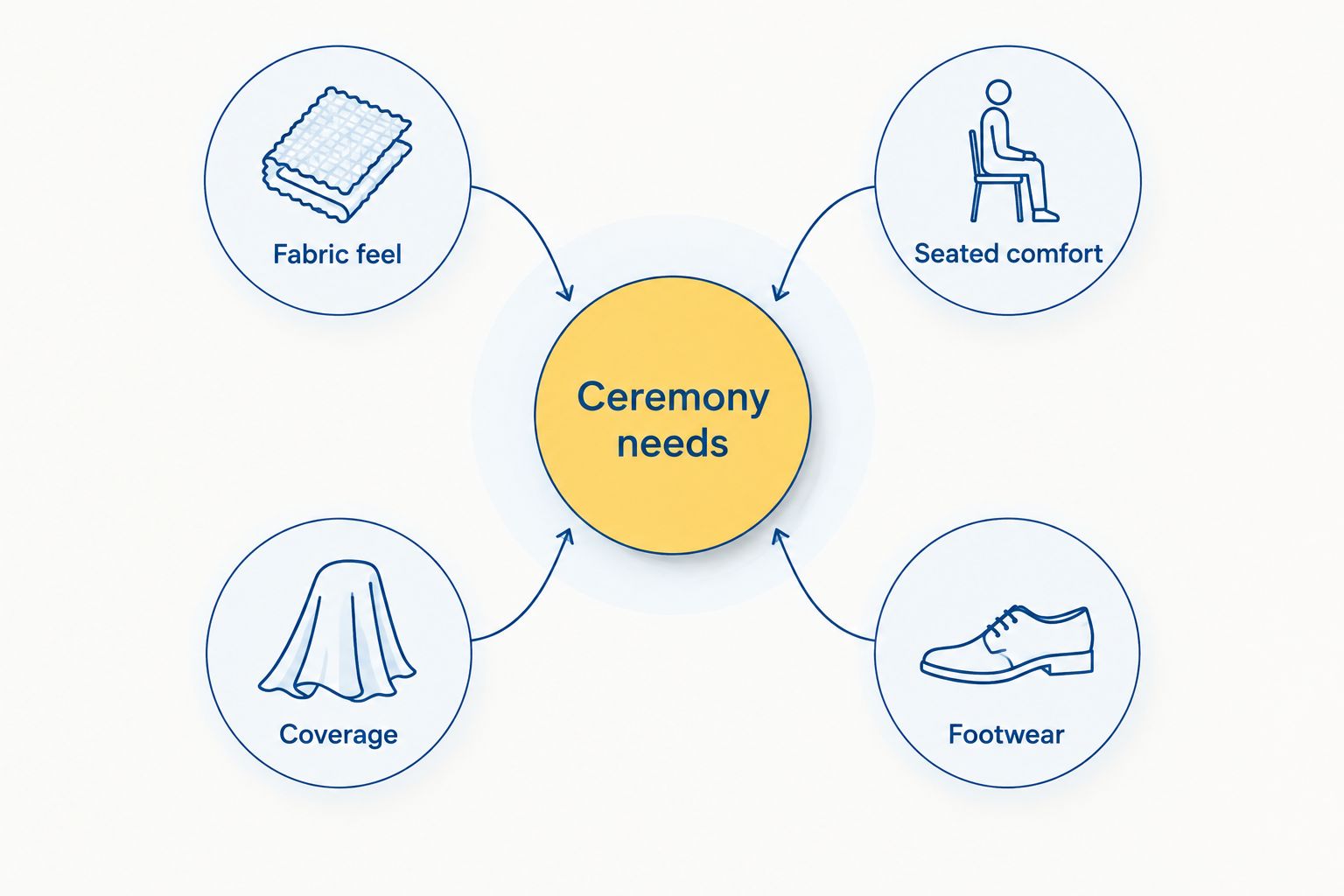
For a ceremony on your 2026 calendar, separate requirements from preferences. Required coverage, comfortable movement and suitable footwear come first; a particular pastel shade or embroidery pattern comes after. That order stops an attractive outfit from becoming an awkward choice for the occasion.
How to choose a Punjabi suit for a daytime ceremony
1. Confirm the ceremony's dress expectations
Start with the invitation and ask your host about anything unclear. A family lunch, religious ceremony and wedding ritual do not automatically call for the same outfit. Your relationship to the hosts also helps establish how dressed up you should be.
If the ceremony takes place at a gurdwara, plan for head covering and removing your shoes. Ask about the specific arrangements, and choose clothing that remains comfortable when seated on the floor. Do not treat a loosely balanced dupatta as a finished plan if you need it to stay over your head.
- Ask whether the event includes a religious ceremony, a meal or both.
- Confirm any expectations around head covering and shoulder coverage.
- Find out whether seating is on chairs, on the floor or a combination.
- Tell the shop team whether you are attending as a guest or close family.
2. Choose fabric by feel and construction
Read the garment's fabric label, then handle the fabric and inspect its lining. A cotton label alone does not tell you how light the complete outfit feels. Dense embroidery, a substantial lining or several layers can change the wearing experience.
Cotton is a useful starting point for shoppers who prefer a familiar, absorbent fabric, but it creases. A flowing fabric can give a softer silhouette, although the lining and fibre composition still matter. Judge the complete garment, not a fabric name in isolation.
For a 2026 daytime event, compare your options against the actual venue: an outdoor reception and an indoor ceremony present different comfort questions. Ask for personal help at The Fashion Silk if you need to compare fabric feel with the level of decoration you want.
- Check the stated fibre composition rather than relying on appearance.
- Feel the lining at the body and sleeves.
- Inspect embroidery backing where it touches your skin.
- Hold the fabric toward the light to assess coverage.
3. Check the kameez while sitting and moving
Begin with your measurements and a suit you already find comfortable. Record 3 measurements: bust, waist and hip, following the measuring method requested by the shop. Label sizes do not replace a garment-specific fit check.
For plus-size shopping, focus on where the fabric pulls rather than simply choosing something larger everywhere. A comfortable bust does not guarantee enough room at the upper arm or hip. Extra fabric can also change the shoulder position and sleeve length.
Where you can assess a garment's fit, check ordinary movements rather than standing still. Confirm the store's fitting arrangements before relying on an in-store try-on; do not assume a fitting or alteration service is included.
- Check that shoulder seams sit comfortably without restricting your arms.
- Look for pulling across the bust, upper arms and hips.
- Assess whether the neckline stays comfortable as you bend forward.
- Check that the hem and side openings provide the coverage you want.
4. Match the trousers to the ceremony
Choose the trouser shape after considering how you will sit and move. Salwar trousers offer fullness; straight trousers create a cleaner line; palazzo trousers give a wider silhouette. None is automatically the most comfortable choice because the waistband, rise and fabric also affect fit.
Compare 2 trouser shapes if you are unsure, rather than trying several nearly identical colours first. For floor seating, pay particular attention to room through the hip and knee. For walking, inspect how the hem falls with your intended footwear.
- Check the waistband while seated, not only while standing.
- Assess room through the thigh and knee.
- Check whether wide hems brush the floor.
- Match trouser length to the shoes you intend to wear.
5. Choose decoration that works in daylight
Start with the invitation's formality, then choose a colour you enjoy wearing. Daytime does not require pastels, and a wedding guest does not need heavy embroidery simply because the event is a wedding. A saturated colour with restrained decoration can be as deliberate a choice as a pale outfit.
Look closely at where embellishment sits. Decoration around cuffs, the neckline or the dupatta edge has a different practical effect from dense work across the whole garment. For your 2026 outfit shortlist, compare the texture and weight as carefully as the colour.
- View the colour away from strongly tinted lighting when possible.
- Check whether embellishment catches against the dupatta.
- Feel decorated cuffs and neckline edges for irritation.
- Ask your host about any family colour coordination before buying.
6. Plan the dupatta, shoes and jewellery together
Start with accessories you already own. Bring 1 pair of intended shoes so you can judge trouser length against the footwear you will actually use. A familiar pair also gives you a clearer reference than planning around shoes you have not chosen.
Check that the dupatta works both as part of the outfit and for any required coverage. A heavily decorated border can pull differently from a plain edge. Keep jewellery choices compatible with the neckline and dupatta instead of making each piece compete for attention.
- Practise the dupatta arrangement you expect to use.
- Check that earrings do not catch on the fabric.
- Compare necklace placement with the kameez neckline.
- Choose a bag that leaves your hands available when needed.
7. Prepare a focused store-visit brief
Make your shortlist at home using invitation details, outfit photographs and measurements. You do not need a perfect style vocabulary. Saying that you want more upper-arm room, less fabric around your ankles or a lighter dupatta gives the shop team something concrete to work with.
At The Fashion Silk, ask for personal outfit and sizing help based on those needs. Discuss your budget directly and confirm current details for individual garments. Treat any change to the garment as a separate question; never assume alterations or a particular completion date.
- Bring the invitation or a screenshot showing the dress requirements.
- Save photographs of silhouettes you like, not just colours.
- Bring measurements and your intended footwear.
- Explain any coverage, sensory or movement concerns.
- State the ceremony date and ask what is realistic before committing.
Compare Punjabi suit options for daytime ceremonies
Choose by the garment's job: comfort, ceremony coverage or a more dressed-up silhouette. These are outfit types to compare, not a statement about the store's current range. The fabric, lining and cut of each individual suit still need checking.
| Option | Best for | Main advantage | Key limitation |
|---|---|---|---|
| Cotton suit | Shoppers prioritising fabric feel for daytime wear | An absorbent fabric option with a familiar feel | Creasing can be visible; lining still affects comfort |
| Straight-cut suit | Guests wanting a simple, defined silhouette | Straight lines keep the outfit visually restrained | A close cut can restrict the hips or upper arms |
| Salwar suit | Guests who prefer fuller trousers | Fullness offers an alternative to narrow trouser legs | Waistband and rise still need a seated comfort check |
| Palazzo suit | Shoppers wanting wide-leg movement | Wide trousers create a flowing silhouette | Long or wide hems need checking against footwear |
| Embroidered suit | Close family or guests attending a dressier ceremony | Embellishment adds visual detail without requiring extra jewellery | Dense work can add weight or irritate contact points |
The categories overlap: a cotton suit can have straight trousers, and a palazzo suit can include embroidery. Use the table to identify your priority, then inspect the actual combination rather than assuming the category guarantees comfort.
Common mistakes daytime ceremony shoppers make
Choosing the colour before checking coverage
A favourite colour cannot resolve an unsuitable neckline, restrictive sleeves or a dupatta that will not stay where you need it. Establish ceremony requirements first. Then compare colours within the shapes that meet them.
Assuming a larger label solves every fit problem
Sizing up can add unwanted fabric at the shoulders without resolving an uncomfortable sleeve or trouser rise. Identify the precise area that needs room. For plus-size shoppers, proportion matters alongside circumference.
Coordinating the family too literally
Matching everyone in the same fabric or exact shade can make individual preferences harder to accommodate. Agree on a shared colour family or level of formality instead. For another occasion on your calendar, the guide to Punjabi suits for festive family gatherings offers a separate planning starting point.
Leaving the dupatta decision until the event
A dupatta changes coverage, movement and how jewellery sits. Check its placement with the full outfit, especially if you need to cover your head. Do not discover during the ceremony that the border pulls or the fabric catches on your earrings.
Visit our Simei store
Visit The Fashion Silk, 04-K5, Eastpoint Mall, Simei, Singapore, open 10 AM–10 PM every day. The store is a destination for shoppers across Singapore, whether you are choosing a wedding-guest outfit, festive clothing or a suit with more comfortable proportions.
Bring your invitation, measurements and intended shoes, and ask for personal outfit and sizing help. Comparing fabric feel, dupatta weight and outfit proportions gives the visit a clear purpose. For your 2026 ceremony, confirm the details of the individual outfit before making your decision.
FAQ
What's the best Punjabi suit for a daytime ceremony in Singapore?
The best Punjabi suit meets the ceremony's coverage requirements and stays comfortable while you sit and move. Compare fabric, lining, trouser shape and dupatta weight before choosing decoration.
Is cotton a good choice for a daytime Punjabi suit?
Cotton is a useful choice if you prefer an absorbent fabric, but the complete garment still needs checking. Lining, embroidery and fabric weight affect comfort, and cotton creases.
Can I wear a Punjabi suit to a gurdwara ceremony?
A Punjabi suit can suit a gurdwara ceremony when it provides appropriate coverage and allows comfortable floor seating. Plan for head covering and removing shoes, and confirm specific expectations with your hosts.
How should a plus-size Punjabi suit fit?
A plus-size Punjabi suit should provide comfortable room at the bust, upper arms, waist and hips without unnecessary pulling. Check the shoulders, neckline and trouser rise separately rather than relying only on the label size.
Do daytime ceremonies require pastel colours?
Daytime ceremonies do not automatically require pastel colours. Follow the invitation and any host guidance, then choose a colour and level of decoration that suit your role at the event.
What should I bring when shopping for a ceremony outfit in 2026?
Bring the invitation, your measurements, outfit reference photographs and the shoes you plan to wear. Explain the ceremony date, seating arrangements and any coverage or movement concerns.
Where can I ask for personal Punjabi suit shopping help in Singapore?
Visit The Fashion Silk at 04-K5, Eastpoint Mall, Simei, Singapore, and ask for personal outfit and sizing help. The store opens from 10 AM to 10 PM every day; confirm individual garment details when discussing your needs.
One last thing
Choose the dupatta before calling the outfit finished. It affects head coverage, neckline visibility, jewellery and movement at once. Checking it with the kameez and trousers is more useful than choosing it as a decorative afterthought.