Choose your first saree in Singapore by matching it to the occasion, then checking how easily you can manage the fabric, pleats and shoulder drape. Assess the blouse, underskirt and footwear together before deciding; a beautiful saree is not a complete outfit on its own. For a beginner, a manageable drape and comfortable fit matter more than elaborate decoration.
- Start your saree Singapore search with the occasion, fabric feel and blouse fit—not colour alone.
- Cotton suits everyday dressing; silk suits festive dressing, but fabric weight and stiffness still need checking.
- The Fashion Silk suits beginners who want personal saree selection and sizing help in Singapore.
- Bring event details, planned footwear and blouse measurements to make your store visit more useful.
The Fashion Silk offers sarees and personal outfit and sizing help at its Simei store. Use this 2026 guide to arrive with a clear shortlist, understand the trade-offs and ask questions that help you choose something you will actually enjoy wearing.
How do you choose a saree in Singapore as a beginner?
Start with the event rather than the prettiest photograph. Your first saree should work when you sit, walk and move your arms—not just when you stand still in front of a mirror.
Use this sequence while shopping:
- Choose the occasion. Explain whether you need an everyday outfit, wedding-guest look or festive family outfit. Share any invitation wording or dress guidance.
- Compare fabrics. Handle the fabric and ask what it contains. Check weight, stiffness, transparency and how easily the pleats hold their shape.
- Check the drape. Look at the fabric around your waist and over your shoulder. Notice whether you keep wanting to adjust it.
- Check blouse fit. Discuss the bust, shoulders, armholes and sleeve comfort. Ask what blouse components are included rather than assuming the outfit is ready to wear.
- Complete the outfit. Consider the underskirt, footwear and jewellery before deciding. Ask about care and any preparation needed before the event.
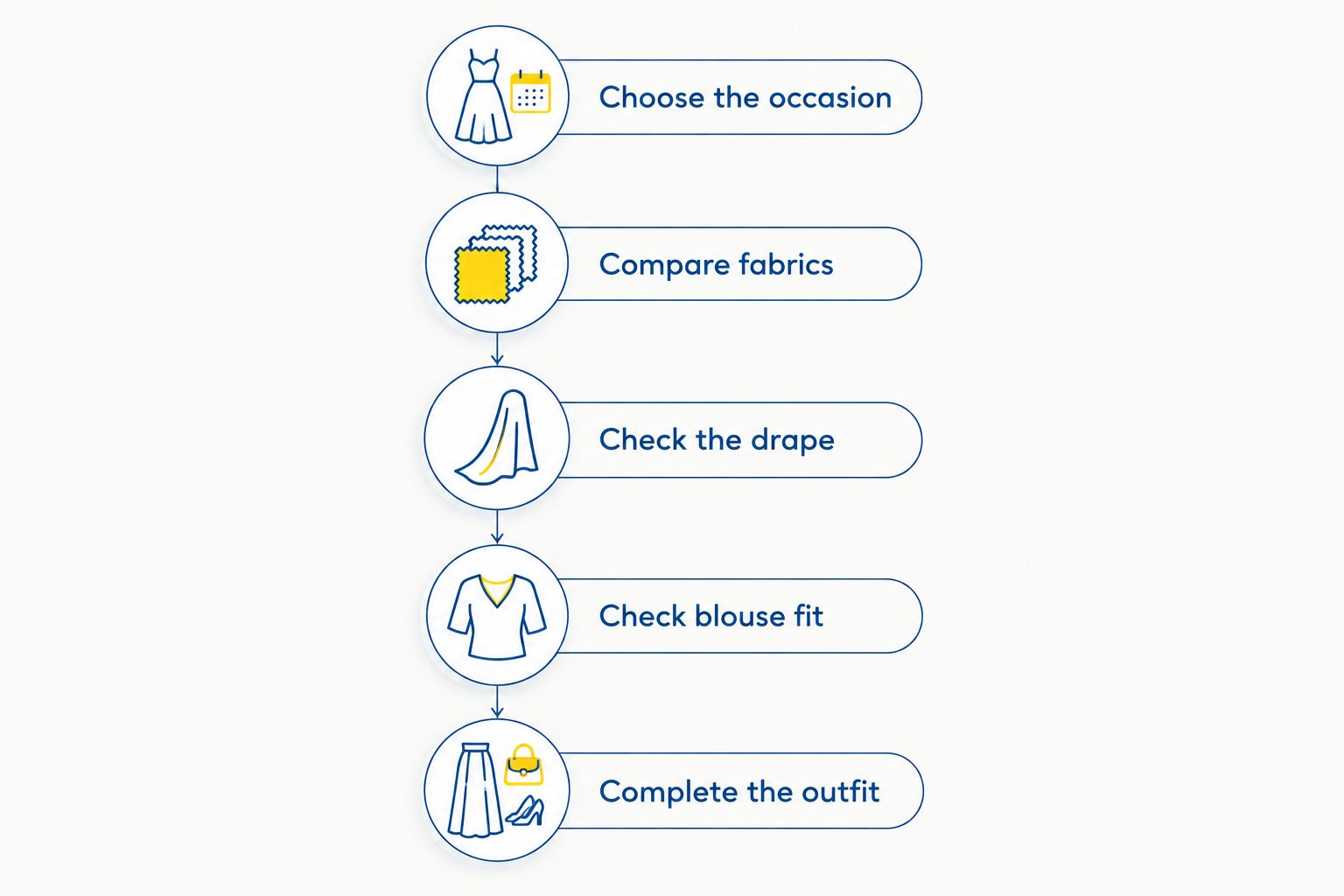
Treat this as a decision process, not a rule that one fabric suits every beginner. If a fabric feels awkward in your hands, ask to compare another option before committing to the colour or embroidery.
Why this matters
A saree purchase involves several connected choices. The fabric affects how the pleats behave, the blouse affects movement, and the footwear affects where you want the hem to sit.
For your first saree in 2026, solve comfort and outfit completeness before adding decorative details. That approach gives you a clearer shopping brief and avoids choosing accessories before you know what the main outfit needs.
Singapore shoppers should also consider where they will wear the outfit: outdoors, indoors or across both settings. Tell the person helping you about the actual event rather than asking for a general-purpose recommendation.
Which saree fabric should a beginner choose?
Choose fabric by its behaviour, not its name alone. Cotton and silk describe fibres; terms such as chiffon describe fabric construction, so read the composition information rather than treating every label as an equivalent category.
| Fabric option | Best for | Main advantage | What to check |
|---|---|---|---|
| Cotton saree | Everyday dressing and shoppers who prefer a more structured feel | Cotton absorbs moisture; some cotton fabrics give pleats a defined shape | Stiffness, creasing, transparency and the care instructions |
| Silk saree | Festive occasions and shoppers who want silk's characteristic lustre | Silk can provide a distinctive sheen and drape | Weight and stiffness vary; check handling and care rather than assuming easy draping |
| Chiffon saree | Shoppers who prefer a light, flowing appearance | Chiffon has a lightweight, sheer construction | Slipperiness, transparency and the support needed underneath |
Do not choose the lightest saree automatically. A light fabric that slides around can be harder for a beginner to manage than a slightly more structured fabric.
Ask to see how the cloth gathers into pleats. Compare how it feels folded, held over your shoulder and supported at the waist; those observations are more useful than a fabric name on its own.
Cotton sarees: best for everyday dressing
A cotton saree is a sensible starting point if your main aim is repeat everyday wear. Look for a fabric feel you like, a border you can manage and care instructions that fit your routine.
The trade-off is that cotton can crease, and a stiff finish can make a new saree feel less forgiving. Choose cotton because the actual fabric works for you, not because every cotton saree is beginner-friendly.
Silk sarees: best for festive dressing
A silk saree is worth considering when you want a festive outfit and enjoy the fabric's appearance. Check whether the specific saree feels soft, crisp, light or substantial; silk does not have one uniform drape.
The trade-off is care and handling. Ask about the fabric composition and cleaning instructions, and do not assume a rich-looking saree will be comfortable for the full event.
Chiffon sarees: best for a flowing look
A chiffon saree suits shoppers who prefer a fluid silhouette rather than crisp, structured pleats. Pay attention to transparency and how securely the fabric rests on your shoulder.
The trade-off is control: a flowing fabric can shift while you arrange it. Choose chiffon only if you feel comfortable managing the particular saree, or have a clear plan for help getting dressed.
Why the right beginner saree varies
There is no single best beginner saree for every shopper. These factors change which option deserves your attention:
- Occasion: Everyday dressing, wedding attendance and festive gatherings call for different levels of decoration. Start with the invitation or your intended use.
- Fabric handling: Stiffness, weight and slipperiness affect how you arrange and maintain the drape. Compare the actual fabrics rather than relying on labels.
- Outfit fit: Blouse comfort and underskirt fit influence how the finished outfit feels. Treat them as part of the purchase decision.
- Movement: Sitting, walking and raising your arms reveal concerns that a standing mirror check misses. Discuss what the event will involve.
- Care routine: A saree only works for repeat wear if its care requirements suit you. Read the instructions before deciding.
For a 2026 wedding or celebration, make your shortlist around these practical factors before comparing embellishment. You can then choose decoration within a set of outfits that already meet your needs.
How should your first saree blouse fit?
Your first saree blouse should let you breathe, sit and move your arms without persistent pulling or uncomfortable pressure. Check the shoulders, bust, back and armholes together rather than judging fit only by whether the fastening closes.
Look for these signs while assessing a blouse:
- The neckline rests as intended without unwanted gaping.
- The shoulder area stays comfortable when you move.
- The bust area does not feel compressed or pull visibly at the seams.
- The armholes and sleeves allow the movements you need.
- The back and fastening remain comfortable when you sit.
Do not buy a smaller blouse just to create a tighter silhouette. Tell the person helping you where the garment feels restrictive and ask which measurements or cut details need attention.
If you need plus-size sizing, bring your current measurements and describe your preferred fit. Ask about the specific blouse or outfit rather than assuming a size label means the same fit across different designs.
The same applies to any blouse fabric supplied with a saree. Confirm whether you are looking at a finished blouse or material requiring separate preparation; never treat those as interchangeable.
What should you check before choosing the colour and border?
Choose a colour you enjoy seeing near your face, then inspect the saree's border and shoulder section together. The pallu—the decorative end worn over the shoulder—can change the balance of the finished outfit.
Hold the fabric near your face in person. Check whether you like the combination with your planned blouse and jewellery, rather than judging the saree as an isolated rectangle of fabric.
A detailed border can create a strong focal point, but inspect how it folds at the waist. A simpler border leaves more room for statement jewellery; it is not automatically a less festive choice.
For coordinated family outfits in 2026, agree on a shared colour detail or level of formality before shopping. Everyone does not need an identical fabric or shade, and a photograph of the other outfits makes the discussion clearer.
What should you bring before visiting a saree shop?
Bring information that helps someone understand both the occasion and your comfort preferences. A useful shopping brief is more specific than asking for something nice for a wedding.
Prepare the following:
- Event details: The occasion, venue setting, dress guidance and date you need the complete outfit.
- Outfit references: A few images showing colours, borders or blouse shapes you like. Explain what appeals to you in each image.
- Fit information: Current blouse measurements or a well-fitting blouse to use as a reference, if practical.
- Planned accessories: Footwear or jewellery you already intend to wear, or clear photographs of them.
- Practical preferences: Your spending limit, preferred coverage and any fabrics or garment features you find uncomfortable.
Ask about preparation before leaving with your selection. Blouse work, draping help and alterations are separate questions; confirm what is needed and what help is offered rather than assuming any service is included.
If your event is in 2026, give the actual date when discussing preparation. The useful question is whether your whole outfit can be ready for that date—not simply whether you like the saree today.
Visit our Simei store
Visit The Fashion Silk, 04-K5, Eastpoint Mall, Simei, Singapore, open 10 AM–10 PM every day. Bring your event details, colour references and sizing questions so you can discuss saree selection as a complete outfit.
The Fashion Silk is best for beginner saree shoppers who want personal outfit and sizing help in Singapore. The reason to visit is practical: you can assess fabric feel in person and ask for help narrowing your choices.
The Fashion Silk saree shopping experience is especially relevant when you are unsure how fabric, blouse fit and accessories work together. Confirm any help you need with fitting, blouse preparation or draping before making plans around those services.
FAQ
What is the easiest saree for a beginner to wear?
The easiest saree for a beginner is one whose fabric you can control comfortably while forming pleats and arranging the shoulder drape. Check the actual fabric's stiffness, weight and slipperiness instead of choosing by its name alone.
Is cotton or silk better for my first saree?
Cotton suits everyday dressing, while silk suits shoppers seeking a festive appearance. Neither is automatically easier: inspect the specific saree's drape, care instructions and comfort before deciding.
Can I wear a saree to a wedding if I have never worn one before?
You can choose a saree for your first wedding outfit, but plan the blouse, underskirt, footwear and dressing arrangements together. Check the invitation's dress guidance and practise arranging the outfit before the event.
What should I ask about when shopping for a plus-size saree outfit?
Ask about blouse measurements, armhole comfort, sleeve fit and underskirt fit rather than relying only on a size label. Share your preferred coverage and where fitted garments usually feel restrictive.
Do I need to buy jewellery before choosing my saree?
Choose the saree and blouse direction before buying new jewellery. If you already own jewellery you want to wear, bring it or a photograph so you can assess the colours and decoration together.
Where can I get personal help choosing a saree in Singapore?
The Fashion Silk offers personal outfit and sizing help at 04-K5, Eastpoint Mall, Simei, Singapore. The store opens 10 AM–10 PM every day; bring your event details and fit questions for a more focused visit.
One last thing
Check the saree while sitting, not just standing. A standing pose can hide pressure from a blouse or discomfort around the waist, and a photograph cannot tell you how either feels.
Before deciding, ask yourself whether you would still choose the outfit without its jewellery. If the answer is yes, you have a clearer foundation for a first saree you enjoy wearing.