Best overall: a classic red Banarasi silk saree for a traditional bridal look. Best for extended celebrations: a lighter floral weave. Best for repeat wear: a border-focused design. This 2026 guide compares banarasi silk sarees by bridal need and helps you prepare for a visit to The Fashion Silk.
- Choose classic red banarasi silk sarees for a traditional bridal look; check the actual fabric and drape before deciding.
- Choose lighter floral designs when comfort and movement matter more than dense ornament.
- Choose border-focused designs when you want a wedding saree you can style again.
- Visit The Fashion Silk in Simei for personal outfit and sizing help; confirm individual Banarasi options before travelling.
Why this matters
A bridal saree needs to work when you sit, walk and greet guests—not just when it hangs on a rail. The richest-looking weave is not automatically the right choice for your ceremony, jewellery or comfort.
For a Singapore wedding in 2026, separate appearance from practical requirements. Decide whether your priority is a traditional colour, an elaborate pallu, easier movement or future wear. Then check the actual saree against that priority rather than choosing by its product name alone.
The Fashion Silk is best for Singapore ethnic-wear shoppers who want personal help choosing outfits and sizes. The recommendations below describe design directions, not verified products or a confirmed Banarasi collection.
What makes the best banarasi silk sarees?
Use these criteria before comparing colours or motifs:
- Fabric clarity: Ask what the saree is made from. A descriptive name alone does not establish silk composition, weaving method or origin.
- Manageable drape: Assess how the fabric forms pleats and how the pallu falls. Judge the actual piece, not its photograph.
- Bridal emphasis: Decide whether the main feature should be colour, all-over pattern, a broad border or the pallu.
- Blouse compatibility: Consider neckline, sleeve shape, support and back coverage alongside the saree.
- Accessory balance: Choose whether your saree or jewellery will carry the strongest visual detail.
- Repeat-wear potential: Picture a second occasion and a different blouse before committing to a highly specific bridal look.
These criteria make the ranking useful without pretending every bride wants the same outfit. A traditional ceremony and a reception with frequent movement call for different decisions.
Banarasi bridal styles at a glance
| Rank and style | Best for | Standout feature | Key limitation |
|---|---|---|---|
| 1. Classic red | Traditional bridal look | Strong colour-led wedding styling | A familiar bridal direction rather than an understated one |
| 2. Lighter floral weave | Extended celebrations | Pattern without making dense ornament the goal | Floral motifs do not guarantee a lighter fabric |
| 3. Deep jewel tone | Evening reception | Rich colour as the main styling feature | Dark shades need checking beside your chosen accessories |
| 4. Pale or pastel shade | Soft bridal palette | Gentle colour contrast with blouse and jewellery | Similar pale tones can blend together |
| 5. Border-focused design | Repeat occasion wear | Detail concentrated around the frame of the drape | Less all-over ornament for brides who want maximum detail |
The ranking is a decision guide for 2026, not a test of named sarees. Fabric composition, provenance, weight and finishing must be checked on the individual piece.
1. Classic red: best for a traditional bridal look
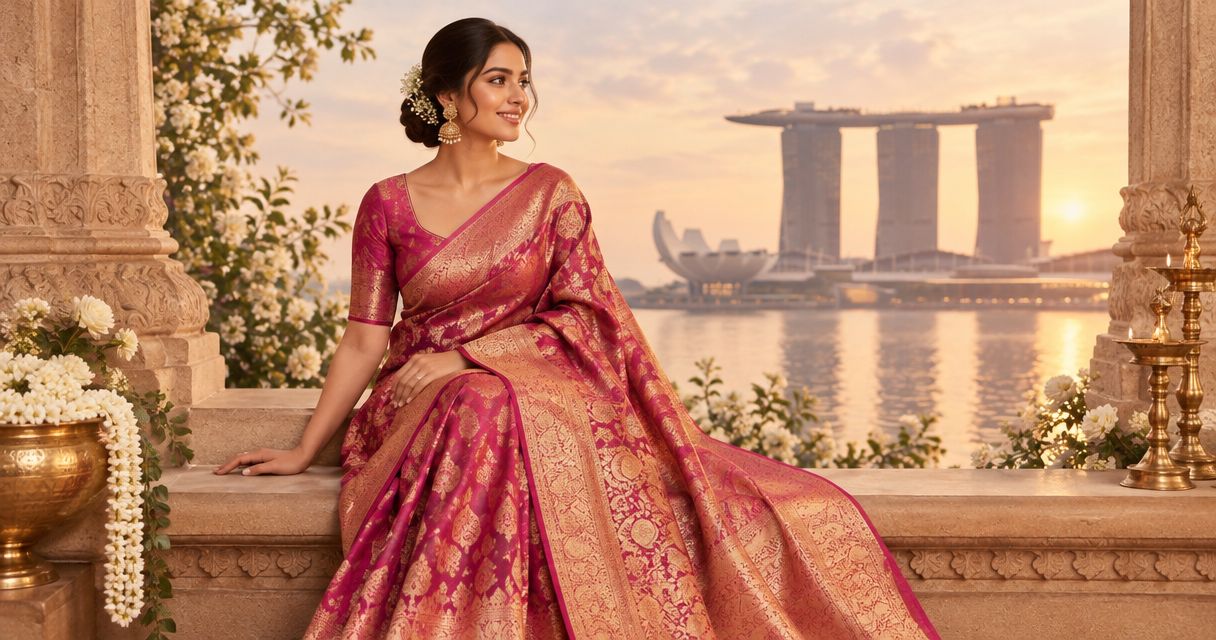
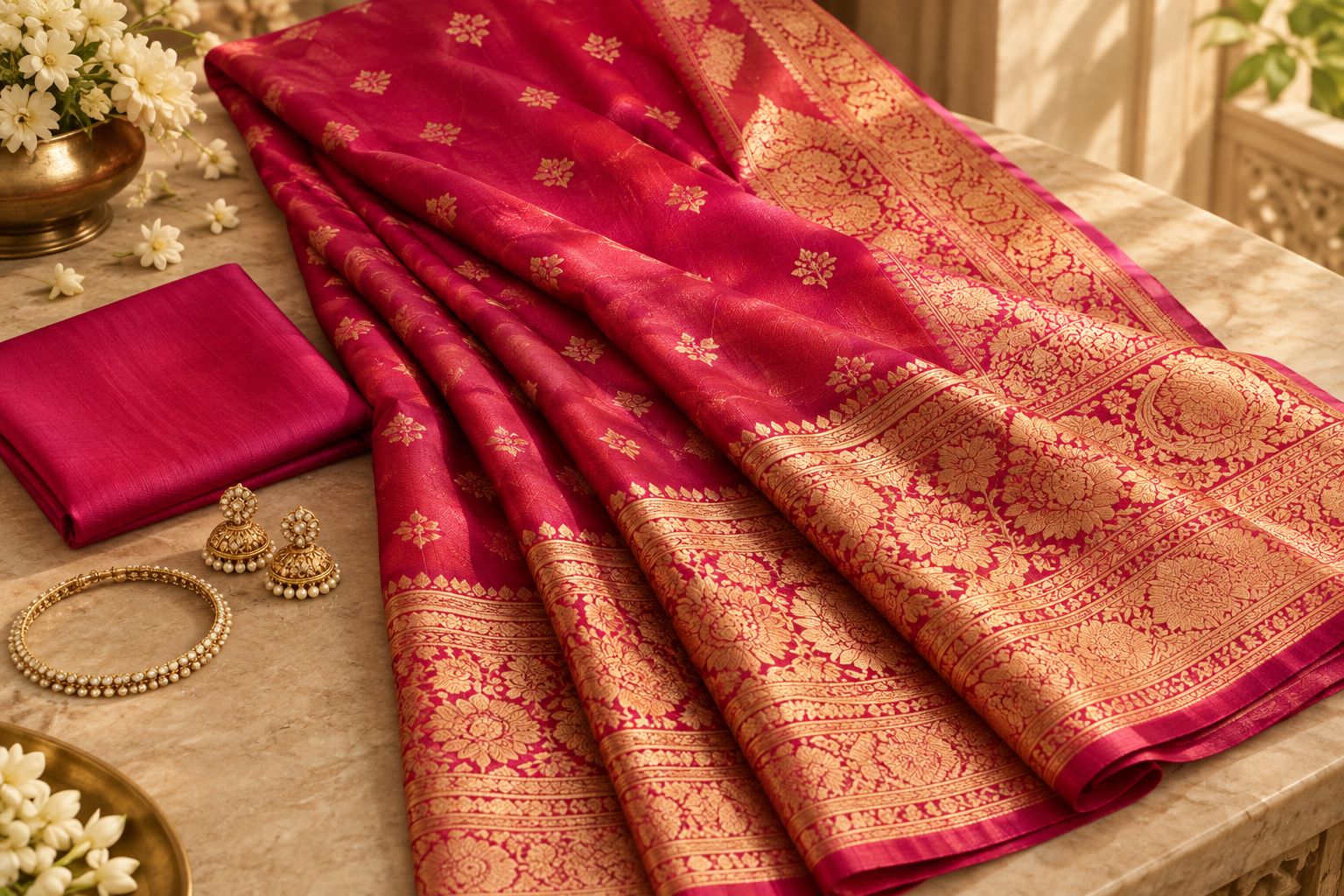
A classic red Banarasi silk saree puts colour at the centre of your wedding outfit. Choose this direction when red already fits your ceremony plans and you want the saree to read as deliberately bridal.
Start with the shade against your face, then compare the border and pallu. A red that looks attractive in isolation still needs to work with your blouse, jewellery and any required ceremonial accessories.
Classic red pros:
- Gives your bridal outfit a clear colour direction.
- Provides a straightforward starting point for coordinating family accents.
- Lets you choose between restrained motifs and more elaborate patterning.
Classic red cons:
- Does not suit a brief built around pale or understated colours.
- Strong colour, elaborate weaving and ornate jewellery can compete visually.
Best for: Brides who have already chosen a traditional red wedding look.
Bring a photograph of your jewellery and any colour requirements from your family. Ask to compare the complete colour combination rather than selecting the saree first and solving everything else later.
Verdict: Buy a classic red style when traditional bridal colour is your priority.
2. Lighter floral weave: best for extended celebrations
A floral Banarasi design suits brides who want visible pattern without making dense ornament the entire brief. Look for a piece whose actual weight, softness and drape feel manageable to you; the word floral proves none of those qualities.
For a long celebration, check how much fabric gathers at the waist and how the pallu behaves over your shoulder. A pleasing motif cannot compensate for a drape that distracts you throughout the event.
Lighter floral weave pros:
- Keeps decorative detail within a softer visual theme.
- Offers a clear direction for a simpler blouse.
- Suits shoppers who prefer floral motifs to large geometric patterns.
Lighter floral weave cons:
- A floral design can still be dense, stiff or substantial.
- Fine motifs need an in-person look to judge their definition.
Best for: Brides prioritising movement and comfort during an extended celebration.
Discuss your event schedule before choosing. Explain whether you expect to sit for ceremonies, move between spaces or keep the same outfit on throughout the celebration.
Verdict: Buy a floral style only after the individual fabric passes your comfort check.
3. Deep jewel tone: best for an evening reception
A deep jewel-toned Banarasi saree is a colour-led alternative when you do not want classic bridal red. Consider this direction for a reception outfit whose impact comes from a saturated shade and a defined border or pallu.
Compare the fabric directly with your accessories. Deep green, blue or purple are colour directions to discuss, not promises about any store's current selection.
Deep jewel tone pros:
- Creates a distinct colour brief for a reception.
- Supports either tonal styling or a contrasting blouse.
- Gives brides an alternative to red without requiring a pale palette.
Deep jewel tone cons:
- Similar dark tones can lose definition when placed together.
- A strongly contrasting blouse introduces another major colour decision.
Best for: Brides planning a separate evening look with colour as the main feature.
Choose your strongest element first. If the saree has an elaborate pallu, keep the blouse discussion focused on shape and proportion rather than automatically adding more ornament.
Verdict: Buy a jewel-toned style when you want a reception outfit distinct from your ceremony look.
4. Pale or pastel shade: best for a soft bridal palette
A pale Banarasi saree suits a wedding brief built around gentle colour rather than deep saturation. The important decision is contrast: your blouse, border and jewellery need enough separation to remain visible together.
Avoid choosing from a close-up photograph alone. View the fabric at full length and beside your intended accessories so you can judge the overall outfit rather than a small area of weaving.
Pale or pastel shade pros:
- Fits a deliberately soft wedding colour scheme.
- Gives a contrasting border a clear visual role.
- Leaves room to introduce stronger colour through accessories.
Pale or pastel shade cons:
- Similar pale colours can merge visually.
- A favourite shade does not automatically complement your chosen jewellery.
Best for: Brides whose ceremony or reception styling already uses a soft palette.
Bring a physical colour reference when you have one. A blouse fabric sample or accessory is more useful for direct comparison than relying entirely on memory.
Verdict: Buy a pale style when the complete outfit has enough contrast for your taste.
5. Border-focused design: best for repeat occasion wear
A border-focused Banarasi saree places the main decorative emphasis around the edges and pallu rather than across the entire body. Choose this direction when you want a bridal outfit that also fits your future festive wardrobe.
Repeat wear depends on your preferences, not a promise attached to the design. Picture the saree with a simpler blouse and fewer accessories before deciding whether you would genuinely choose it again.
Border-focused design pros:
- Gives the drape a clearly defined frame.
- Makes it easier to plan around one main decorative feature.
- Supports a bridal look now and a simpler styling approach later.
Border-focused design cons:
- Does not satisfy a preference for dense all-over ornament.
- Border width needs checking against your preferred pleat arrangement.
Best for: Brides who want future festive use to influence their wedding purchase.
Verdict: Buy a border-focused style when repeat wear matters more than all-over embellishment.
How the styles are ranked
Classic red comes first for a traditional bridal brief; the remaining choices answer different needs rather than represent lower quality. Comfort, reception colour, a soft palette and repeat wear each receive a separate recommendation.
For 2026 shopping, use the ranking to narrow your questions—not to skip fabric checks. No colour or motif establishes pure silk, handloom production, Banaras origin or the quality of an individual saree.
Check fabric, blouse and movement together
Before choosing, ask for the fabric composition and any information supporting claims about origin or weaving. Read the product information rather than treating silk, Banarasi and handwoven as interchangeable descriptions.
Next, discuss how you want the finished outfit to feel. A close-fitting blouse, secure shoulder fit and your preferred coverage deserve as much attention as the saree's colour. Use the saree blouse fit shopping checklist to prepare specific sizing questions.
Finally, consider the movement your celebration involves. Explain your concerns about sitting, pleats or the pallu, and ask what can be assessed during your visit without assuming fitting or alteration services are included.
What to bring before visiting
Prepare a short brief instead of an unlimited inspiration folder. For your 2026 wedding shopping visit, bring 3 reference photos showing the colour, drape and overall detail you like, and write down 2 non-negotiable priorities, such as comfort and traditional colour.
Also bring or discuss:
- Your wedding date and which event needs the outfit.
- Any ceremony-specific colour or coverage requirements.
- Jewellery photographs or a blouse fabric sample.
- Your usual size and specific fit concerns.
- Your overall spending limit, including the pieces still needed.
- Family colours if you are coordinating several outfits.
For plus-size shoppers, describe where you need ease and support rather than relying on a size label alone. Ask about the individual options and sizing help relevant to your outfit; do not assume every design has the same fit or size range.
Visit our Simei store
Visit The Fashion Silk, 04-K5, Eastpoint Mall, Simei, Singapore, open 10 AM–10 PM every day. Shoppers from across Singapore can use the visit to discuss bridal colours, compare outfit directions and ask for personal outfit and sizing help.
Before travelling specifically for banarasi silk sarees, confirm which individual options, fabrics and sizes are currently available. Bring your wedding brief so the conversation starts with your actual ceremony, comfort needs and accessories—not just a request for something bridal.
The Fashion Silk's personal help is especially useful when you are deciding between an elaborate wedding look and a saree you want to wear again. Ask about the complete outfit, including the blouse and accessories still on your list.
Which Banarasi bridal style should you choose?
Choose classic red if you want a traditional bridal starting point. Choose a lighter floral direction if comfort leads your brief, and a border-focused design if future festive wear matters most.
For a 2026 wedding, the final decision belongs to the actual saree in front of you. Confirm what it is made from, compare it with your accessories and choose the drape you want to wear—not merely the description you like reading.
FAQ
What's the best Banarasi silk saree for a Singapore bride?
A classic red Banarasi silk saree is the recommended starting point for a traditional bridal look. Choose a different direction when comfort, a soft colour palette or repeat wear matters more, and check the individual fabric before deciding.
Are all sarees described as Banarasi made from pure silk?
The word Banarasi alone does not establish pure silk composition. Ask for the individual saree's fabric information and supporting details for any origin or weaving claims.
Which Banarasi saree should I choose for a long celebration?
Choose the individual saree whose weight and drape feel manageable to you. A lighter floral direction is a useful starting brief, but floral motifs do not guarantee comfort or lightness.
Can I choose a Banarasi bridal saree that isn't red?
Yes, you can build your bridal outfit around a jewel tone or a pale shade instead of red. Check any ceremony-specific colour requirements before making the final choice.
How should I choose a blouse for my bridal saree?
Choose the blouse around fit, support, coverage and its balance with the saree. Bring your jewellery references and discuss shoulder fit, sleeves and neckline together rather than choosing ornament alone.
Where can I ask for personal ethnic-outfit help in Singapore?
Visit The Fashion Silk at 04-K5, Eastpoint Mall, Simei, Singapore, for personal outfit and sizing help. The store opens 10 AM–10 PM every day; confirm specific Banarasi options before travelling for one.
What should I bring when shopping for a wedding saree?
Bring your event details, colour references, jewellery photographs and specific fit concerns. A short list of priorities helps keep the visit focused on the outfit you need.
One last thing
Before deciding, imagine the saree without the bridal jewellery. If you still love the colour, border and drape, you have identified what attracts you to the saree itself—not just the complete wedding styling.