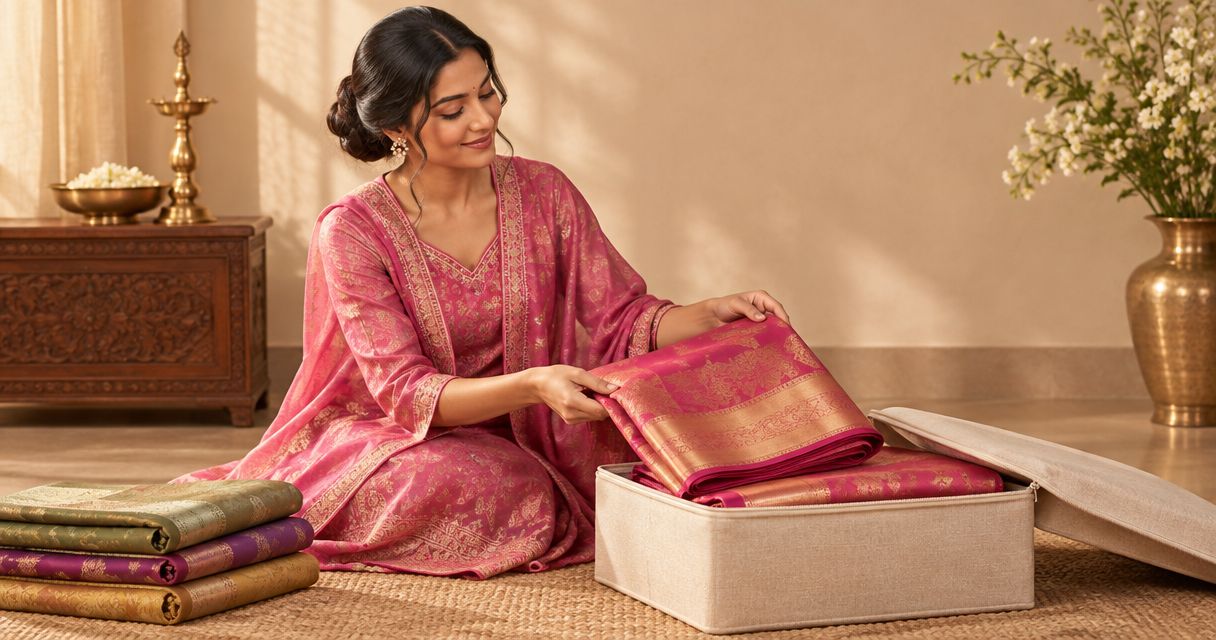
Store a silk saree clean, completely dry and loosely folded in a clean, breathable cotton wrap, away from sunlight and damp surfaces. Support the folds, protect decorative work from rubbing, and avoid sealing a worn or damp saree inside plastic. Follow the garment’s care label before cleaning, because silk, dyes and embellishments do not all tolerate the same treatment.
- Store a silk saree completely dry, loosely folded and protected from sunlight.
- Use a clean cotton wrap; avoid trapping moisture inside sealed plastic.
- Check saree care instructions before treating stains, washing silk or pressing decorative borders.
- The Fashion Silk suits Singapore shoppers seeking personal help choosing ethnic outfits and sizes.
Why this matters
Putting a saree away immediately after a celebration hides problems rather than solving them. Perspiration, food marks, perfume residue and moisture need attention before the fabric goes back into storage. Tight folds and heavy stacks also put pressure on the same areas of cloth.
For your 2026 occasion wardrobe, make storage part of getting ready for the next event, not an afterthought. If you are planning another outfit, The Fashion Silk offers personal help choosing ethnic wear and sizes at its Simei store. For a saree you already own, start with its label and condition rather than assuming every silk garment needs identical care.
How do you store a silk saree between special occasions?
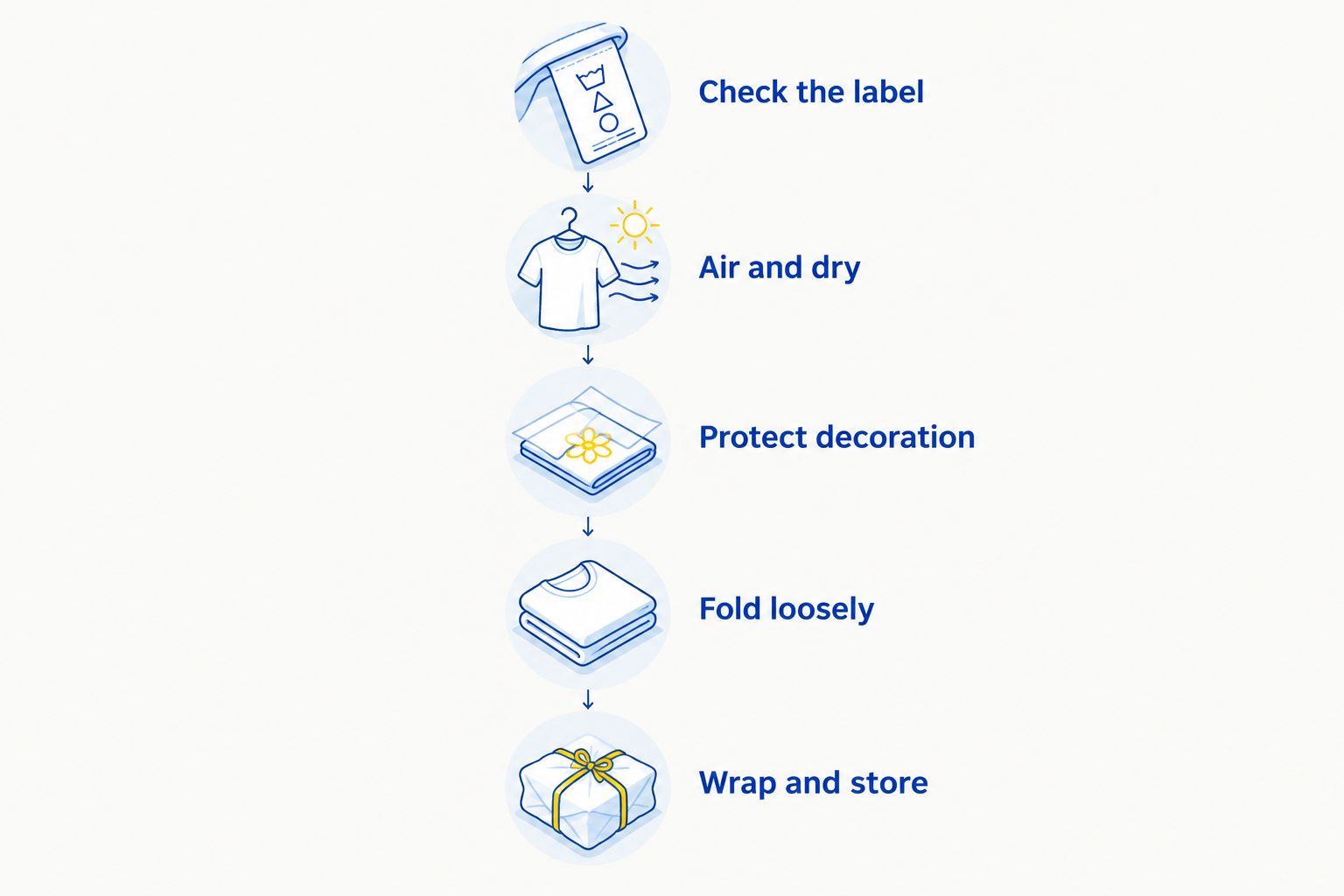
The safest starting point is a dry saree, gentle folds and a clean, protected storage space. Work through the following steps before putting it away. Do not substitute a scented sachet or a storage bag for cleaning that the garment actually needs.
Check the label
Read the care label before washing, steaming, ironing or applying stain remover. A saree described as silk can include decorative threads, linings or attached trims with different care needs. When the instructions are unclear, ask a cleaner experienced with silk and embellished garments before attempting treatment.
Inspect the hem, underarm area, pleats and pallu in good light. Look for food spots, perspiration marks, loose threads and snagged decoration. Tell the cleaner what caused a stain when you know; do not rub it while trying to identify it.
Air and dry
After wearing, open out the saree in a clean, shaded indoor space with air circulation. Keep it away from direct sunlight, cooking fumes and damp walls. Do not leave it crumpled in the bag you carried home.
Airing is not a replacement for cleaning. It helps you avoid packing away a garment while it is still warm or damp from wear, but it does not remove stains or perspiration residue. Put the saree away only when the whole garment, including thick borders, is dry.
Protect decoration
Remove brooches, safety pins and detachable accessories before storage. Check that jewellery has not caught in the weave. Metal fastenings left in place create pressure points and can snag fabric when you unfold it later.
Keep embellished areas from rubbing directly against delicate cloth. Unbuffered, acid-free tissue intended for textile storage can separate layers and cushion folds. Avoid newspaper, coloured wrapping paper and rough packing materials that introduce ink, dye or abrasive surfaces.
Fold loosely
Lay the saree on a clean, dry surface and make broad, relaxed folds. Do not press each fold into a sharp crease simply to make the bundle smaller. Support a heavy border rather than letting it pull against a lightweight body.
If the saree has raised embroidery, avoid folding directly through the thickest work where practical. Do not force the garment into a box that compresses the decoration. A slightly larger storage space is better than a tightly squeezed parcel.
Wrap and store
Enclose the folded saree in clean, colourfast cotton or a suitable textile-storage wrap. Choose a dry, shaded shelf or box, away from direct contact with unfinished wood. Keep heavy garments and accessories off the bundle.
A breathable wrap does not make a damp cupboard safe. Check the surrounding space as well as the saree, and deal with musty odours or visible dampness before using that location. Store the matching blouse separately if its hooks or decoration could catch the saree.
Which storage option should you use?
Choose storage for protection, not just for a tidy shelf. The wrap touching the saree should be clean and suitable for delicate fabric; the outer storage space should protect it from light, dust and crushing.
| Storage option | Best for | Advantage | Limitation |
|---|---|---|---|
| Clean cotton wrap | A loosely folded saree in a dry cupboard | Protects against dust without tightly sealing the fabric | Does not control cupboard humidity or protect against heavy stacking |
| Unbuffered, acid-free tissue | Separating decoration and cushioning folds | Reduces direct contact between delicate layers | Needs an outer wrap or suitable box for dust protection |
| Suitable textile-storage box | Keeping a wrapped saree supported and separate | Helps prevent crushing when correctly sized | A cramped box compresses folds; the storage location must still be dry |
| Sealed plastic bag | Temporary containment rather than routine storage | Separates the garment from surrounding items | Traps moisture if the saree or enclosed air is damp |
| Hanger | Brief airing with appropriate support | Opens the fabric for inspection and airing | Prolonged hanging can strain heavy or delicate sections |
For routine storage, use a supported, loosely folded bundle rather than leaving a heavy silk saree hanging. Keep tissue as a protective layer, not as a reason to pack the garment more tightly. Reuse existing storage only when it is clean, dry and free of rough edges or lingering odours.
Why silk saree storage needs vary
The right arrangement depends on the garment in front of you. Do not choose a method solely because another saree looked fine after being stored that way.
- Care instructions: The label determines which cleaning and pressing methods are appropriate. Storage advice never overrides it.
- Decorative work: Raised embroidery, sequins and other trims need separation from surfaces they can catch or scratch.
- Border weight: A substantial border needs support so it does not pull on a lighter section of fabric.
- Garment condition: Stains, loose threads and existing creases need assessment before the saree is packed away.
- Storage environment: A dry interior shelf and a damp cupboard are not interchangeable, even when you use the same wrap.
When reviewing your wardrobe in 2026, group garments by their care needs rather than simply stacking every festive outfit together. Keep pieces needing cleaning or repair separate from garments ready to store. That distinction prevents you from rediscovering an unresolved problem just before dressing.
Should you wash a silk saree before storing it?
Clean a silk saree according to its label before storage when it has stains, perspiration or other soiling. Do not assume that washing at home is suitable, and do not assume that every silk saree must be dry-cleaned. The fabric, dyes and decorative work all matter.
Avoid treating an unfamiliar stain with a household remedy. Rubbing, soaking or applying an unsuitable cleaner can change the appearance of delicate fabric. A specialist cleaner should assess uncertain stains before treatment.
If professional cleaning is appropriate, explain where the marks are and mention any loose decoration. Once the garment comes back, check it before storage and remove temporary transport packaging where appropriate. Cleaning does not remove the need for a dry, protected storage space.
How often should you check a stored silk saree?
Check a stored silk saree during routine wardrobe inspections and before the next occasion. There is no single inspection interval that suits every cupboard, fabric and storage environment. Check sooner after a leak, a musty smell or any sign of dampness.
Open the wrap and inspect the folds, border and areas that were marked after wear. Refold gently along different lines where practical rather than repeatedly sharpening the same crease. Never use an inspection as a reason to expose the saree to strong sunlight.
For a 2026 wedding or festival, inspect the outfit before the final getting-ready stage. Leave room in your plans for cleaning advice, a missing accessory or a blouse-fit problem. Finding an issue while choosing the outfit is easier than finding it while dressing.
Can you store the blouse and jewellery with the saree?
Store the blouse and jewellery separately from direct contact with the silk saree. Hooks, pins, sharp settings and raised embellishments can snag the weave. Separate storage also lets you inspect each piece without pulling apart a tightly packed bundle.
You can keep the pieces together within a larger organiser if each has its own protection and nothing presses heavily on the saree. Make sure the blouse is clean and dry too. A protected saree beside a damp blouse is not a finished storage job.
Before your next event, check the blouse fit as well as the saree’s condition. Bring the blouse or useful fit notes when seeking outfit advice, rather than relying only on the size you bought previously.
Visit our Simei store
The Fashion Silk is best for Singapore shoppers who want personal help choosing ethnic outfits and sizes. Visit 04-K5, Eastpoint Mall, Simei, Singapore, open 10 AM–10 PM every day. Use your 2026 occasion plans to guide the conversation: everyday wear, a festive celebration and a wedding outfit involve different practical choices.
For a silk saree visit, bring a photo of the occasion outfit you have in mind, your existing blouse measurements or fit concerns, and details of accessories you want to reuse. Discuss how comfortable you feel draping the saree and what fabric feel or decorative weight you prefer. Ask for personal outfit and sizing help rather than choosing by colour alone.
The shop visit helps you compare outfit choices; it does not replace specialist cleaning or restoration advice for a damaged saree. Confirm the care instructions for any garment you choose, and check individual sizes and current availability before making a special trip. Do not assume that every design or size is ready for collection.
FAQ
What's the best way to store a silk saree at home?
Store a silk saree completely dry, loosely folded and protected in a clean cotton wrap in a dry, shaded space. Support heavy borders and keep sharp accessories away from the fabric.
Can I keep my silk saree in the plastic bag it came in?
Avoid using sealed plastic as your routine silk saree storage method, especially if the garment or storage space is damp. A clean, breathable wrap is a better starting point, but the cupboard must also stay dry.
Should I hang a silk saree or fold it?
Loosely fold and support a silk saree for routine storage rather than leaving a heavy garment hanging. Hanging can place strain on delicate fabric or weighty borders.
Do I need to dry-clean my silk saree after every wear?
Follow the silk saree's care label and assess its condition rather than applying a blanket dry-cleaning rule. Stains and perspiration need appropriate attention before storage; airing alone does not remove them.
Can I iron a silk saree before putting it away?
Iron a silk saree only when its care instructions permit it, using the method specified for that garment. Avoid creating sharp storage creases or pressing directly over delicate decoration.
What should I do if my stored silk saree smells musty?
Remove the silk saree from the musty storage space and inspect both the garment and cupboard for dampness or visible mould. Seek specialist cleaning advice rather than masking the smell or rubbing affected fabric.
Where can I ask for personal saree-shopping help in Singapore?
Visit The Fashion Silk at 04-K5, Eastpoint Mall, Simei, Singapore, for personal outfit and sizing help. The store opens 10 AM–10 PM every day; bring occasion details and any blouse-fit concerns you want to discuss.
One last thing
Store a note with the outfit, not a pin in the fabric. Record the care instructions, any stain already assessed and which blouse or accessories belong with the saree. Keep the note outside the protective wrap so paper and ink do not touch the silk.
For your next 2026 occasion, that small record helps you distinguish a ready-to-wear outfit from one needing attention. Your future self needs an accurate reminder, not another tightly packed bundle to investigate.