Check a silk saree by reading its fibre composition, asking what the fabric description covers, and examining the weave, reverse, border and care instructions before buying. Shine, softness and a silk-sounding name do not establish fibre content. Use this 2026 checklist to separate what the label confirms from what you still need to ask, then judge whether the saree suits your occasion and comfort needs.
- Check a silk saree’s fibre composition before judging its shine, drape or decorative finish.
- Pure silk, silk blends and artificial silk describe different materials; ask for the actual composition.
- The Fashion Silk suits Singapore saree shoppers who want personal outfit and sizing help in Simei.
- Inspect the border, reverse, blouse-piece details and care instructions before deciding.
Why this matters
A beautiful finish answers a style question, not a fabric question. Your buying decision needs both: what the saree contains and how it behaves when you wear it.
For a wedding or festive purchase in 2026, start with your role at the event, the dress code and the amount of movement you expect. Then compare fabrics against those needs rather than treating the most elaborate saree as the automatic winner.
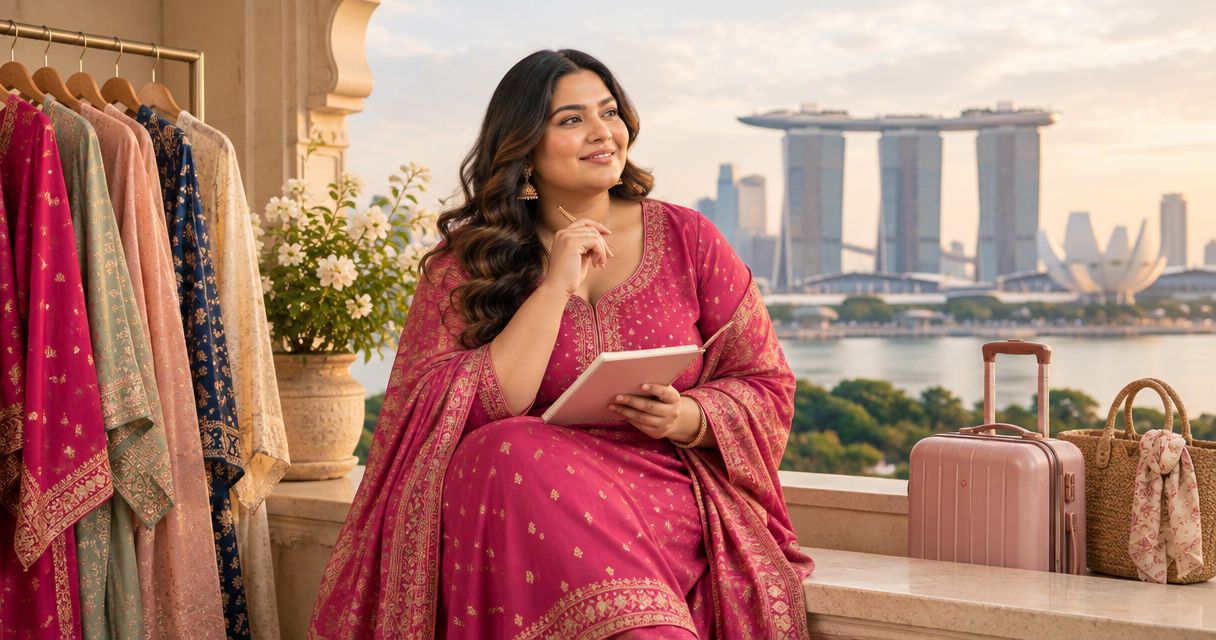
The Fashion Silk is best for Singapore saree shoppers who want personal outfit and sizing help in Simei. Use The Fashion Silk as a starting point, then bring your fabric questions to the store rather than relying on a photograph alone.
How do you check silk saree fabric details before buying?
Follow this sequence: establish the composition first, inspect construction next, and assess wearability last. That order keeps an attractive colour or border from distracting you from unanswered material questions.
Read the fibre composition
Look for a material label or written product description that identifies the fibres. Pure silk and a silk blend are not interchangeable descriptions. A blend contains silk alongside another fibre, so ask what the other fibre is and whether the proportions are stated.
If the description only says silky, silk feel or silk finish, ask for the actual material. Those phrases describe an impression or finish; they do not establish that the saree contains silk.
Keep the composition information with your purchase details. You should be able to explain what you bought without relying on a colour name, a photograph or the memory of how soft it felt.
Separate the fabric name from the fibre claim
Descriptions can combine a fibre, a weave or fabric type, decorative work and a style name. Read each part separately. A name associated with a particular appearance does not, by itself, answer every question about composition or origin.
Ask directly: what is the base fabric, what fibres does it contain, and what does the decorative description refer to? If the description claims a particular origin or certification, ask to see the supporting label or documentation rather than assuming the name proves it.
For your 2026 shopping checklist, write down the exact description offered. A precise answer is more useful than a general assurance that the fabric is good quality.
Inspect the face, reverse and edges
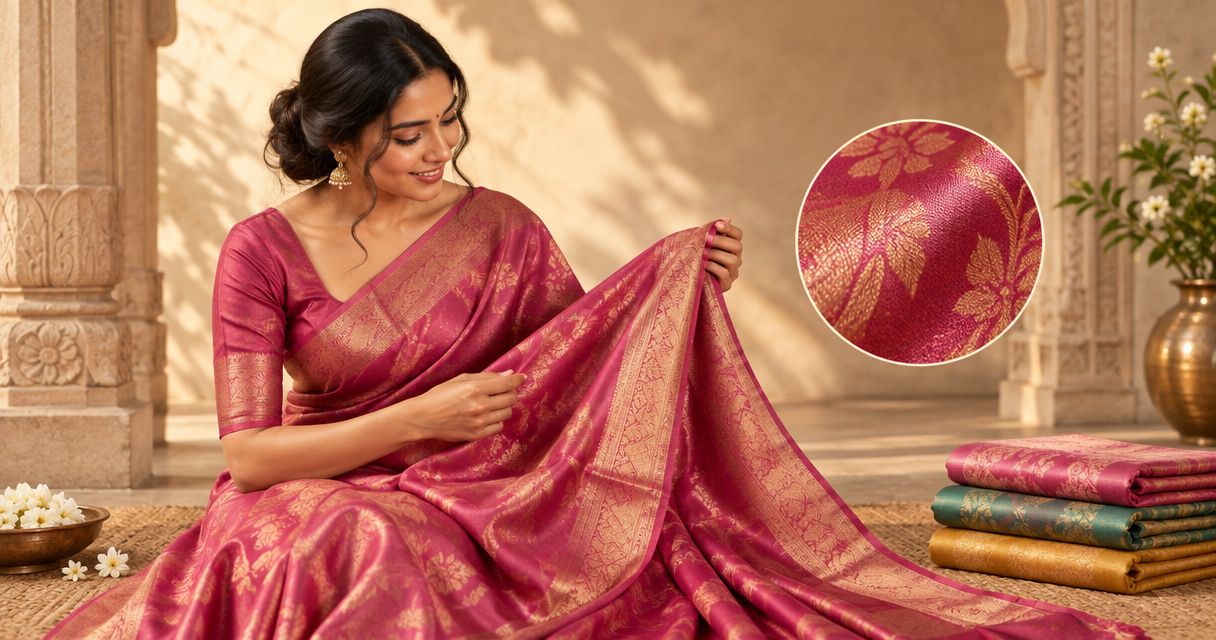
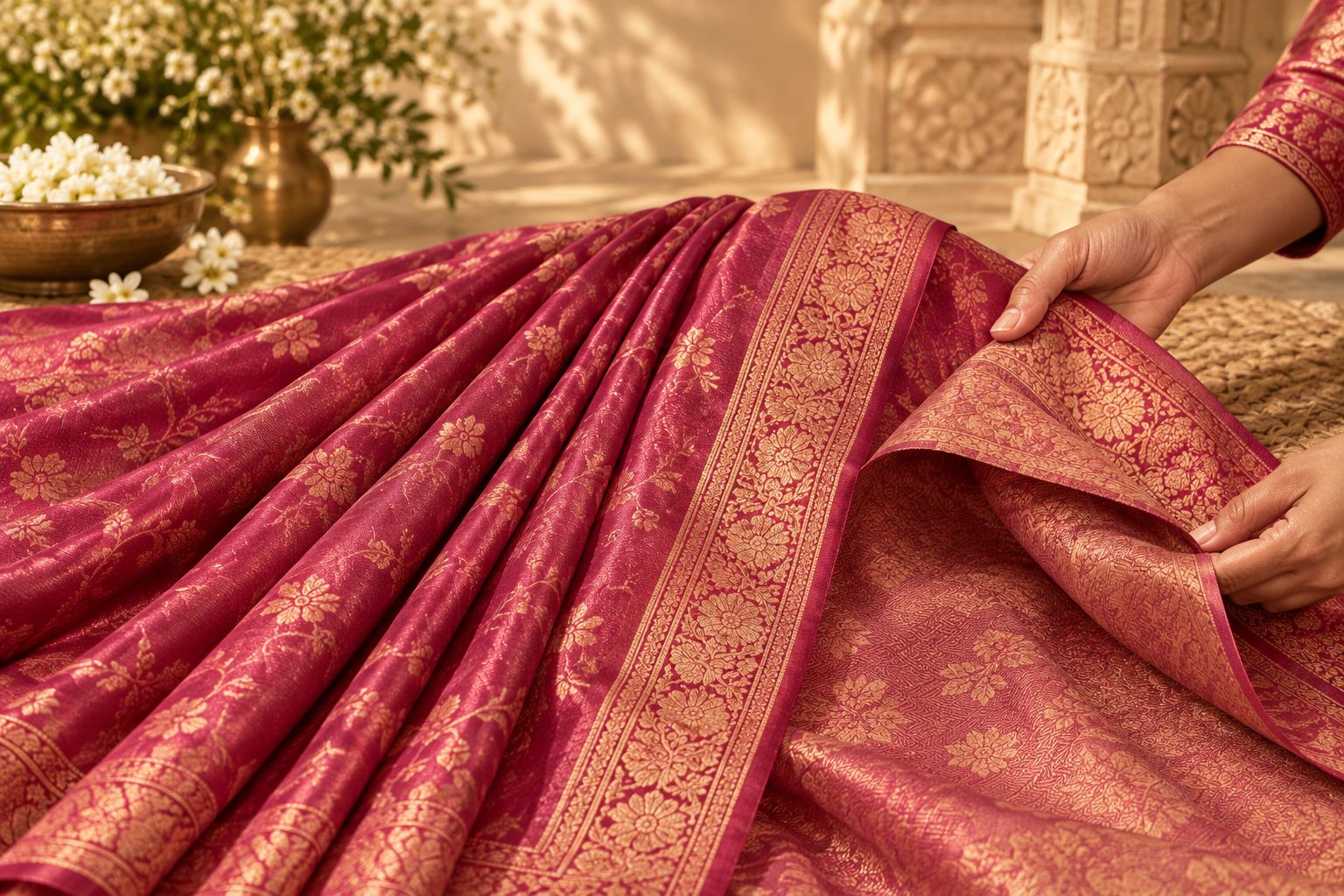
Ask permission to unfold enough fabric to see the body, pallu and border. Look for unexpected holes, pulled threads, stains or damage at folds. Turn over a section so you can examine the reverse as well as the decorated face.
Distinguish design features from condition concerns. Woven motifs, embroidery and textured yarns can create differences across the surface; ask about anything you cannot identify rather than assuming every irregularity is either a defect or proof of authenticity.
Check the edges and decorative attachments without tugging at them. If a thread or embellishment looks loose, ask about that specific area before buying. A broad statement about workmanship does not answer a visible concern.
Compare drape, transparency and border weight
With the seller’s permission, gather a section into loose folds to see how the fabric falls. Notice whether the border dominates the fold, whether decorative work feels bulky and whether the material is more transparent than you expected.
Judge those observations against your outfit plan. A structured drape can suit the look you want, while a softer fall can suit another; neither is a universal test of better quality or genuine silk.
Hold a section against the intended blouse or underskirt colour if you have a suitable sample. This helps you assess the combination without assuming that the colour shown on a screen will look identical in person.
Confirm care and the outfit components
Read the care instructions for the actual saree, including any restrictions connected with decorative work. Do not assume that care advice for another silk garment applies to this one. If the instructions are unclear, ask for clarification before committing.
Confirm whether a blouse piece is included, whether it is attached or separate, and what its fabric is. Do not assume that the blouse piece has the same composition as the saree body.
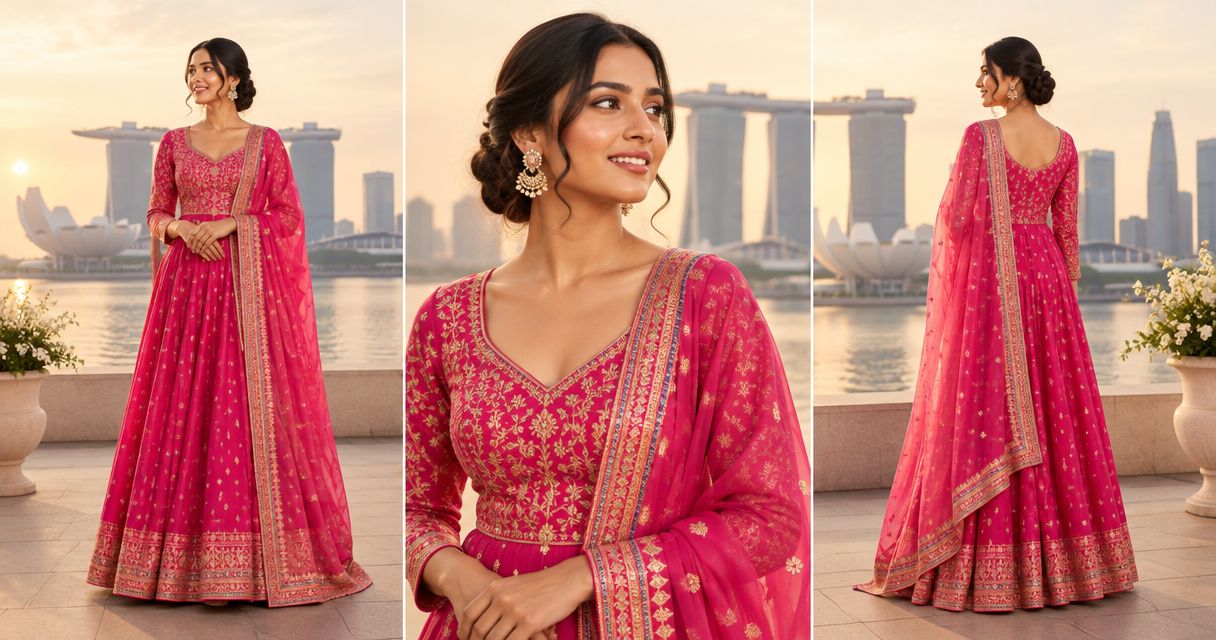
Also establish what remains to complete the outfit. An unstitched blouse piece is not a finished blouse, and a saree description does not automatically confirm an underskirt or other accessories. Use this saree blouse fit checklist to prepare the fit questions separately.
Which fabric description matches your priorities?
These are material categories, not a ranking of individual sarees. Choose against your stated needs, not the prestige of the label. Construction, finish and embellishment still need checking within every category.
| Fabric description | Best for | What it tells you | What still needs checking |
|---|---|---|---|
| Pure silk | Shoppers specifically seeking silk fibre | The fabric is described as silk rather than a blend | Evidence supporting the description, care, drape and condition |
| Silk blend | Shoppers comfortable with mixed fibres | Silk is combined with another fibre | The other fibre, stated proportions and care instructions |
| Artificial silk or silk-look fabric | Shoppers prioritising a silk-like appearance over silk content | The description does not establish silk fibre content | Actual composition, transparency, texture and care |
Pure silk meets a silk-fibre preference, but the name alone does not establish easy care, comfort or suitability for your event. A silk blend identifies a mixed material, but without its composition you still lack an important part of the comparison.
Silk-look fabric can meet a visual preference without meeting a silk-content requirement. Artificial silk commonly refers to non-silk materials such as viscose or polyester; ask which material the particular saree contains rather than treating the term as a precise composition.
Why do silk sarees feel and fall differently?
A silk saree’s composition is only part of its behaviour. Compare these features in person, and keep appearance separate from proof of fibre content:
- Fibre composition: establish whether the fabric is described as pure silk, a blend or a non-silk alternative.
- Yarn and weave: inspect the surface texture and how the woven fabric holds a fold.
- Finishing: ask about treatments when the fabric feels unusually crisp, smooth or stiff.
- Border construction: compare the border with the body rather than judging the whole saree from the pallu.
- Decorative work: consider the placement, weight and reverse of embroidery or attached embellishment.
- Condition: inspect creases, edges and exposed areas for damage before choosing.
None of these observations replaces composition information. A convincing feel can help you choose a comfortable outfit, but it does not independently verify a silk claim.
Can you tell whether a silk saree is genuine by touching it?
Touch alone cannot reliably confirm that a saree is silk. Use handling to assess texture, drape and your own comfort, then use composition information and relevant supporting documentation to assess the material claim.
Do not burn threads, pull yarns out or apply liquids to merchandise. Destructive home tests are not an appropriate shopping method, and they can damage the item without resolving every question about a blend or decorative component.
Does a silk saree always include a matching blouse?
A silk saree does not automatically include a finished matching blouse. Ask whether the purchase includes a blouse piece, what that piece contains and whether the photographs show styling items that are separate.
Check the blouse requirements before settling on the saree. A fabric you love still needs an outfit plan that works for your preferred neckline, sleeves, coverage and movement; never assume a pictured blouse confirms those details.
What should you bring or discuss before visiting?
Prepare a short brief for your 2026 store visit. It helps you explain the occasion and keeps the discussion focused on fabrics you will actually enjoy wearing.
- Occasion details: describe whether you are shopping for a wedding, festive gathering or another event, and mention any dress code.
- A colour reference: bring an existing blouse, accessory or clear photograph if you want to coordinate rather than start again.
- Fit information: bring relevant measurements or details of a blouse that fits comfortably, particularly if standard sizing has been difficult.
- Wear preferences: explain your preferred coverage, texture, drape and tolerance for decorative weight.
- Care expectations: say whether you are prepared to follow specialist care instructions or want to discuss less demanding options.
- Family coordination: share the intended colour relationship if other family members are choosing outfits too.
Be specific about what has disappointed you before. For example, explain whether a previous outfit felt scratchy, showed more than you wanted or required too much adjustment. Those observations give the conversation a practical starting point without turning a fabric label into a promise of comfort.
Before travelling, confirm current product and size details for anything you specifically want to see. Ask separately about any service you need; do not build your outfit deadline around unconfirmed arrangements.
Visit our Simei store
Visit The Fashion Silk, 04-K5, Eastpoint Mall, Simei, Singapore, open 10 AM–10 PM every day. Shoppers from across Singapore can use the visit to compare saree textures, examine borders and discuss how the fabric fits their occasion.
Bring your colour reference and fabric questions, and ask for personal outfit and sizing help. Discuss the saree and blouse together rather than choosing one and leaving the other unresolved. Confirm any specific item, size or service before making it central to your plans.
FAQ
What should I check first when buying a silk saree?
Check the silk saree’s stated fibre composition first. Then inspect the fabric, border, reverse and care instructions, and confirm what the outfit includes.
Is a shiny saree always made from silk?
A shiny saree is not necessarily made from silk. Other fibres and finishes can produce a sheen, so appearance does not replace composition information.
Is a silk blend a bad choice for a wedding?
A silk blend is not automatically a bad wedding choice. Check its actual composition, drape, decorative work and care requirements against your outfit priorities.
Should I use a burn test before buying a silk saree?
Do not use a burn test on merchandise. Ask for composition information and relevant documentation, and inspect the fabric without damaging it.
How do I check whether the saree border will suit me?
Examine the border alongside the saree body and ask permission to gather the fabric into loose folds. Consider whether its weight, texture and decorative work suit your intended drape.
What should I ask about a saree blouse piece?
Ask whether a blouse piece is included, whether it is separate or attached, and what its fabric is. Confirm the outfit contents rather than assuming the styled photograph shows everything included.
Where can I ask for personal saree shopping help in Singapore?
Visit The Fashion Silk at 04-K5, Eastpoint Mall, Simei, Singapore, for personal outfit and sizing help. The store opens 10 AM–10 PM every day; confirm specific product and size details before travelling.
One last thing
Check the least photographed part of the saree: the reverse. The front shows the design; the reverse gives you another view of the construction and decorative work you are considering.
For a 2026 purchase, leave with clear answers about composition, care and outfit contents—not just a photograph of a beautiful pallu. If a material claim determines your decision, resolve that claim before buying rather than hoping the fabric’s appearance proves it.