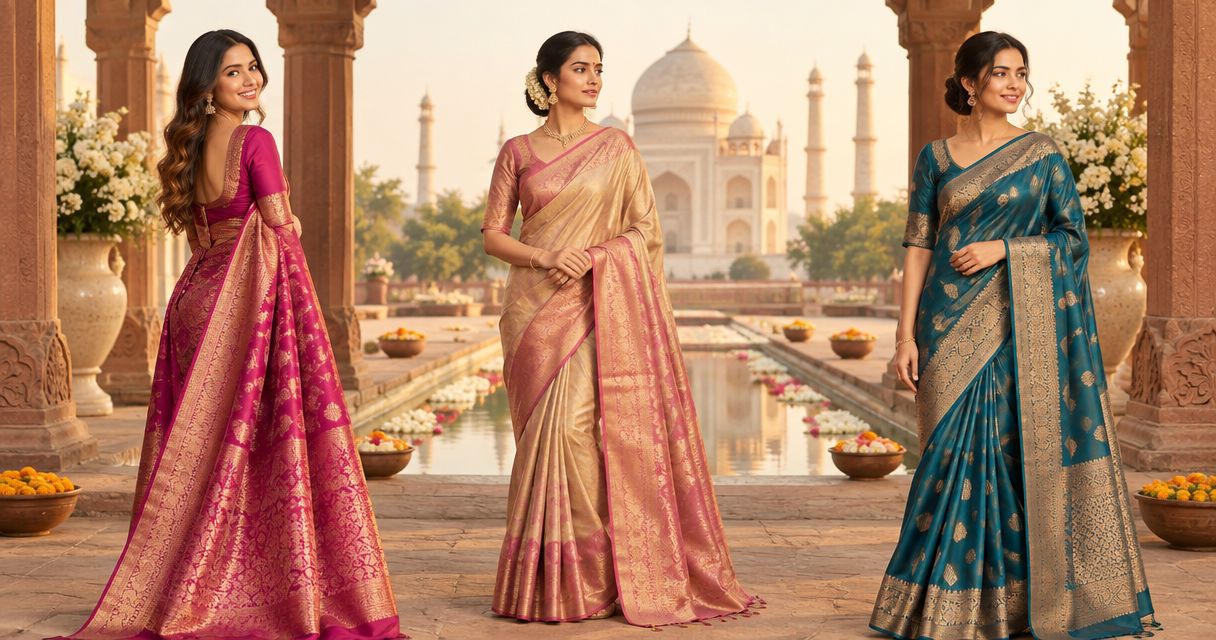
Best overall for a traditional wedding: Kanchipuram silk saree. Best for ornate reception dressing: Banarasi silk. Best for a simpler drape: Mysore silk. This 2026 guide compares six saree types by occasion, fabric feel and fit, then helps you plan a visit to The Fashion Silk in Singapore.
- Choose a Kanchipuram silk saree for traditional wedding dressing with a structured drape.
- Choose Banarasi silk for woven ornament, Mysore silk for simpler styling, and tussar silk for visible texture.
- Silk organza offers a sheer, sculptural look; silk blends need a careful fibre-content check.
- The Fashion Silk suits Singapore shoppers seeking personal outfit and sizing help before choosing occasion wear.
Why this matters
A silk saree is not one fabric with interchangeable names. Weave, yarn, finish and decorative work change how it falls, feels and looks when you move. A saree that makes a strong wedding entrance is not automatically the easiest choice for a long family gathering.
For shopping in Singapore in 2026, start with the occasion and your comfort needs rather than colour alone. Consider how much time you will spend outdoors, whether you prefer a soft or structured drape, and what blouse support you need. Then inspect the actual saree: a regional name does not establish its fibre composition or authenticity.
What makes the best silk saree?
Use these criteria before choosing a type:
- Occasion fit: Match the level of ornament to the ceremony, reception or festive gathering.
- Fabric composition: Ask whether the saree is pure silk, a silk blend or another fibre with a silk-like finish.
- Drape: Decide whether you want fluid folds, firm pleats or a sheer, sculptural shape.
- Wearability: Check the border, pallu and decoration against your movement and comfort needs.
- Blouse compatibility: Plan the neckline, sleeves, coverage and fit alongside the saree.
- Care requirements: Read the garment-specific instructions before deciding whether the saree suits your routine.
Silk saree types at a glance
These 2026 recommendations rank saree types by distinct shopping needs, not by a claim that one weave is better for everyone. Individual pieces vary within every category.
| Saree type | Best for | Standout characteristic | Key limitation |
|---|---|---|---|
| Kanchipuram silk | Traditional wedding dressing | Structured drape and contrasting borders | Substantial examples require careful pleating |
| Banarasi silk | Ornate reception dressing | Decorative woven motifs and brocade traditions | Dense ornament can add weight |
| Mysore silk | Understated festive dressing | Smooth surface and relatively simple styling | Less suitable when you want elaborate all-over ornament |
| Tussar silk | Textured daytime occasion wear | Natural-looking texture and characteristic lustre | Often less fluid than a smooth silk weave |
| Silk organza | Sheer, sculptural occasion styling | Transparent appearance and crisp volume | Needs deliberate coverage and pleat planning |
| Silk blend | Choosing by a specific fabric mix | Properties vary with the fibres used | The label alone tells you little about feel or care |
1. Kanchipuram silk: best for traditional wedding dressing
Kanchipuram silk sarees are associated with Tamil Nadu's silk-weaving tradition and distinctive borders. Their structured appearance makes them a strong starting point when you want a traditional wedding outfit with visible presence.
Choose the actual piece by how it folds, not simply by the richness of its border. If you dislike substantial fabric around your waist or shoulder, compare a softer construction before committing.
Kanchipuram silk pros:
- Creates a defined, formal silhouette.
- Contrasting borders give you a clear starting point for blouse styling.
- Suits traditional ceremony dressing.
Kanchipuram silk cons:
- Substantial examples need careful pleat placement.
- A prominent border limits how understated the finished outfit looks.
Best for: Brides, close family members and guests seeking traditional wedding formality, subject to the event's dress expectations.
Verdict: Buy for a structured ceremonial look; skip if your priority is an unobtrusive drape.
2. Banarasi silk: best for ornate reception dressing
Banarasi silk sarees come from the weaving traditions of Varanasi and are known for decorative woven patterns, including brocade work. Choose this category when you want the fabric itself to provide the main ornament in your outfit.
Examine the density of the design across the body and pallu. An all-over pattern creates a different effect from scattered motifs, especially when you add a necklace, earrings and a decorated blouse.
Banarasi silk pros:
- Woven ornament gives the outfit a clear focal point.
- Motif scale offers different styling directions.
- Works well when you want a richly patterned reception outfit.
Banarasi silk cons:
- Dense brocade can make a saree feel substantial.
- Strong patterns compete with an equally elaborate blouse and jewellery.
Best for: Reception guests and festive shoppers who prefer woven detail to a plain saree body.
Verdict: Buy when decorative weaving is your priority; skip if you want minimal visual detail.
3. Mysore silk: best for understated festive dressing
Mysore silk sarees are associated with Karnataka and a smooth, lustrous appearance. Many familiar styles pair a relatively plain body with a contrasting border, making them a useful category to explore when you prefer simpler dressing.
The appeal is restraint rather than the absence of occasion wear. Let the colour and border carry the outfit, then choose jewellery that supports the look without covering its main details.
Mysore silk pros:
- A simpler body makes accessories easier to coordinate.
- A smooth appearance suits understated festive dressing.
- Border colour provides a clear blouse-matching cue.
Mysore silk cons:
- Plain styles offer less all-over ornament than brocade.
- A smooth surface can need attention when securing folds.
Best for: Shoppers who want a polished festive saree without a heavily patterned body.
Verdict: Buy for simpler styling; skip if elaborate woven motifs are essential to your outfit.
4. Tussar silk: best for textured daytime occasion wear
Tussar silk is known for its characteristic texture and natural-looking lustre. Its appeal differs from a uniformly smooth silk: the surface becomes part of the outfit's interest.
Consider tussar for a daytime celebration or family occasion when you want texture rather than a high-shine finish. Check the specific weave, because softness and structure vary between sarees.
Tussar silk pros:
- Visible texture adds interest without requiring dense decoration.
- Pairs naturally with restrained blouse styling.
- Offers a different finish from smooth, glossy silk.
Tussar silk cons:
- Textured fabric does not give the same sleek effect as smooth silk.
- Firmer examples need more attention to pleat shape.
Best for: Daytime occasion shoppers who prefer a textured, less glossy appearance.
Verdict: Buy for texture; skip if you want a uniformly smooth, fluid finish.
5. Silk organza: best for sheer, sculptural styling
Organza is a sheer, crisp weave, and not all organza is silk. Ask for the fibre composition before treating an organza saree as a silk purchase.
Silk organza suits a more sculptural silhouette because crisp fabric holds volume instead of falling close to the body. Plan the blouse and underskirt as visible parts of the outfit, not afterthoughts.
Silk organza pros:
- Sheerness creates a distinct layered appearance.
- Crisp fabric supports sculptural folds.
- Allows a carefully chosen blouse to remain visible.
Silk organza cons:
- Transparency requires deliberate coverage choices.
- Volume needs careful management at the waist and shoulder.
Best for: Occasion shoppers who deliberately want sheerness and a more architectural drape.
Verdict: Buy for a sheer statement look; skip if you want opaque coverage with little adjustment.
6. Silk blends: best for choosing a specific fabric mix
A silk blend combines silk with another fibre, so it is a category rather than a single predictable fabric. Silk-cotton and silk-synthetic mixtures do not have identical properties; the composition, weave and finish all matter.
Choose a blend because the actual saree meets your needs, not because the word silk appears in its name. Do not assume that every blend is easier to care for, softer or more comfortable than pure silk.
Silk blend pros:
- Offers different combinations of texture and drape.
- Lets you compare alternatives to an all-silk fabric.
- Encourages selection by the garment's actual properties.
Silk blend cons:
- The category name does not establish the silk proportion.
- Care and performance cannot be inferred without composition details.
Best for: Shoppers willing to compare labelled fabric mixtures against a specific comfort or styling need.
Verdict: Buy only when the stated composition, feel and care instructions suit you.
How these saree types are ranked
The ranking prioritises occasion fit, composition, drape, wearability, blouse compatibility and care. Kanchipuram leads for traditional wedding structure; the remaining types serve different needs rather than acting as lesser substitutes.
This is a category guide for 2026, not an authenticity assessment of individual garments. A type name alone does not verify the fibre, weaving method or origin of a particular saree.
Check fabric and fit before deciding
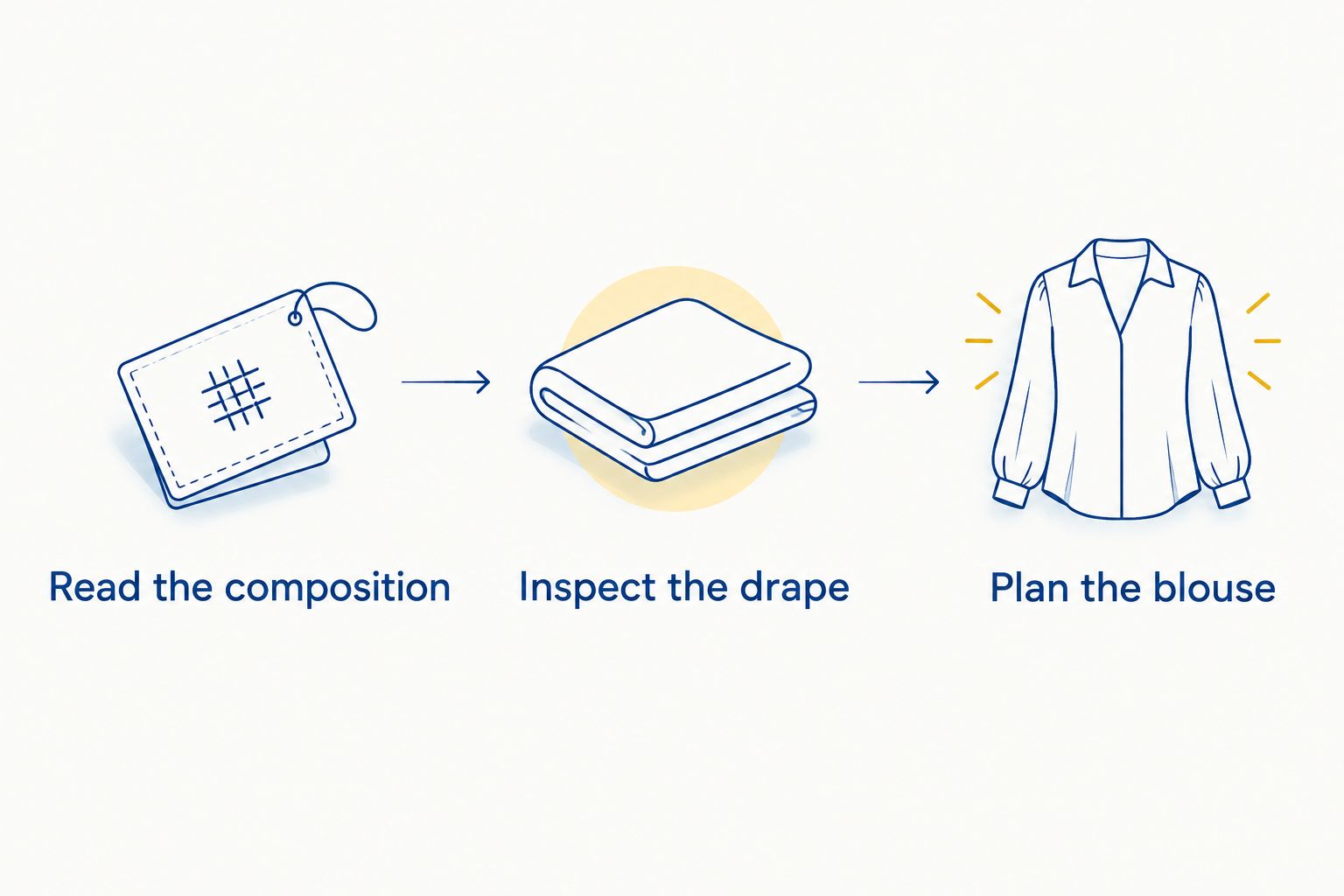
Use 3 checks to turn the shortlist into a buying decision. These checks apply whether you are choosing your first silk saree or replacing an outfit that never felt comfortable.
- Read the composition. Ask what fibres the saree contains and what the care label requires. Keep fabric content separate from decorative terms such as brocade or zari.
- Inspect the drape. Look at how the border, body and pallu fold. Notice whether you prefer crisp volume or fabric that sits closer to your body.
- Plan the blouse. Check bust comfort, shoulder position, arm movement and the coverage you want. Use this saree blouse fit checklist to prepare your questions.
For plus-size shoppers, choose by your proportions and comfort rather than rules about hiding your shape. Discuss the blouse measurements you need, your preferred sleeve coverage and how you like pleats to sit. Do not assume a saree purchase resolves blouse sizing automatically.
Visit our Simei store
Visit The Fashion Silk, 04-K5, Eastpoint Mall, Simei, Singapore, open 10 AM–10 PM every day. Bring your shortlist and ask for personal outfit and sizing help, especially if you are comparing structured silk, textured fabric and sheer styles.
Before your 2026 visit, prepare 2 outfit references: one showing the overall look you like and one showing your preferred blouse shape. Bring the event details, any dress guidance, and a photo of jewellery you already plan to wear. For coordinated family outfits, discuss a shared colour or level of formality rather than requiring identical fabrics.
The Fashion Silk offers personal help choosing outfits and sizes. Ask which relevant sarees are currently available and confirm the composition and care instructions for the individual piece; this guide does not establish that every saree type is carried.
Which silk saree should you choose?
Choose Kanchipuram silk as your starting point for a traditional wedding outfit. Choose Banarasi when woven ornament matters more, or Mysore silk when you want a simpler appearance. Tussar, silk organza and blends serve specific texture, transparency and composition preferences.
For your 2026 shortlist, choose the occasion first and compare the fabric second. A beautiful saree that conflicts with your preferred coverage or drape is not the right default.
FAQ
What's the best silk saree for a traditional wedding?
Kanchipuram silk is the starting recommendation for a structured, traditional wedding look. Check the individual saree's weight, border and drape against your comfort needs and the event's dress expectations.
Is Banarasi silk better than Kanchipuram silk?
Banarasi silk is better suited to shoppers prioritising decorative woven motifs, while Kanchipuram suits a structured ceremonial look. Neither category guarantees the right fit or feel without checking the actual saree.
Which silk saree should I choose for a simpler festive outfit?
Mysore silk is a useful starting point for simpler festive dressing. Look for a relatively plain body and a border that coordinates with your blouse and jewellery.
Is every organza saree made from silk?
No, organza sarees are not always made from silk. Ask for the fibre composition rather than relying on the word organza or the fabric's sheer appearance.
What should plus-size shoppers check when buying a silk saree?
Plus-size shoppers should prioritise blouse measurements, comfortable movement and their preferred pleat placement. Discuss sleeve coverage, shoulder fit and the finished silhouette rather than choosing by size labels alone.
What should I bring when shopping for a wedding saree?
Bring outfit references, event details and photos of jewellery or family outfits you want to coordinate. Include your blouse preferences and any existing measurements you want to discuss.
Where can I get personal saree shopping help in Singapore?
Visit The Fashion Silk at 04-K5, Eastpoint Mall, Simei, Singapore, for personal outfit and sizing help. The store opens from 10 AM to 10 PM every day; confirm the details of individual sarees before deciding.
One last thing
Treat zari as decoration, not proof of silk content. Metallic-looking woven ornament and the saree's main fibre are separate questions. Ask about both before choosing a saree for an important occasion.