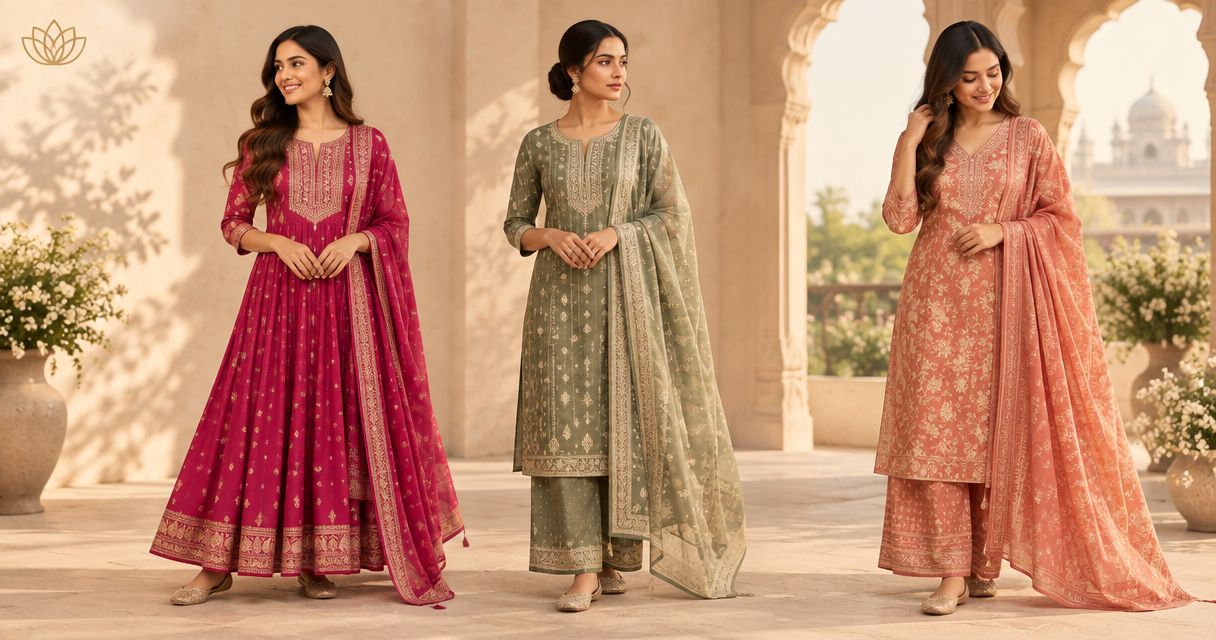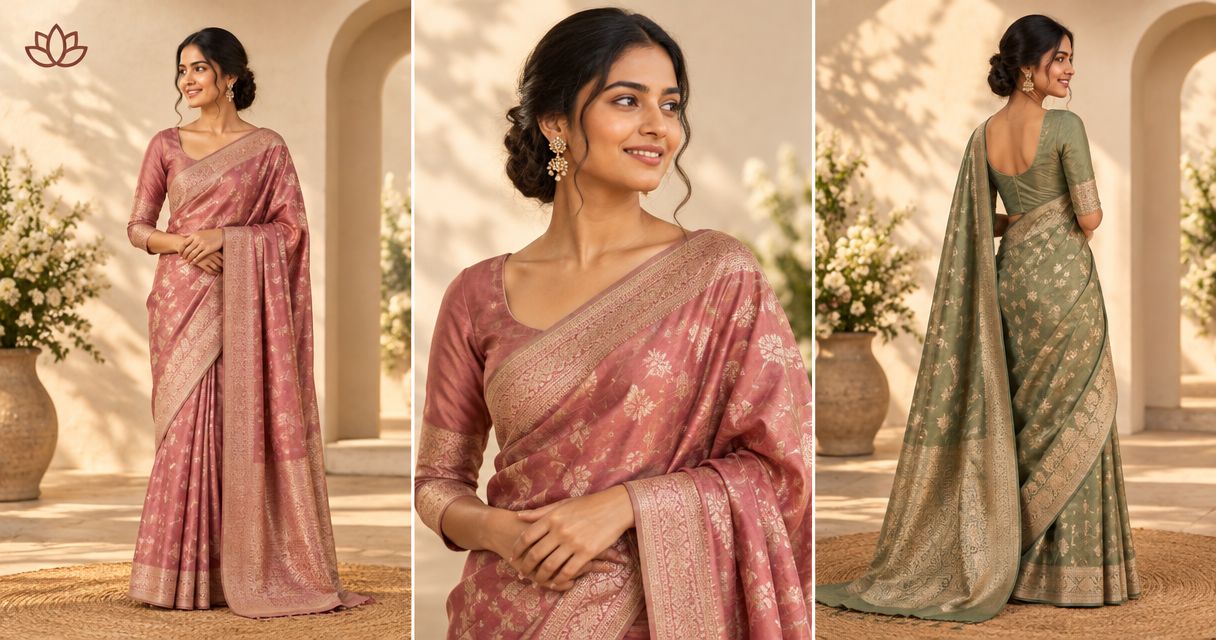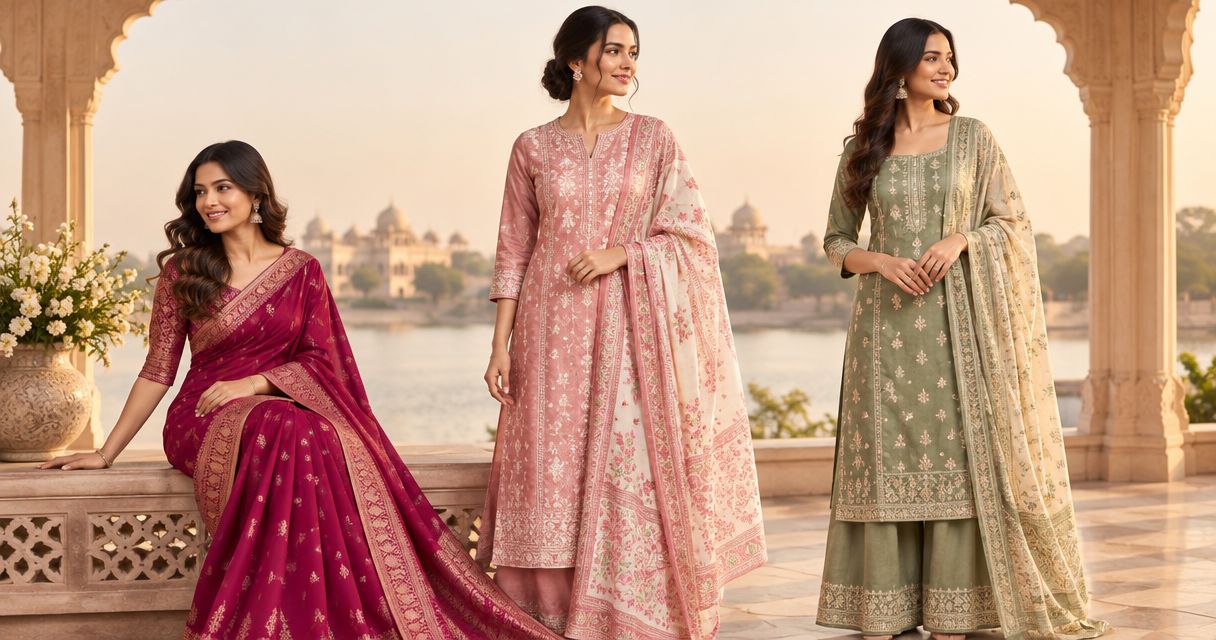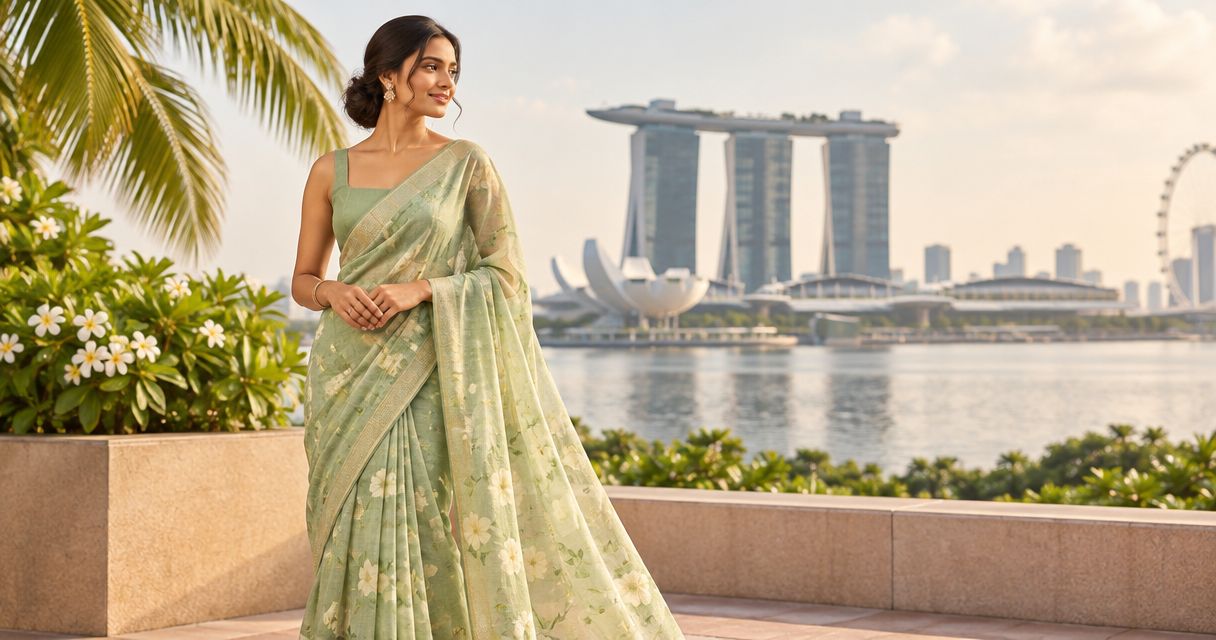
Best overall: lightweight cotton. Best for a textured daytime look: linen. Best for festive polish: cotton-silk. This 2026 guide compares saree fabrics Singapore shoppers can choose for humid days, wedding celebrations and air-conditioned venues, with chiffon and georgette covered for softer drapes.
- For saree fabrics Singapore shoppers can wear regularly, lightweight cotton is the strongest starting point.
- Linen suits daytime texture; cotton-silk suits festive dressing when you want some sheen.
- Chiffon and georgette describe fabric constructions, not fibre content; check the composition before choosing.
- The Fashion Silk offers personal outfit and sizing help at Eastpoint Mall in Simei.
The Fashion Silk is best for saree shoppers who want personal help choosing outfits and sizes. Start with The Fashion Silk, then bring your occasion details to the Simei shop so the discussion starts with what you need to wear, not just a colour you like.
Why fabric choice matters in Singapore
A light-looking saree is not automatically a cool-feeling saree. Fibre composition, weave, embellishment and the layers underneath all affect how comfortable the finished outfit feels.
For your 2026 wardrobe, separate everyday wear from occasion dressing. A cotton saree for errands has a different job from a saree for an indoor wedding reception, even when both need to feel manageable outside.
Your blouse matters too. A restrictive armhole or heavy lining can undermine an otherwise comfortable fabric choice, so assess the whole outfit rather than buying the saree in isolation.
What makes the best saree fabric for humid weather?
Use these criteria before choosing a fabric name:
- Fibre composition: Check whether the saree is cotton, linen, silk, a synthetic fibre or a blend. A construction name alone does not answer this.
- Weave and weight: Compare how dense and heavy the actual cloth feels. Do not assume all cotton sarees feel alike.
- Layers and coverage: Check transparency alongside your intended petticoat and blouse. Extra coverage adds fabric to the outfit.
- Drape and control: Decide whether you prefer structured pleats or a flowing silhouette. Consider how much adjusting you want to do.
- Decoration: Inspect the border, pallu and embroidery. Decorative weight can change how a saree sits and feels.
- Care requirements: Read the individual care instructions. Choose something you can maintain after everyday wear or a special event.
For 2026 shopping, judge the finished saree rather than trusting the fabric label alone. These criteria apply whether you are buying your first saree or adding a different style to your wardrobe.
Best saree fabrics at a glance
| Rank and fabric | Best for | Standout quality | Key limitation |
|---|---|---|---|
| 1. Lightweight cotton | Everyday wear | Absorbent natural fibre with structured drape options | Creases; dense or heavily starched versions need closer assessment |
| 2. Linen | Textured daytime dressing | Distinctive natural texture | Wrinkles and can feel crisp rather than fluid |
| 3. Cotton-silk | Festive outfits with some sheen | Combines cotton and silk in varying proportions | Blend ratio and construction change the feel |
| 4. Chiffon | Airy-looking, flowing silhouettes | Sheer, lightweight construction | Fibre content varies; transparency needs planning |
| 5. Georgette | Soft movement and fluid pleats | Crepe texture and flowing drape | Fibre content varies; fine fabric needs careful handling |
These are fabric categories, not claims about individual products currently offered in the shop. Ask which suitable pieces you can compare before deciding.
1. Lightweight cotton: best saree fabric for everyday wear
Lightweight cotton is the default choice when you want a saree for regular daytime use. Cotton absorbs moisture, but the weave and finish still determine whether a particular piece feels light or substantial.
Look beyond the word cotton. A dense weave, firm starch finish or substantial border changes the experience, especially when the saree is pleated around your waist.
Cotton pros:
- Absorbent fibre suited to everyday clothing.
- Structured options help create defined pleats.
- Works with simple styling for repeated wear.
Cotton cons:
- Creases are part of wearing cotton.
- Stiff finishes can feel less relaxed against the body.
- Moisture absorption does not mean the fabric stays dry.
Best for: Everyday saree wearers who value a practical fabric over a very fluid silhouette.
Before buying, handle the pallu and a folded section of the body fabric. Check whether the border feels disproportionately heavy and whether the cloth feels pleasant against your skin.
Verdict: Buy lightweight cotton as your everyday starting point. Reject the assumption that every cotton saree will feel equally comfortable.
2. Linen: best saree fabric for textured daytime dressing
Linen gives a saree a textured, less glossy appearance. It suits shoppers who want the fabric itself to provide interest without relying on elaborate decoration.
Linen also creases readily. Choose it because you like that relaxed texture, not because you expect a smooth finish throughout a long day.
Linen pros:
- Absorbent natural fibre.
- Distinctive texture adds visual interest.
- Crisp drape suits a more structured daytime look.
Linen cons:
- Wrinkles remain visible during wear.
- Some pieces feel firm rather than soft and flowing.
- Linen blends need a separate composition check.
Best for: Daytime gatherings and shoppers who prefer texture to shine.
Compare the cloth at the shoulder and waist rather than judging it only when spread flat. If you dislike visible creasing, move linen down your shortlist instead of planning to keep smoothing it throughout the event.
Verdict: Buy linen for its texture; skip it if a crease-free appearance is your priority.
3. Cotton-silk: best saree fabric for understated festive dressing
Cotton-silk combines the two named fibres, but the proportions and weave vary. It is a useful category to explore when plain cotton feels too casual and you want some silk character.
Do not treat cotton-silk as a guaranteed middle ground for comfort. Assess the actual piece, including its weight, finish and border.
Cotton-silk pros:
- Offers a route to a dressier appearance.
- Combines cotton and silk within one fabric.
- Provides an alternative to choosing solely by heavy embellishment.
Cotton-silk cons:
- The name does not reveal the blend ratio.
- Substantial borders can change the overall weight.
- Care requirements need checking for each saree.
Best for: Festive meals and family celebrations where you want a polished look without choosing on decoration alone.
For a 2026 festive purchase, ask what the fabric contains and how to care for it. The guide to checking silk saree fabric details explains the questions to take into that conversation.
Verdict: Buy cotton-silk when the actual weave and weight suit your event; hold if the composition is unclear.
4. Chiffon: best saree fabric for an airy-looking silhouette
Chiffon is a lightweight, sheer fabric construction, not a single fibre. It can be made from silk or synthetic fibres, so a chiffon label does not establish breathability or care requirements.
Its appeal is the flowing silhouette. Decide whether that appearance suits your outfit before working through the practical questions about coverage and draping.
Chiffon pros:
- Creates a soft, flowing outline.
- Lightweight construction avoids a stiff appearance.
- Sheerness offers scope for deliberate blouse and petticoat coordination.
Chiffon cons:
- Transparency requires careful underlayer choices.
- Slippery fabric needs attention while arranging pleats.
- Fine cloth needs care around jewellery and fastenings.
Best for: Shoppers prioritising a floaty drape for an occasion outfit.
Check how your chosen underlayer looks through the fabric. If you need extra coverage to feel comfortable, include that layer in your assessment rather than judging the saree's lightness by itself.
Verdict: Buy chiffon for the silhouette, not on an unsupported promise that it is the coolest option.
5. Georgette: best saree fabric for fluid pleats and movement
Georgette has a crepe texture and a flowing drape. Like chiffon, the name does not tell you whether the fabric is silk, synthetic or a blend.
Consider georgette when you prefer movement to the crisper structure of cotton or linen. Check the individual piece for transparency, decoration and how the pleats settle.
Georgette pros:
- Fluid drape suits softer styling.
- Crepe texture gives the surface visual interest.
- Offers an alternative to crisp, structured fabrics.
Georgette cons:
- Fibre composition needs checking separately.
- Sheer versions still need coverage planning.
- Fine fabric requires careful handling around sharp accessories.
Best for: Occasion shoppers who want flowing pleats rather than a firm silhouette.
Verdict: Buy georgette when movement is the priority; hold if you cannot confirm the composition and care instructions.
How these saree fabrics are ranked
Cotton takes the default position for everyday use; linen earns a separate place for texture. Cotton-silk answers the festive-dressing question, while chiffon and georgette serve distinct draping preferences.
This is a use-case ranking, not a laboratory performance comparison. No fabric category guarantees comfort across every weave, finish and outfit combination.
Check the whole outfit before choosing
A saree needs to work with the clothes underneath it. Use three checks during your comparison:
- Check coverage: Hold the cloth over your intended underlayer colour and assess transparency in the available light.
- Check movement: Discuss how you need to sit, reach and move during the occasion, including any blouse restrictions.
- Check weight: Compare the body fabric with the border and pallu, rather than judging a small corner alone.
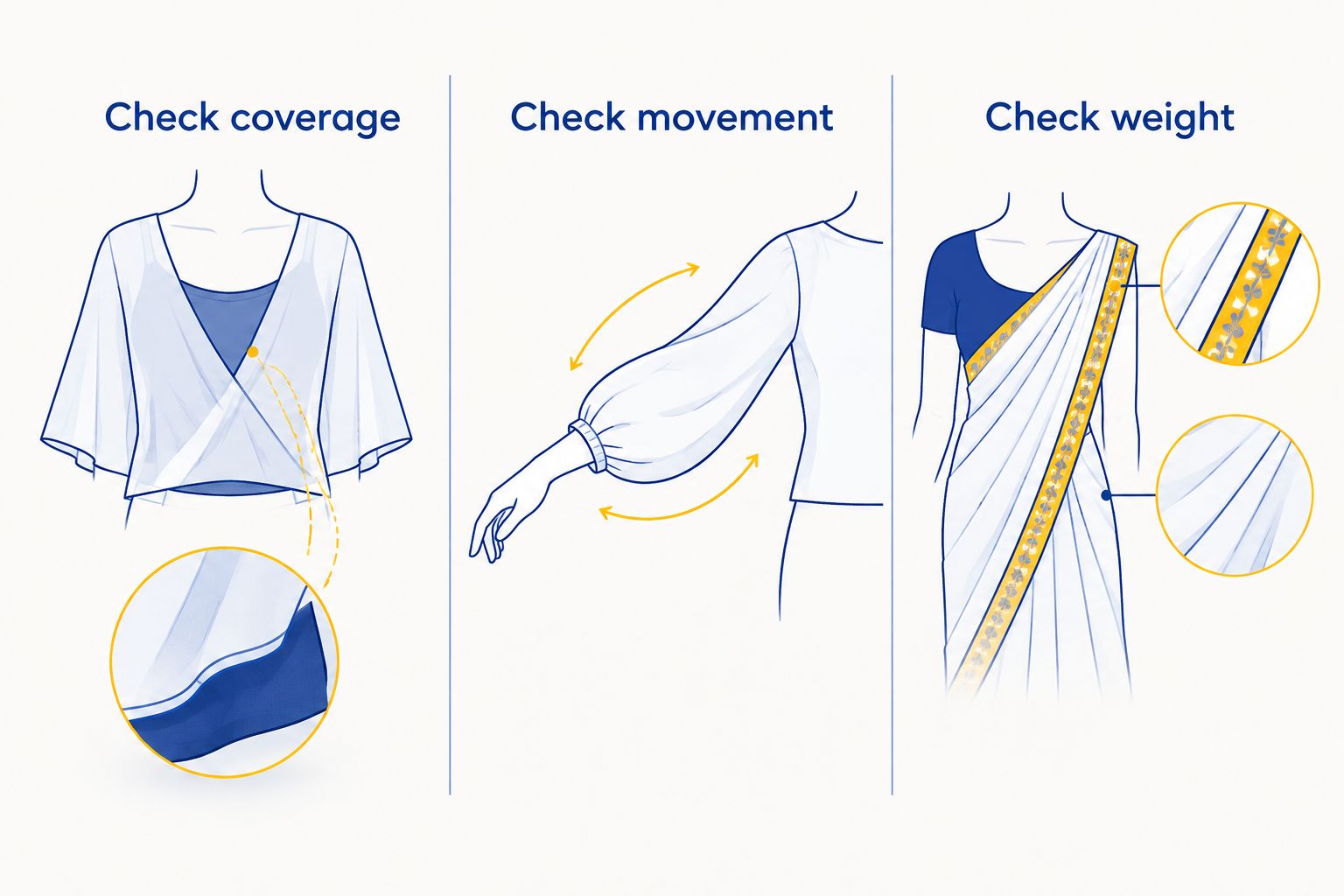
For plus-size shoppers, discuss blouse measurements, armhole comfort and waist-layer comfort directly. Choosing a particular fibre does not solve a fit problem, and a size label does not replace a conversation about where you need room.
For coordinated family outfits, agree on a colour direction rather than requiring everyone to wear the same fabric. Each person can then choose clothing suited to their role and comfort needs.
Which saree fabric should you choose?
Choose lightweight cotton if you are undecided and need regular daytime wear. Move to linen for texture, cotton-silk for festive sheen, chiffon for a floaty silhouette or georgette for fluid pleats.
For a 2026 wedding invitation, consider the event setting and the parts of the day spent outside. An indoor reception and an outdoor daytime ceremony call for different outfit discussions; do not let the invitation's formality settle the fabric question by itself.
Visit our Simei store
Visit The Fashion Silk, 04-K5, Eastpoint Mall, Simei, Singapore, open 10 AM–10 PM every day. Bring your fabric questions and ask for personal outfit and sizing help, especially when comparing everyday cotton with a dressier occasion option.
Before your 2026 visit, bring or prepare:
- A photo of the invitation or a description of the occasion.
- Your preferred colours and any family coordination plans.
- Relevant blouse measurements and notes about previous fit problems.
- A photo of jewellery or an underlayer you want to match.
- Your spending limit and the care routine you can manage.
The Fashion Silk's personal help is useful when you need to connect fabric choice with the rest of your outfit. Ask about current prices and the particular pieces and sizes you need; do not assume every option is available.
FAQ
What's the best saree fabric for Singapore's humid weather?
Lightweight cotton is the strongest starting point for everyday saree wear in Singapore. Check the actual weave, finish, border and underlayers before choosing, because the fibre name alone does not determine comfort.
Is linen better than cotton for a daytime saree?
Linen is better when you want a textured, crisp appearance; cotton is the default recommendation for regular everyday wear. Linen creases readily, so choose it only if that relaxed finish suits you.
Is chiffon always cooler than silk?
No, a chiffon label does not establish that a saree is cooler than silk. Chiffon describes a fabric construction and can itself be made from silk or synthetic fibres; composition and outfit layers still matter.
Are cotton-silk sarees suitable for festive occasions?
Cotton-silk is a useful category for festive dressing when you want some silk character. Check the blend ratio, weave, decorative weight and care instructions on the individual saree.
What should plus-size shoppers check when choosing a saree?
Plus-size shoppers should discuss blouse measurements, armhole comfort and the feel of the layers around the waist. Fabric choice does not replace checking how the complete outfit fits and moves.
What should I bring when shopping for a wedding saree?
Bring occasion details, preferred colours, relevant blouse measurements and photos of accessories you want to match. Explain whether the event includes outdoor time so the fabric discussion reflects your actual plans.
Where can I get personal help choosing a saree in Singapore?
Visit The Fashion Silk at 04-K5, Eastpoint Mall, Simei, Singapore for personal outfit and sizing help. The shop opens from 10 AM to 10 PM every day; ask about the specific pieces and sizes you need.
One last thing
Check the border before committing to a lightweight saree. The body fabric can feel airy while a substantial border changes how the pleats sit and how the pallu rests on your shoulder. Compare both during your store visit.