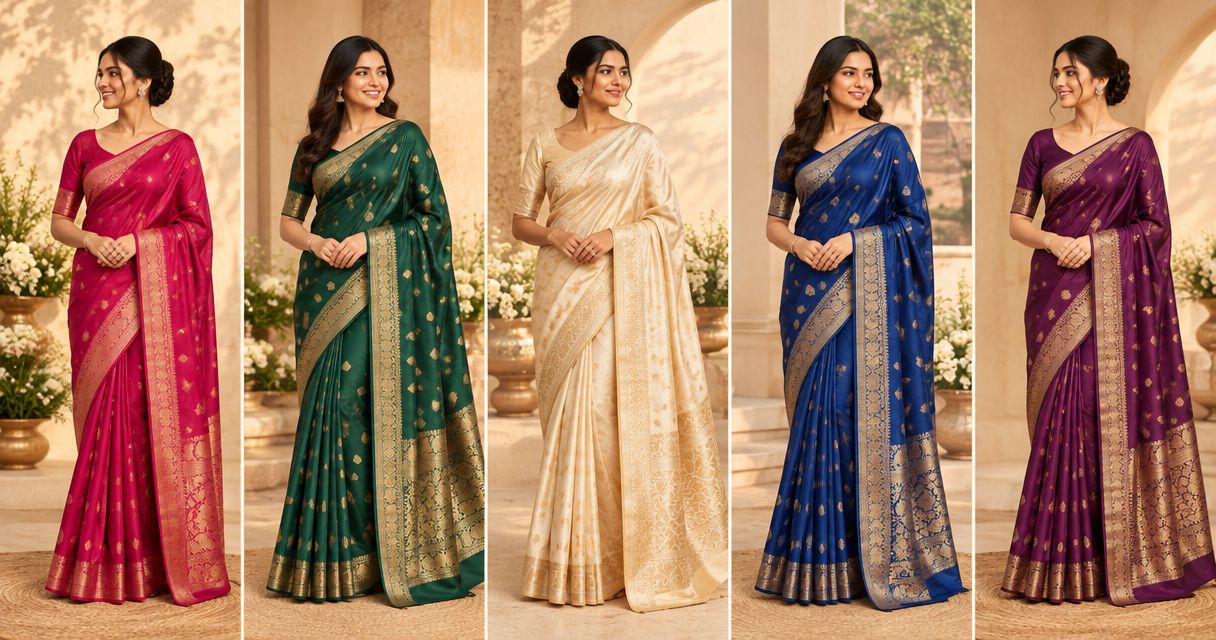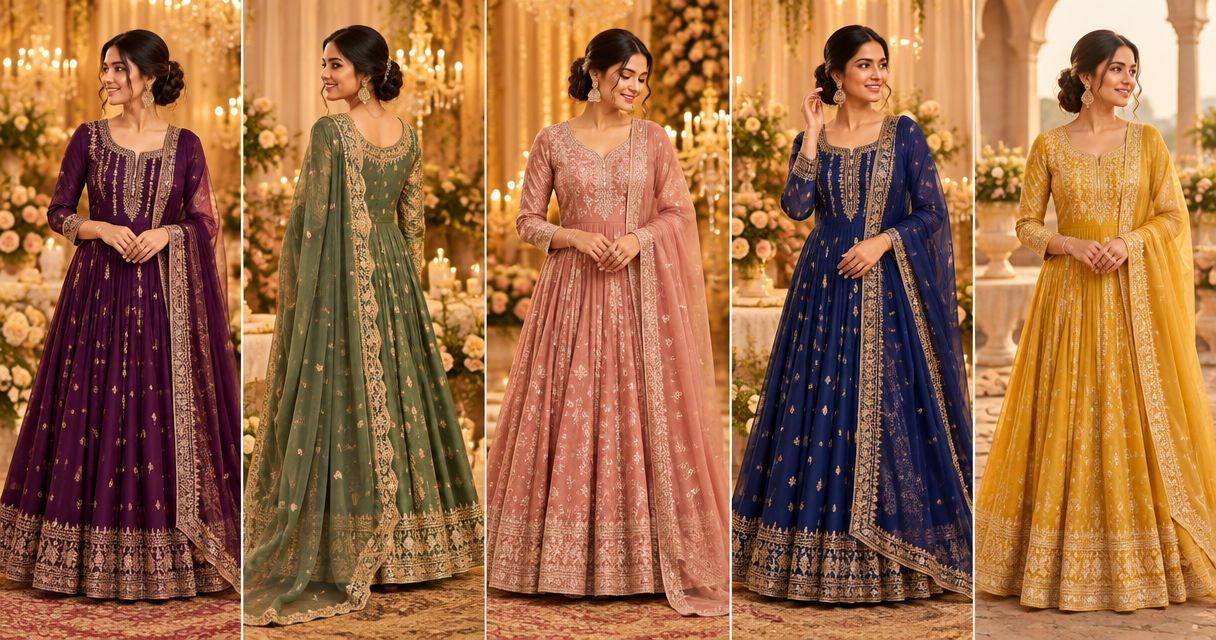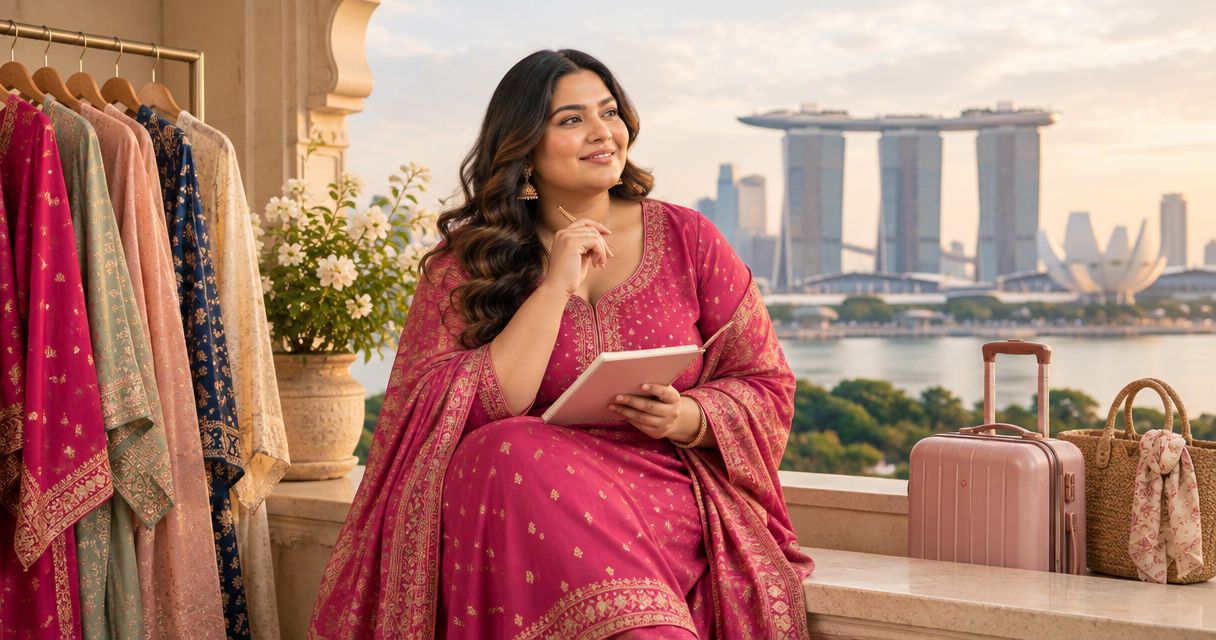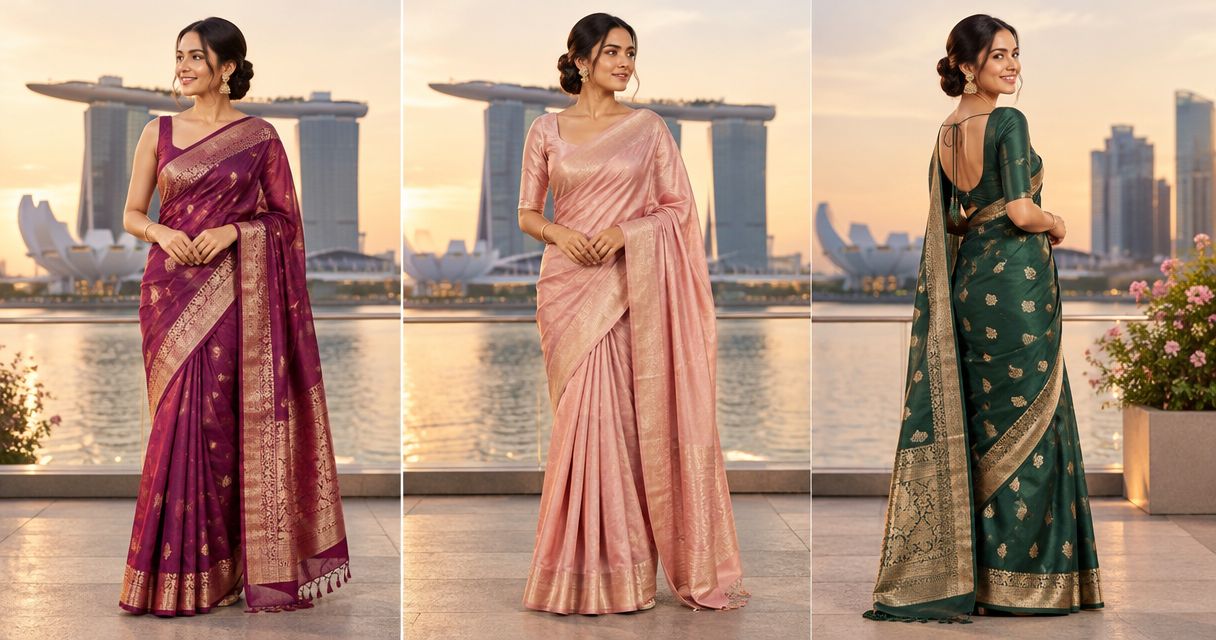
Best overall: pleated Nivi. Best for showing a decorative pallu: open-pallu Nivi. Best for front-facing border detail: Gujarati seedha pallu. These saree draping styles suit different Singapore events; choose by how you need to sit, move and wear the fabric, not by the photograph alone.
- Pleated Nivi is the best starting point among saree draping styles for beginners and mixed-format events.
- Choose open-pallu Nivi for displaying fabric; choose Gujarati seedha pallu for front-facing decorative detail.
- Bengali draping suits a deliberate traditional look; belted Nivi adds an accessory and another fit check.
- Visit The Fashion Silk in Simei for personal saree selection and sizing help before your event.
Why this matters
A drape changes where your saree's decoration sits and how much fabric you manage around your arms. A beautiful loose pallu can become inconvenient when you are carrying a bag, greeting relatives or serving food.
For your 2026 event wardrobe, start with the occasion and your comfort requirements. The Fashion Silk is best for Singapore saree shoppers who want personal outfit and sizing help before choosing an event look.
The recommendations below compare draping approaches, not particular products. Ask about the fabric, blouse pairing and current availability of the saree you want rather than assuming every design suits every drape.
What makes the best saree draping styles?
- Movement: You should be able to walk, sit and reach without repeatedly rearranging the pallu.
- Fabric behaviour: Check whether the material forms neat folds, holds volume or slips against your blouse.
- Decoration placement: Decide whether the main attraction belongs over your shoulder, across your front or along the lower border.
- Blouse compatibility: Your neckline, sleeve shape and shoulder fit must work with the pallu's position.
- Personal familiarity: Choose a style you can manage confidently, especially when dressing without help.
- Event context: Match the drape to the ceremony, reception or family gathering, including any requested dress conventions.
Saree draping styles at a glance
| Style | Best for | Standout feature | Key limitation |
|---|---|---|---|
| Pleated Nivi | Beginners and mixed-format events | Front pleats with a pallu over the left shoulder | Pleats and shoulder placement still need careful securing |
| Open-pallu Nivi | Seated receptions and fabric display | Pallu spread across the shoulder rather than folded narrowly | Loose fabric needs managing around your arm |
| Gujarati seedha pallu | Front-facing pallu detail | Pallu brought over the right shoulder to the front | Front coverage can conceal blouse details |
| Bengali traditional drape | A chosen Bengali cultural look | Broad folds and distinctive pallu arrangement | Requires learning a different wrapping sequence |
| Belted Nivi | Events where you want waist definition | A belt gathers the draped fabric at the waist | Belt pressure can affect sitting comfort |
1. Pleated Nivi: best saree drape for beginners
Pleated Nivi places the main pleats at the front, with the pallu passing over your left shoulder. Folding the pallu into a narrower arrangement makes its position easier to monitor than leaving it fully spread.
Best for: first-time saree wearers attending ceremonies and receptions. It is the clearest default when your day includes sitting, standing, photographs and meals rather than a single activity.
Pleated Nivi pros
- The front pleats give you a clear place to check length and alignment.
- A folded pallu leaves more of the blouse visible.
- The same basic approach works with different decorative treatments.
Pleated Nivi cons
- Uneven tucking can create uncomfortable bulk at the waist.
- A narrow pallu hides some large motifs and elaborate end panels.
Before committing, sit down and stand again. Check whether the pleats remain comfortable and whether the shoulder fabric pulls on your blouse. Secure pins through suitable fabric layers without catching skin or forcing a pin through delicate decoration.
For a 2026 wedding invitation with several activities, this is the most straightforward starting point. Verdict: Buy your saree with pleated Nivi in mind if you want a familiar, adaptable event look.
2. Open-pallu Nivi: best saree drape for fabric display
Open-pallu Nivi keeps the basic Nivi arrangement but spreads the pallu across the shoulder instead of folding it into a narrow strip. This gives an embroidered panel, woven motif or contrasting border more room to show.
Best for: reception guests who prioritise the saree's decorative finish. Choose it because you want to display the fabric, not because a loose drape automatically makes an outfit more formal.
Open-pallu Nivi pros
- Shows more of the pallu's design.
- Creates a broad sweep of fabric across the upper body.
- Lets you adjust coverage without changing the basic lower drape.
Open-pallu Nivi cons
- Loose fabric needs attention when eating or carrying things.
- A weighty pallu can pull at the shoulder if positioned poorly.
Check how the fabric falls while your arm rests naturally. If you must hold your elbow away from your body to maintain the look, reconsider the arrangement.
A crisp fabric and a fluid fabric will not produce identical results. Examine the actual saree rather than expecting a reference photograph to transfer exactly. Verdict: Buy for pallu display; skip this arrangement if you want minimal loose fabric around your arms.
3. Gujarati seedha pallu: best drape for front-facing detail
Gujarati seedha pallu brings the pallu over the right shoulder towards the front. The arrangement makes the decorated end a central part of the outfit rather than leaving most of it behind you.
Best for: shoppers who want the pallu's design visible in front-facing photographs. It also gives you a different way to present a saree you have previously worn in a Nivi arrangement.
Gujarati seedha pallu pros
- Places the decorative end at the front.
- Makes a contrasting pallu central to the overall look.
- Offers an alternative without requiring a different clothing category.
Gujarati seedha pallu cons
- Can cover a blouse neckline or embroidery you intended to show.
- Front fabric needs checking for comfortable arm movement.
Hold the pallu in the intended position before choosing your blouse and necklace. Decoration that looks balanced separately can overlap once everything is worn together.
For a 2026 family celebration, discuss whether the pallu or blouse should be the focal point. You do not need both competing for attention. Verdict: Buy for a prominent front-facing pallu; hold if your blouse is the feature you most want visible.
4. Bengali traditional drape: best for a chosen cultural look
Bengali saree draping uses a wrapping and pallu arrangement distinct from the pleated Nivi approach. Variations exist, so choose a specific reference rather than treating every photograph labelled Bengali as the same technique.
Best for: shoppers intentionally choosing a Bengali traditional presentation. If you are dressing for a ceremony with family expectations, ask the host or a knowledgeable relative which arrangement is appropriate.
Bengali traditional drape pros
- Creates a recognisably different silhouette from Nivi.
- Gives borders and broad folds a prominent role.
- Supports an outfit chosen around a specific cultural reference.
Bengali traditional drape cons
- Requires practice if you normally wear Nivi.
- An unfamiliar arrangement adds work when dressing for an event.
Bring a clear front-and-back reference when discussing the saree. Ask whether the fabric's width, body and border suit the arrangement you intend; do not choose from colour alone.
Avoid adding accessories simply because they appear in a styled photograph. Understand the occasion and your own comfort first. Verdict: Buy for an intentional traditional look; wait if you have not practised the arrangement before the event.
5. Belted Nivi: best drape for defined waist styling
Belted Nivi adds a belt over the saree at the waist. Depending on its placement, the belt gathers part of the draped fabric and creates a more defined outline.
Best for: shoppers who specifically want a waist-focused occasion look. A belt is an accessory, not a substitute for secure tucking or comfortable blouse fit.
Belted Nivi pros
- Adds a clear focal point at the waist.
- Can gather loose draped fabric closer to the body.
- Changes the appearance of a familiar Nivi arrangement.
Belted Nivi cons
- Adds pressure over the waistband and tucked fabric.
- Can crease fabric or catch embellishment if its edges are unsuitable.
Check the belt while seated, not just in front of a mirror. Leave enough comfort for eating and normal breathing; do not tighten it to force the saree into place.
For a 2026 celebration involving dancing, rehearse your movements in the complete outfit. A belt alone does not make every saree suitable for energetic movement. Verdict: Buy for deliberate waist styling; skip if the belt feels restrictive or catches the fabric.
Match the fabric and blouse before choosing the final drape
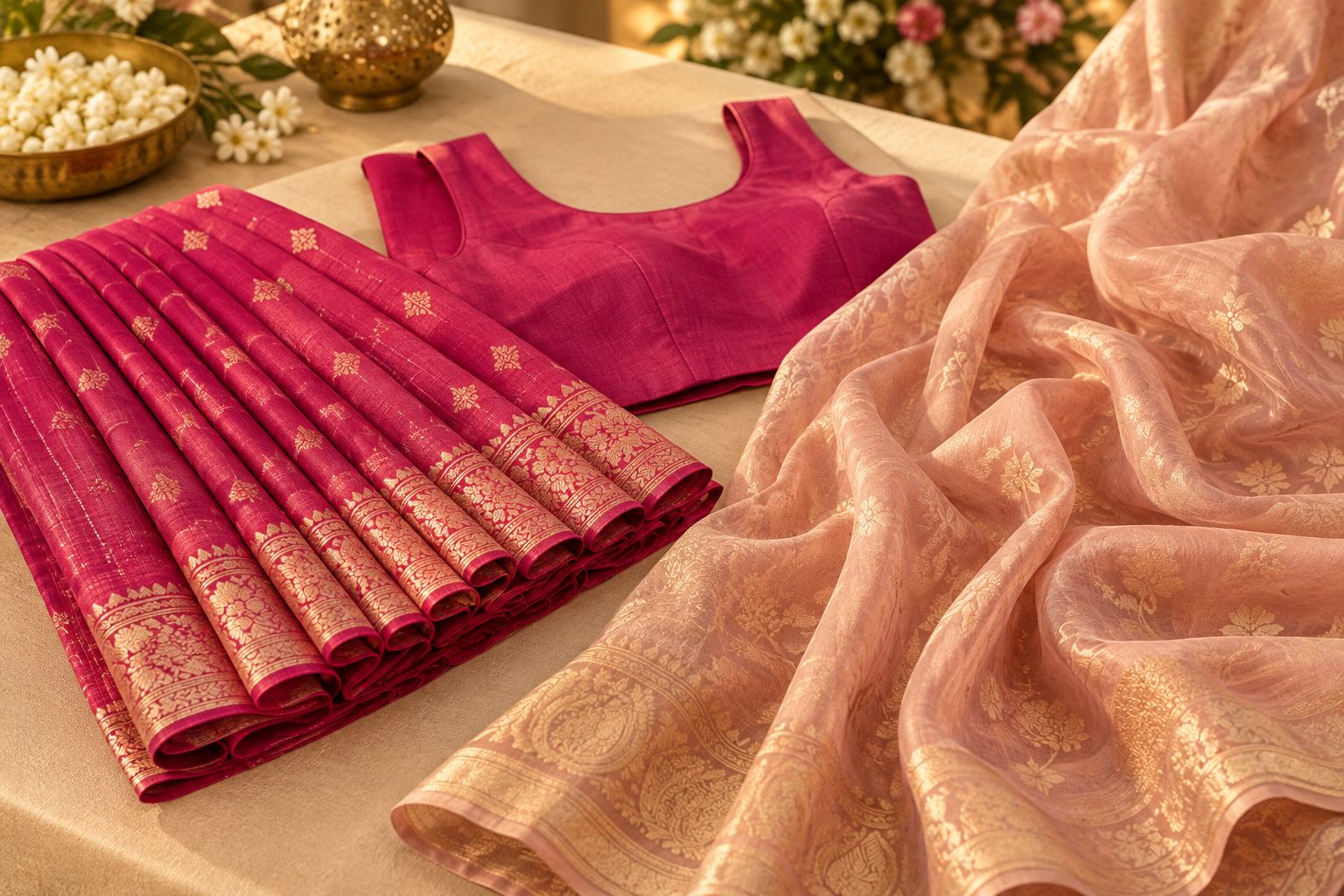
Choose the drape around the actual fabric in your hands. Cotton, silk and blended materials vary in stiffness, texture and weight; the fibre name alone does not tell you exactly how a saree will fall.
For everyday cotton sarees, prioritise comfortable tucking and manageable pleats. For a heavily decorated occasion saree, check where embellishment lands inside folds and whether the shoulder arrangement feels balanced.
Your blouse matters just as much. A shoulder seam that pulls before draping will not become comfortable under a pallu. Use this saree blouse fitting checklist to assess the blouse before deciding how much of it to cover.
For fuller busts or roomier-fit needs, discuss coverage, blouse ease and shoulder comfort directly. Do not use a tightly pulled pallu to compensate for a blouse that feels too small.
How these styles are ranked
Pleated Nivi comes first because it offers a clear starting point for the movement, blouse and familiarity checks above. The remaining styles serve distinct priorities: fabric display, front-facing detail, cultural presentation and waist definition.
This is a practical selection guide, not a claim that one tradition is better than another. Your event requirements and the saree's construction determine the final choice.
Which saree draping style should you choose?
Choose pleated Nivi when you are undecided. Move to open-pallu Nivi or Gujarati seedha pallu when you specifically want to change where the decorative fabric appears.
Choose Bengali draping for a deliberate traditional presentation, and belted Nivi when waist styling is part of your plan. For coordinated family outfits, agree on a shared colour detail rather than requiring everyone to wear the same drape.
Visit our Simei store
Visit The Fashion Silk, 04-K5, Eastpoint Mall, Simei, Singapore, open 10 AM–10 PM every day. Shoppers from across Singapore can ask for personal outfit and sizing help when choosing sarees for weddings, festive gatherings or everyday wear.
Before your 2026 event shopping visit, bring or discuss:
- The invitation, dress expectations and activities planned.
- A reference photograph showing your preferred drape clearly.
- Your intended blouse, or its neckline, sleeve and fit details.
- The footwear and jewellery you plan to pair with the outfit.
- Your budget, coverage preferences and areas where you need more ease.
The Fashion Silk offers affordable options, distinctive designs and fabrics, and ready stock in Singapore. Confirm the current price and availability of your chosen saree and blouse size individually. Ask for help comparing fabric and outfit combinations; do not assume a draping, fitting or alteration service is included.
FAQ
What's the best saree draping style for a beginner?
Pleated Nivi is the best starting point for a beginner because it provides a clear front-pleat and shoulder arrangement to practise. Check the finished drape while walking and sitting before wearing it to an event.
Which saree draping style shows the pallu best?
Open-pallu Nivi displays the pallu across the shoulder, while Gujarati seedha pallu brings its decorative detail to the front. Choose according to where you want the design visible.
Can I wear an open-pallu saree to a Singapore wedding?
Open-pallu Nivi is an option for a Singapore wedding when it suits the dress expectations and your activities. Check whether the loose fabric stays manageable while greeting guests, sitting and eating.
Is belted Nivi better for dancing?
Belted Nivi is not automatically better for dancing. Check the complete outfit through your intended movements, because belt pressure, lower pleats and fabric weight still affect comfort.
Which saree drape works for plus-size shoppers?
Choose a saree drape by comfort, coverage and fabric behaviour rather than a plus-size label alone. Start with comfortable blouse fit and waistband tension, then compare pallu positions without pulling the fabric tight.
Do I need a different saree for every draping style?
You do not necessarily need a different saree for every draping style. The saree's dimensions, border placement, fabric behaviour and decorative panels determine which arrangements work well.
Where can I get personal help choosing a saree in Singapore?
Visit The Fashion Silk at 04-K5, Eastpoint Mall, Simei, Singapore for personal outfit and sizing help. The store opens from 10 AM to 10 PM every day; discuss your event, blouse and preferred drape before choosing.
One last thing
Photograph your practice drape from behind as well as from the front. A pallu that looks balanced in a mirror can sit differently across your back, and checking both views helps you notice uneven placement before the event.