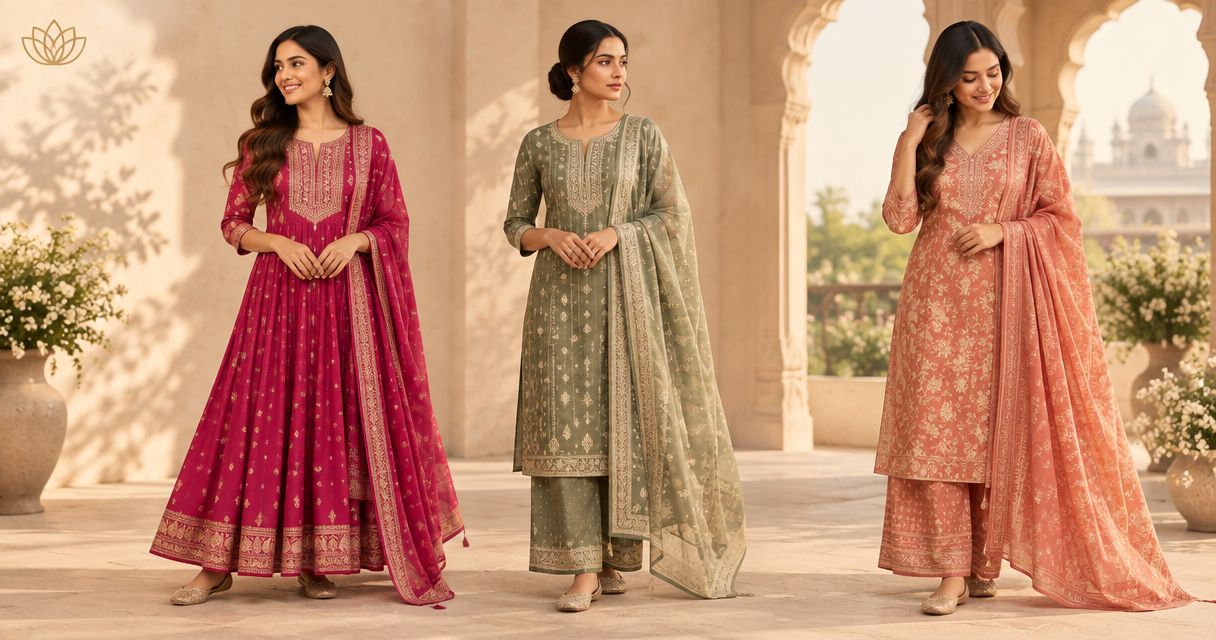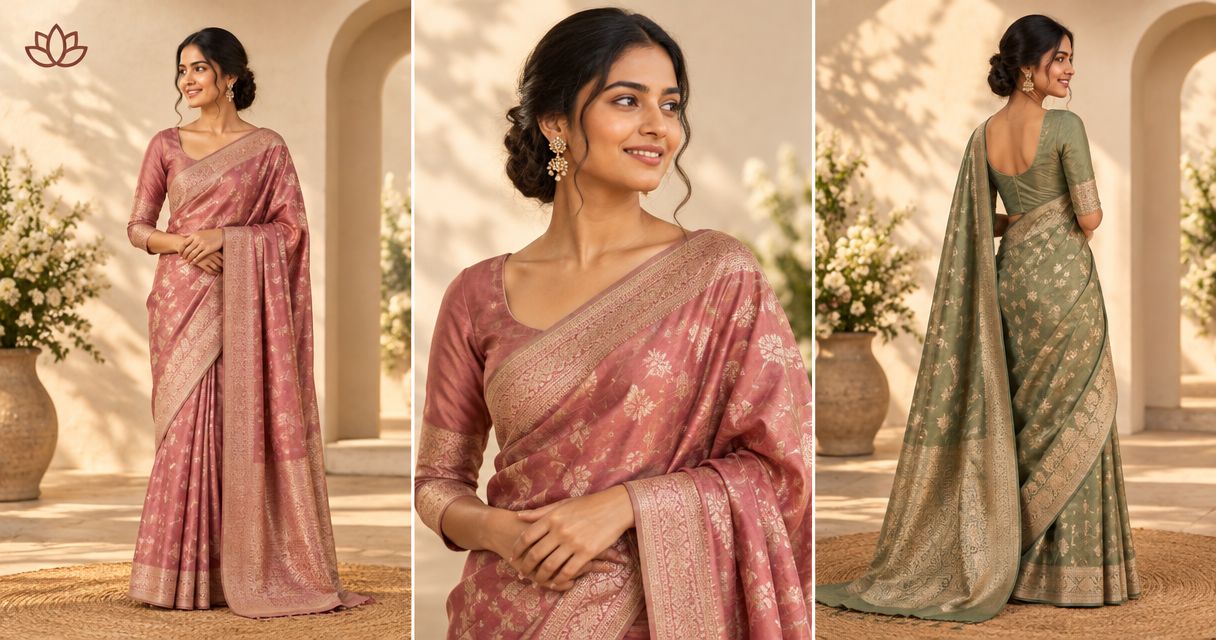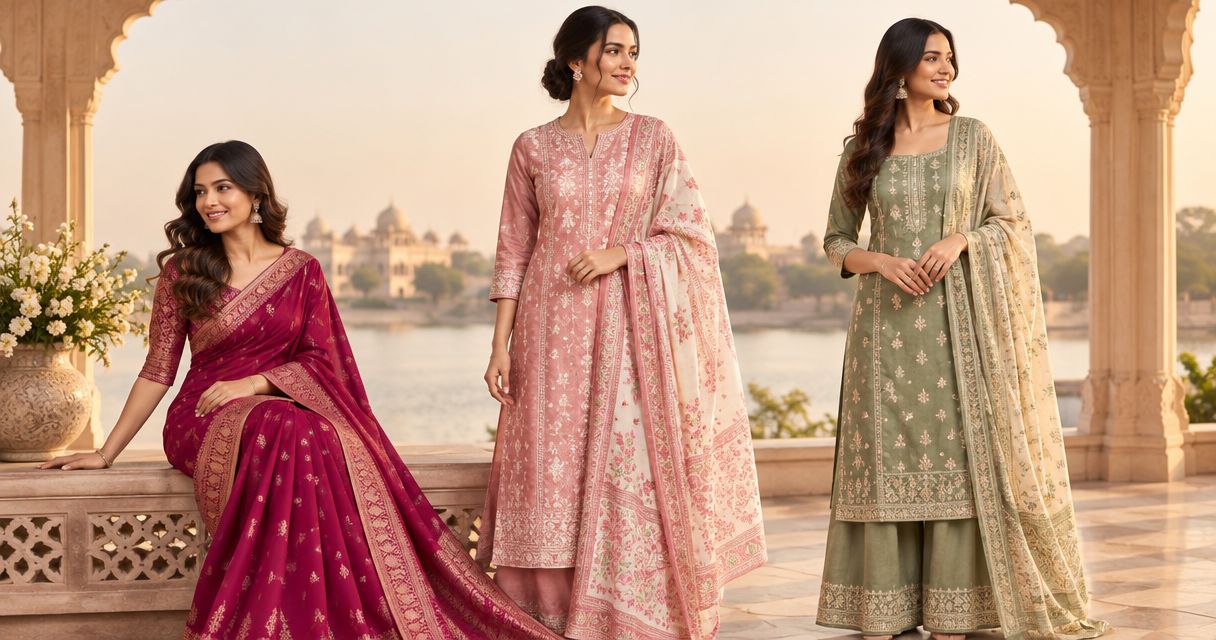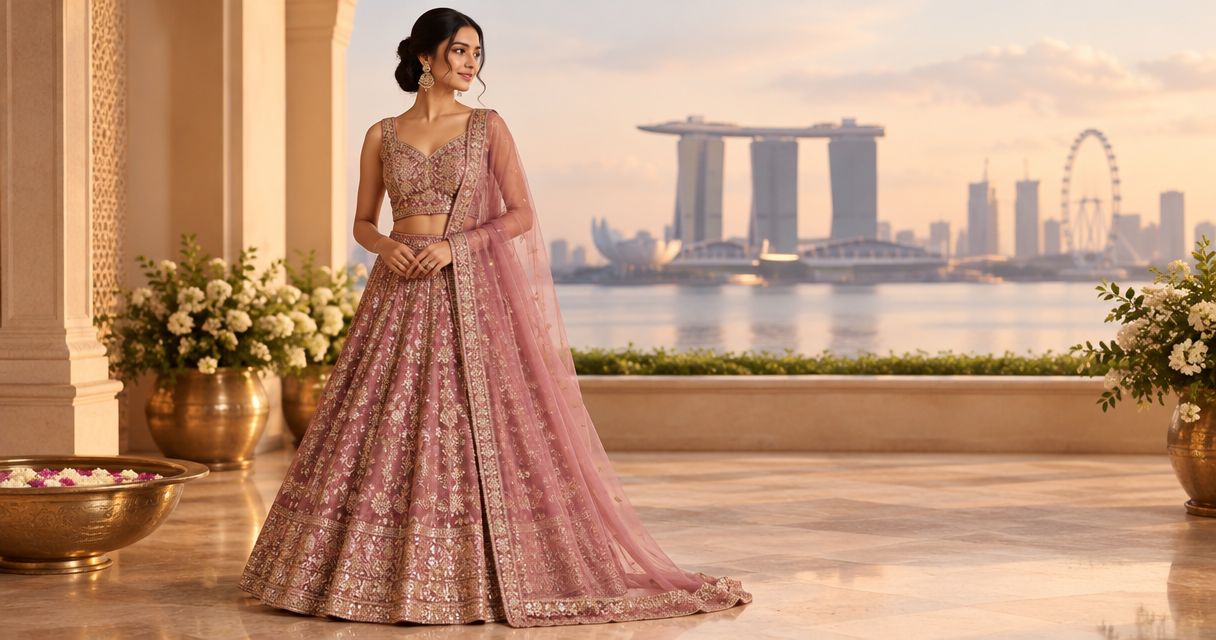
Best overall: an A-line lehenga. Best for dancing: a softly flared, lightly embellished lehenga. Best for a simple reception look: a panelled lehenga with restrained embroidery. This 2026 lehenga Singapore guide matches reception styles to your role, comfort needs and plans for the evening.
- For lehenga Singapore shopping, choose an A-line lehenga as the starting point for a wedding reception.
- Choose soft flare for dancing, a fishtail for a sculpted silhouette, or a jacket for added coverage.
- The Fashion Silk suits Singapore lehenga shoppers who want personal outfit and sizing help.
- Check the blouse, waistband, lining and dupatta together before choosing your reception outfit.
Why this matters
A reception outfit needs to work beyond the arrival photograph. You need to sit through dinner, greet relatives and move without constantly lifting your skirt or adjusting your blouse.
For a 2026 reception, start with the invitation and your role rather than a trend photograph. The guide to choosing a lehenga in Singapore for a wedding covers the wider buying decision; this shortlist focuses on reception silhouettes and their trade-offs.
The Fashion Silk is best for Singapore lehenga shoppers who want personal help choosing an outfit and size. Use the styles below as shopping directions, not as a list of specific products or confirmed sizes.
What makes the best reception lehenga?
- Movement: You should be able to walk, turn and sit without the skirt pulling or catching underfoot.
- Fit: Assess the blouse and waistband separately. A comfortable skirt does not compensate for tight armholes.
- Fabric feel: Handle the outer fabric and lining together. A soft exterior tells you little about an uncomfortable inner seam.
- Occasion fit: Match the amount of embellishment to your role and the couple’s dress guidance.
- Outfit balance: Consider the skirt, blouse, dupatta and jewellery as one outfit rather than separate purchases.
- Repeat wear: Decide whether you want a reception statement or pieces you can style differently later.
Reception lehenga styles at a glance
These styles describe different design features, so they can overlap. An A-line skirt can also be panelled or embroidered; choose your main silhouette first, then refine its fabric and decoration.
| Style | Best for | Standout feature | Key limitation |
|---|---|---|---|
| A-line lehenga | An undecided reception guest | Gradual flare from waist to hem | The lining can still add bulk |
| Panelled lehenga | A restrained look with visible structure | Joined panels shape the skirt | Panel seams need checking |
| Softly flared lehenga | Dancing and frequent movement | Flare without a rigid outline | Less suited to a sharply structured look |
| Fishtail lehenga | A sculpted, close-fitting silhouette | Fitted upper skirt with lower flare | Restricts stride more than an open cut |
| Jacket-style lehenga | Shoppers prioritising upper-body coverage | An additional layer over the blouse | Adds fabric around the torso |
| Heavily embellished lehenga | A bride seeking a statement reception outfit | Decoration across a larger part of the outfit | Weight and surface texture need careful checking |
1. A-line lehenga: best for an undecided reception guest
An A-line lehenga widens gradually from the waist towards the hem. It is a useful starting point when you want a recognisable lehenga silhouette without choosing either a close-fitting skirt or a very full shape.
For a 2026 wedding reception, compare the outline from the front and side. Check whether the waistband stays comfortable when you sit; the shape alone does not guarantee a good fit.
A-line lehenga pros:
- Gives you a clear starting silhouette when comparing outfits.
- Works with either a restrained or more decorative blouse.
- Offers a less fitted alternative to a fishtail skirt.
A-line lehenga cons:
- Stiff lining can make the skirt feel fuller than expected.
- A comfortable waist does not guarantee the right hem length.
Best for: A guest who wants a balanced reception outfit and has not settled on a silhouette.
Verdict: Buy an A-line lehenga if you want a straightforward starting point; judge the actual garment, not its label.
2. Panelled lehenga: best for a restrained, structured look
A panelled lehenga uses joined sections of fabric to shape the skirt. Panels are a construction detail, not a promise of softness, lightness or a particular fit.
Choose restrained embroidery if you want the cut and fabric to remain visible. Look closely at the joins, especially where a printed or woven pattern crosses a seam, and check that the skirt hangs evenly.
Panelled lehenga pros:
- Makes the skirt’s construction part of the design.
- Provides an alternative to all-over surface decoration.
- Lets you balance a simpler skirt with a detailed blouse.
Panelled lehenga cons:
- Uneven seams can interrupt the intended outline.
- The number of panels does not establish comfort or quality.
Best for: A shopper who prefers visible shape and fabric detail over dense embellishment.
Verdict: Buy a panelled lehenga when the seams sit smoothly and the finished skirt gives you the structure you want.
3. Softly flared lehenga: best for dancing at the reception
A softly flared lehenga creates movement without relying on a rigid skirt outline. Look for a garment that follows your steps rather than one you must repeatedly lift or rearrange.
Fabric names are not enough: inspect the lining, waistband and decoration as well. A flowing outer layer can still sit over a stiff or uncomfortable underskirt, so assess the complete outfit.
Softly flared lehenga pros:
- Gives the skirt movement as you walk and turn.
- Prioritises an unstructured outline over a fixed shape.
- Pairs naturally with restrained decoration when movement is your priority.
Softly flared lehenga cons:
- Does not create the same outline as a strongly structured skirt.
- A trailing hem remains impractical, however soft the fabric feels.
Best for: A guest or family member expecting to dance and move between tables.
Verdict: Buy a softly flared lehenga if movement matters more than a rigid silhouette.
4. Fishtail lehenga: best for a sculpted reception silhouette
A fishtail lehenga fits closer through the upper skirt before flaring towards the bottom. Choose it because you like that outline, not because it looks comfortable on a hanger.
The fitted section makes sitting and stride especially important. Ask how to assess movement in the garment, and check whether the fabric pulls across the hips when you change position.
Fishtail lehenga pros:
- Creates a defined contrast between the fitted section and lower flare.
- Offers a distinct alternative to a skirt that flares from the waist.
- Makes the silhouette itself a focal point.
Fishtail lehenga cons:
- Gives you less stride room than a comparable open-cut skirt.
- Requires particular attention to seated comfort and hip fit.
Best for: A shopper who specifically wants a close-fitting reception silhouette.
Verdict: Hold a fishtail lehenga until you have checked sitting and walking comfort; skip it if either feels restricted.
5. Jacket-style lehenga: best for added upper-body coverage
A jacket-style lehenga adds a layer over the blouse and skirt. It gives you another way to manage upper-body coverage without relying entirely on dupatta placement.
Check the jacket with the complete outfit. Its length, sleeve shape and fastening affect how the blouse and waistband sit underneath, while additional fabric changes how the outfit feels.
Jacket-style lehenga pros:
- Adds coverage over the blouse.
- Offers a layered alternative to a blouse-and-dupatta focus.
- Lets you use jacket length as part of the overall silhouette.
Jacket-style lehenga cons:
- Adds another layer around the torso and arms.
- Can bunch at the waist or pull at the shoulders if poorly fitted.
Best for: A shopper who wants added coverage as a deliberate part of the design.
Verdict: Buy a jacket-style lehenga when the layers sit comfortably together; skip a jacket that restricts your arms.
6. Heavily embellished lehenga: best for a bridal statement
A heavily embellished lehenga places decoration at the centre of the outfit. This is a style direction rather than a fabric specification: inspect what the embellishment actually involves and where it sits.
For a bride planning a 2026 reception look, compare the complete outfit’s weight and feel, not just its appearance. Pay attention to decoration near the underarms, waist and dupatta edges, where texture comes into contact with your body.
Heavily embellished lehenga pros:
- Makes decorative detail the main feature.
- Gives a bride a clear statement-outfit direction.
- Allows restrained jewellery to accompany a detailed garment.
Heavily embellished lehenga cons:
- Decoration can add weight to the skirt and dupatta.
- Raised details can catch against other fabrics or feel uncomfortable.
Best for: A bride who prioritises a decorated reception outfit and is comfortable with its weight.
Verdict: Buy a heavily embellished lehenga only when its weight and texture remain comfortable across the complete outfit.
How these styles are ranked
The order prioritises an easy starting decision, then separates shoppers by structure, movement, silhouette, coverage and bridal detail. It is not a ranking of brands, fabric quality or individual products.
Your priorities can change the order. A shopper seeking coverage should start with the jacket style; a bride seeking dense decoration should start with the embellished option rather than treating the first entry as a universal winner.
What to bring or discuss before visiting
Prepare a short brief for your 2026 reception shopping visit. Bring 2 reference photos: one showing a shape you like and one showing a detail you want to avoid. This makes your preferences more specific than asking for something festive.
- Event details: Share your role, the dress guidance and whether dancing is part of your evening.
- Fit preferences: Explain where you want room, coverage or support. Discuss blouse and skirt sizing separately, especially for plus-size shopping.
- Shoes and accessories: Bring the shoes you intend to wear and a photo of any jewellery you already own.
- Family coordination: Bring outfit or fabric photos if relatives want a shared colour theme rather than identical clothing.
- Budget: State your spending limit before comparing options, and confirm the current price of each garment.
Use 3 fit checks: stand, sit and raise your arms when assessing an outfit, subject to the shop’s guidance. Ask what fitting arrangements are available rather than assuming them.
Which reception lehenga should you choose?
Choose an A-line lehenga if you remain undecided. Move to soft flare for dancing, a panelled design for restrained structure, a fishtail for a fitted outline, or a jacket for coverage. Choose heavy embellishment because you want the decoration and accept its weight—not because reception dressing requires it.
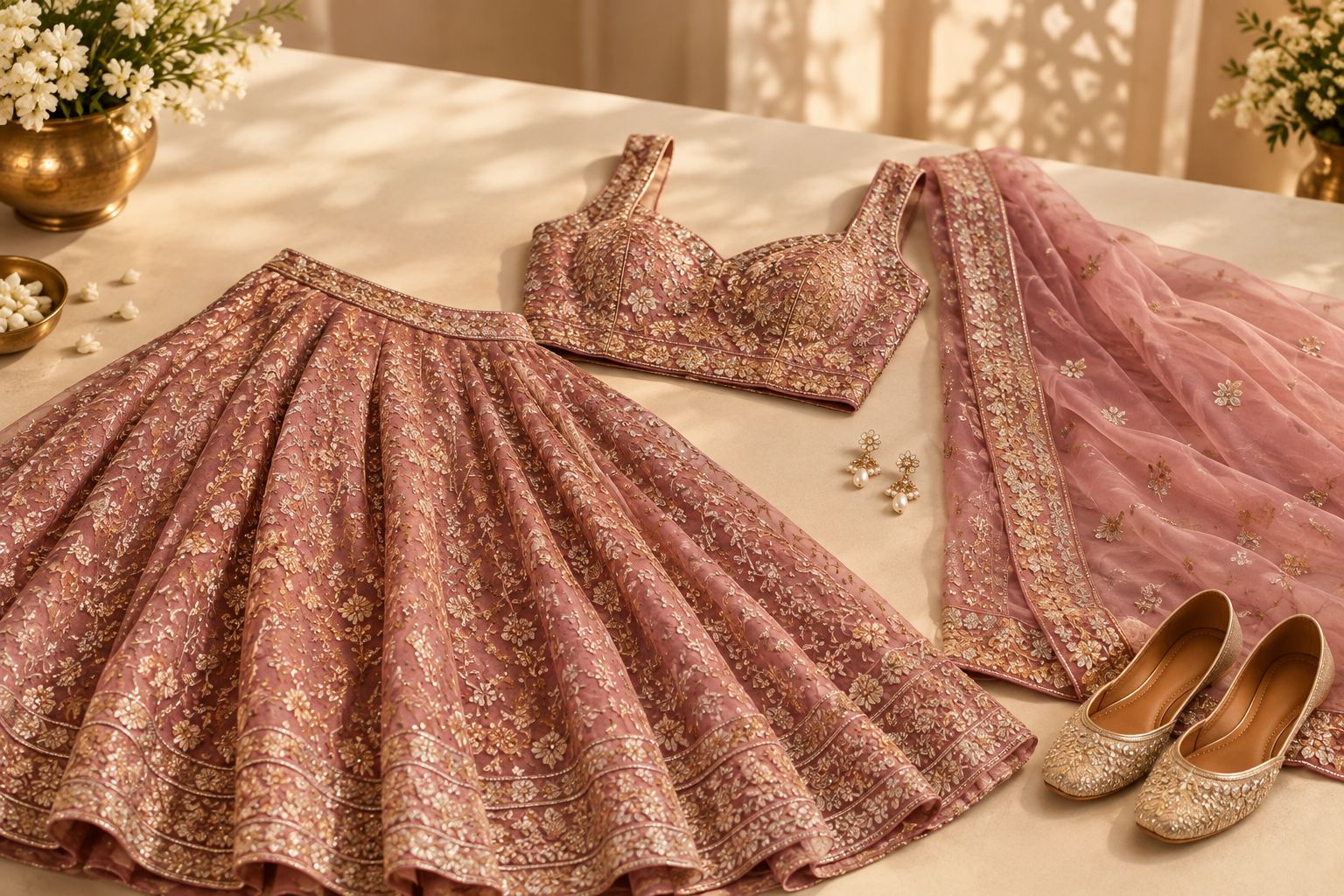
Before deciding, assess all 3 garment pieces: skirt, blouse and dupatta. A skirt you love is not the right purchase if the blouse restricts movement or the dupatta feels difficult to manage.
Visit our Simei store
Visit The Fashion Silk at 04-K5, Eastpoint Mall, Simei, Singapore. The store is open 10 AM–10 PM every day.
Bring your reception brief and ask for personal outfit and sizing help. The Fashion Silk offers affordable prices and personal guidance; compare the fabrics, designs and fit against your priorities, and confirm the current price and availability of your preferred outfit and size before travelling.
The destination is Simei, but this guide is for shoppers across Singapore. For your 2026 reception visit, focus the conversation on your role, comfort needs and preferred silhouette rather than asking for a style by name alone.
FAQ
What is the best lehenga style for a Singapore wedding reception?
An A-line lehenga is the best starting point for an undecided reception guest. Choose soft flare instead if dancing is your priority, or a jacket style if you want added coverage.
Is a fishtail lehenga better than an A-line lehenga?
A fishtail lehenga is better for a deliberately fitted silhouette, not for unrestricted movement. An A-line lehenga gives you a less fitted starting point; check the actual garment before deciding.
Which lehenga should I choose if I want to dance?
Choose a softly flared lehenga with manageable decoration and a hem that stays clear of your shoes. Check the lining and waistband as well as the outer fabric.
What should a plus-size shopper check in a reception lehenga?
Check blouse and skirt fit separately rather than relying on one size label. Discuss armhole comfort, bust fit, waistband pressure and seated ease, then ask about the sizes available in your preferred design.
What should I bring when shopping for a reception lehenga?
Bring reference photos, your intended shoes and pictures of jewellery or family outfits you want to coordinate. Share the dress guidance, your role and your budget before comparing garments.
Do I need a heavily embellished lehenga for a reception?
No, a reception outfit does not require heavy embellishment. Choose the level of decoration around your role, the dress guidance and how much garment weight you find comfortable.
Where can I get personal help choosing a lehenga in Singapore?
Visit The Fashion Silk at 04-K5, Eastpoint Mall, Simei, Singapore for personal outfit and sizing help. The store opens 10 AM–10 PM every day; confirm your preferred design and size before travelling.
One last thing
The dupatta can change the decision even after you have chosen the skirt. Check its weight, edge texture and placement with the blouse before committing; do not leave it folded aside while assessing the rest of the outfit.